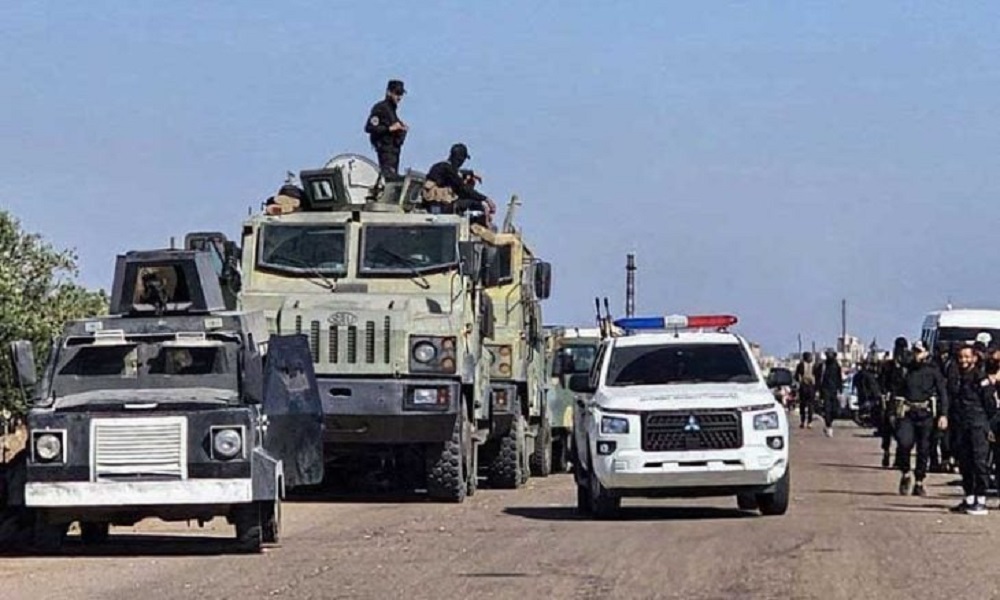
Watan-On Monday, the Syrian Ministry of Defense announced the deployment of military forces in the southern city of Suwayda, following deadly clashes between Druze fighters and Bedouin tribes, which left 40 people dead, according to the Syrian Observatory for Human Rights.
These violent confrontations underscore the security challenges still facing Syria’s transitional authorities, who came to power after the ouster of Bashar al-Assad in December, particularly in asserting control over volatile regions.
Deadly incidents had already occurred in Syria’s coastal regions in March, and clashes erupted in April near Damascus between Druze fighters and regime security forces.
According to both the Observatory and the local platform Suwayda 24, fighting remains ongoing in several villages in western Suwayda province.
The Syrian Observatory reported that the 40 fatalities included:
-
27 Druze, among them two children,
-
10 Bedouins,
-
3 unidentified persons,
-
Plus around 50 wounded.
The Ministry of Defense confirmed a death toll of over 30, with nearly 100 injured.
In a statement, the ministry said it had begun, in coordination with the Ministry of Interior, to:
-
Deploy specialized military units to affected areas,
-
Establish safe corridors for civilians, and
-
Swiftly end the clashes.


Triggering Incident and Background
According to the Syrian Observatory, the clashes began Saturday after Bedouin gunmen kidnapped a Druze vegetable vendor, setting up roadblocks on the Suwayda–Damascus highway. This quickly escalated into mutual kidnappings.
Suwayda 24 later reported that captives from both sides were released Sunday night, but tensions remained high.
The Observatory linked the flare-up to sectarian tensions that have simmered since April, when Druze fighters clashed with security forces and allied Sunni Bedouin gunmen near Damascus and in Suwayda.
Security Vacuum and State Response
The Ministry of Defense blamed a “vacuum in state institutions” for fueling the violence, stating that the lack of formal security presence in the region had hindered previous de-escalation efforts.
Interior Minister Anas Khattab echoed this on X (formerly Twitter), noting that “the absence of military and security institutions is a primary cause of the ongoing unrest in Suwayda,” and stressed the need to restore law and order to ensure civil peace.
The Ministry of Interior also confirmed that it would begin deploying forces in coordination with the army, adding that the current clashes were the result of “accumulated tensions” over time.
Political and Religious Reactions
Suwayda’s governor Mustafa al-Bakkour urged calm and dialogue, praising local and tribal leaders for their mediation efforts and stating that “the state will not tolerate threats to citizens’ safety.”
Druze religious leaders called for restraint and appealed to Damascus for intervention.
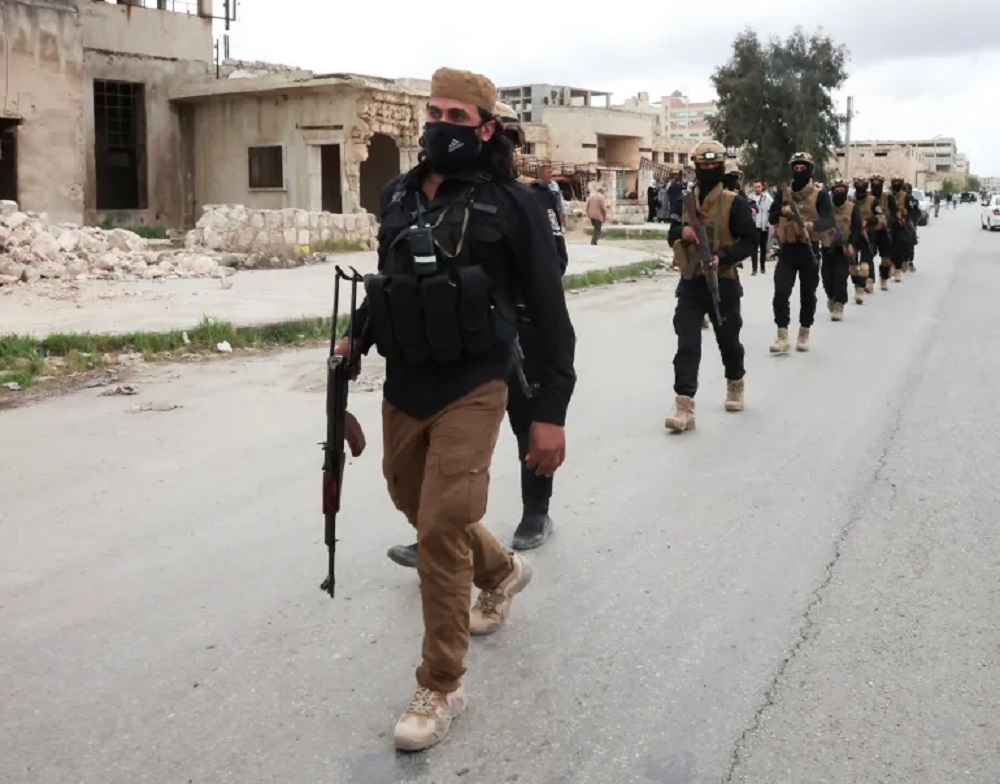
Following the Assad government’s ouster, the international community and Western envoys had urged Syria’s new leadership — an Islamist-leaning transitional authority — to protect minority communities, ensure their inclusion, and prevent sectarian violence.

Rising Fears Among Minorities
In June, a suicide bombing at a church in Damascus killed 25 people, an attack blamed on ISIS, further stoking fears among religious minorities.
There are over 1 million Druze across the Levant, concentrated in mountain regions in Lebanon, Syria, Palestine, and Jordan.
In Syria, they number around 700,000, primarily residing in Suwayda province, with smaller communities in Jaramana and Sahnaya near Damascus, and a limited presence in Idlib.
Following the April clashes, Israel launched airstrikes in Syria, warning Damascus against any harm to the Druze community.
-
-
-

-
-
-