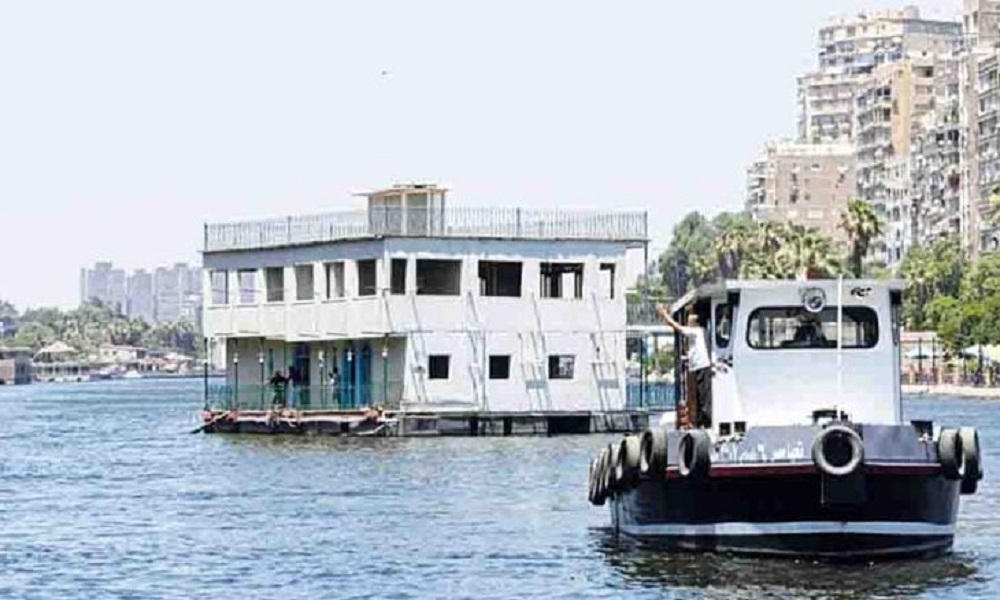
Watan-Among the social and human phenomena long observed by Egyptian cinema is that segment of Cairo’s population that lives hand-to-mouth, surviving on what the Nile offers each day in the form of fish of various sizes and breeds. These are humble fishermen who own little more than a small boat, a handmade net, and a few containers to store the day’s catch. Their work begins before sunrise and ends aFishermen t sunset.
One of the films that portrayed the fishermen’s lives with deep humanity is Al-Marakby (The Boatman), directed by Karim Diaa El-Din and starring Salah El-Saadani and Maali Zayed. The 1995 film was less concerned with the act of fishing than with the intimate portrait of a small family living entirely on a fishing boat. El-Saadani’s character, the father, doesn’t even have a birth certificate and doesn’t know when he was born. He is illiterate, having never attended school.
He and his wife—who shares the same background—live entirely on the boat they own. They eat, sleep, and carry on their lives on it, satisfied with the modest income the river provides, enough for their daily food needs.
This dramatic portrayal wasn’t the creation of scriptwriter Ahmed Awad’s imagination, but a reflection of the reality for dozens of families who reside on the Nile, floating peacefully and optimistically across its waters. Nothing disturbs their serenity—except, at times, a scarcity of fish and the low income from their modest catches.


What’s striking and unusual is that these fishermen treat their small boats as homes, outfitted with the bare essentials to sustain long-term life. Life on the Nile is not temporary; it’s practically permanent. Many have adapted to living under extremely difficult conditions and with minimal resources. As long as they have food and water, they feel secure.
When someone falls ill, they are taken ashore to the nearest hospital for treatment. If a young man wants to marry, he typically chooses a relative or someone familiar with the lifestyle—someone unlikely to rebel against the aquatic life or demand a house on land. It’s crucial that both parties agree in advance on all the details of Nile-based living, knowing they are destined to live as wanderers, constantly striving to earn a living. There’s no room for rebellion or fleeing to the noisy, stressful world beyond the river.
A recent shift in this lifestyle has emerged: some have replaced their small boats with motorized launches (lanche), commonly used for leisure cruises by city dwellers and occasional tourists. These lanches, according to their owners, provide a more stable income and are faster and easier to operate—though they’re rarely used for fishing, especially the smaller, high-speed types designed for one or two passengers.
Medium-sized boats, on the other hand, are often decorated for tourism, especially during the summer. Arab and foreign tourists rent them by the hour for evening cruises along iconic landmarks like the Qanater Khairiya and the Cairo Tower. These scenic nighttime rides, lasting an hour or two, offer visitors peace and quiet far from city noise and pollution.
Such tourism cruises are organized and monitored by the Ministry of Tourism. Because they bring in significantly more money than fishing, they’ve affected the multigenerational trade, causing a sharp decline in the small-boat fishing phenomenon that once thrived but is now nearing extinction. Young fishermen are abandoning their fathers’ and grandfathers’ trade in search of other opportunities. Some have even migrated to Gulf countries for better futures.


Despite the sharp decline in small fishing boats—once ubiquitous across the Nile—a handful of traditional fishermen still cling to their boats and nets, either out of loyalty to the craft or because they lack the resources to transition into more modern livelihoods.
-
-
-

-

-

-