Watan-Israel has scaled back expectations for an anticipated agreement with Syria, saying it will take time to achieve and will likely result in a “cold peace” at best during the initial phase.
According to the Hebrew-language news site Walla, while full normalization is not currently on the table, the ongoing talks may lay the groundwork for future diplomacy. Efforts are currently focused on easing tensions and updating security arrangements along the volatile Israeli-Syrian border.
An unnamed Israeli official told Walla that the U.S. favors a gradual process of building bilateral relations, but Israel wants to know upfront that the outcome will be a comprehensive peace agreement that includes full normalization.
“The agreement with Syria is not imminent and will take time,” said the Israeli official.
Walla reported that in early June, Prime Minister Benjamin Netanyahu informed Trump’s envoy to Syria, Tom Barrack, of his interest in negotiating a new security arrangement with the Syrian government that came to power after the ousting of Bashar al-Assad in late 2024, with U.S. mediation.
According to a senior Israeli official, Netanyahu’s goal is to pursue phased agreements with Syria, beginning with an updated version of the 1974 disengagement accord, ultimately leading to a full peace treaty and normalization.

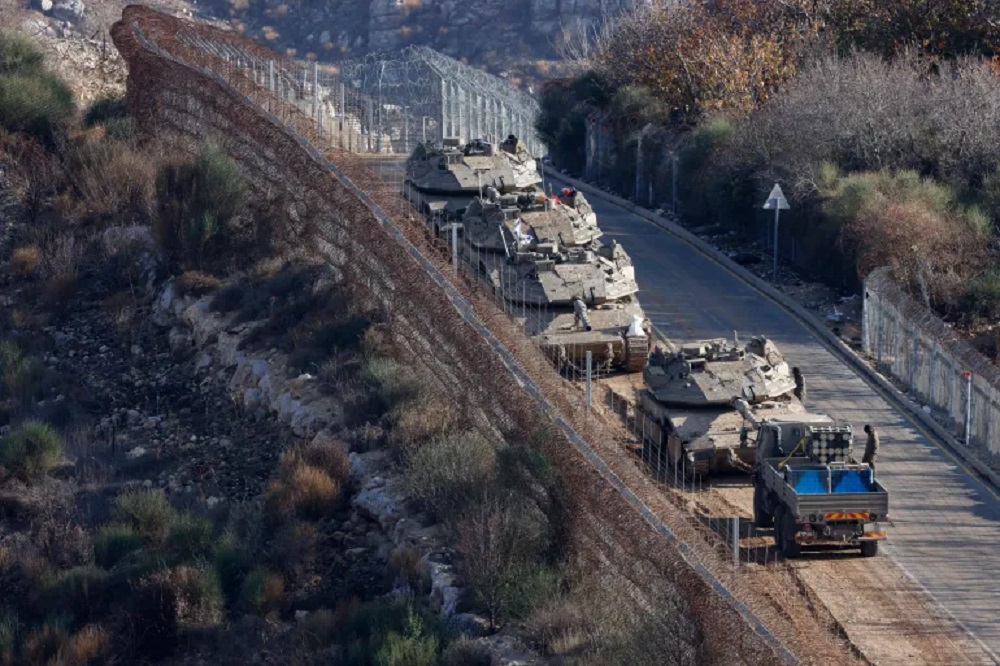
Since 1967, Israel has occupied most of Syria’s Golan Heights and, following the Assad regime’s collapse, seized the buffer zone between the two countries and declared the 1974 disengagement agreement null.
Israel also occupied the strategic Mount Hermon, which is less than 35 kilometers from Damascus and borders Lebanon and Jordan. With its highest peak at 2,814 meters, the mountain has become a key pressure point in Israel’s negotiations.
Israeli officials reportedly view these occupied territories as major bargaining chips and state that withdrawal would only happen in exchange for full peace and normalization with Syria.
An unnamed U.S. official told Walla that the current talks involve officials below Syrian President Ahmad Al-Shara and that there are no plans yet for a summit between leaders.
Israel is reportedly using at least four communication channels with Syria: National Security Advisor Tzachi Hanegbi, Mossad Director David Barnea, Foreign Minister Gideon Sa’ar, and the Israeli military for daily coordination.
Unnamed senior Israeli officials told the outlet that they favor greater U.S. involvement in mediation, believing it would incentivize the Syrian government to move toward a deal.
The future status of the Golan Heights remains a key sticking point. In every round of negotiations over the past 30 years, Syria has demanded a full or near-full Israeli withdrawal from the Golan in exchange for peace. During his first term, President Donald Trump recognized the Golan as part of Israel — a move not reversed by the Biden administration.
On Monday, Israeli Foreign Minister Gideon Sa’ar reiterated that while Israel is open to a deal with Syria, the Golan Heights will remain under Israeli sovereignty in any future agreement.
Separately, the Jerusalem Post reported that the ongoing security talks between Israel and Syria face serious obstacles and are more likely to lead to a cold peace than full reconciliation.

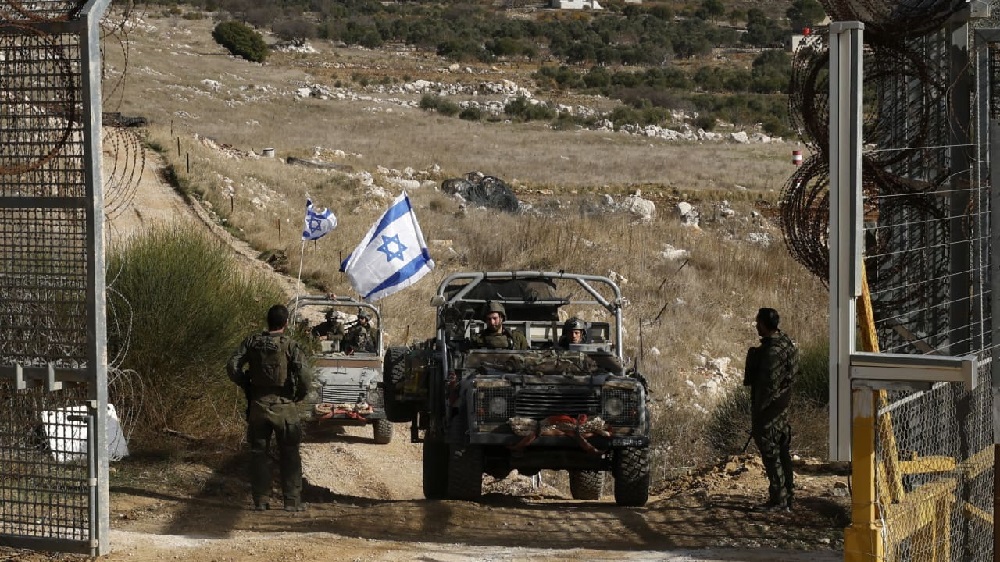
According to two informed sources cited by the paper, Israel and Syria continue discussions that could result in a peace agreement, but a major hurdle remains: Syria insists that any deal prohibit Israel from conducting military operations on Syrian territory, while Israel demands the right to act against security threats, especially if it withdraws from newly occupied buffer zones.
The Jerusalem Post noted that even if a deal is signed, it would likely begin as a cold peace and would not affect Israel’s control over the Golan Heights. Instead, it would focus on the buffer areas captured by Israel after Assad’s fall.
An Israeli source told the paper, “At this stage, it’s more of a security arrangement than a peace agreement,” adding sarcastically, “No one’s going to be eating hummus in Damascus or sailing in Latakia anytime soon.”
Despite the fact that Syria’s new administration has not threatened Israel directly, Tel Aviv has continued its military campaign since Assad’s fall. This includes airstrikes that have killed civilians and destroyed military facilities, along with ground incursions into Quneitra and rural Damascus.
-
-
-

-

-
-