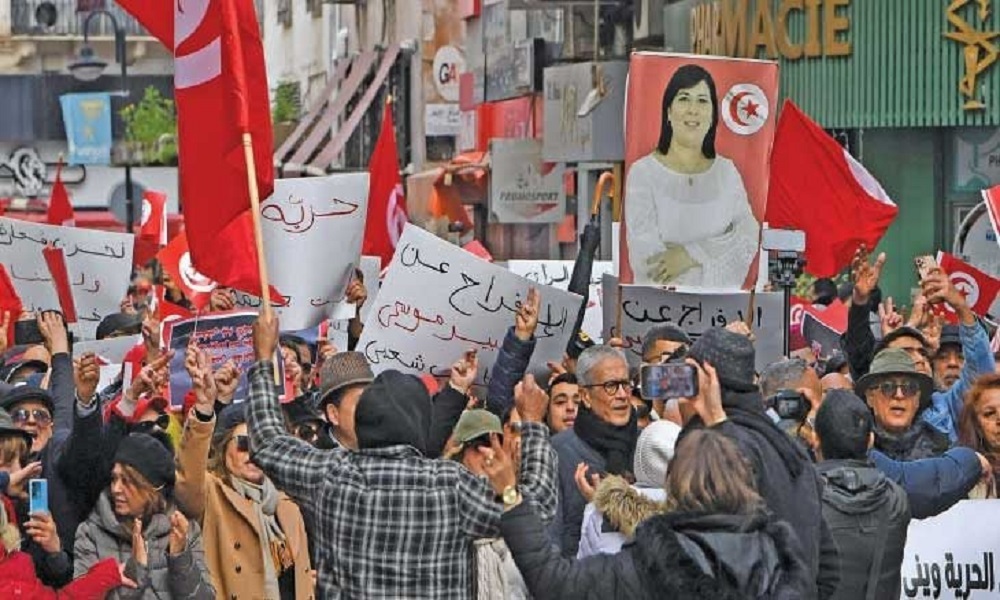
Watan-The recent transfer of Abir Moussi, head of Tunisia’s Free Destourian Party, to Bulla Regia prison in the northwestern governorate of Jendouba has sparked significant controversy. Many view the move as a form of mistreatment against the prominent opposition lawyer and politician, especially since her family resides in the capital, Tunis. Moussi was previously held at Manouba prison, then transferred to Nabeul prison in the northeast, and most recently to the remote Bulla Regia facility near the Algerian border.
Bulla Regia, a historic Numidian city now under Jendouba’s jurisdiction, has become a symbol of repression for Moussi’s defense team, who argue that her detention there is both unjust and abusive.
Moussi’s legal team expressed concern for her safety and legal status due to the relocation but did not disclose the reasons behind what they labeled a “dangerous” decision. Neither the judiciary nor the prison authorities explained why the move was made—one that complicates visitation for family and legal representatives due to the distance from the capital.
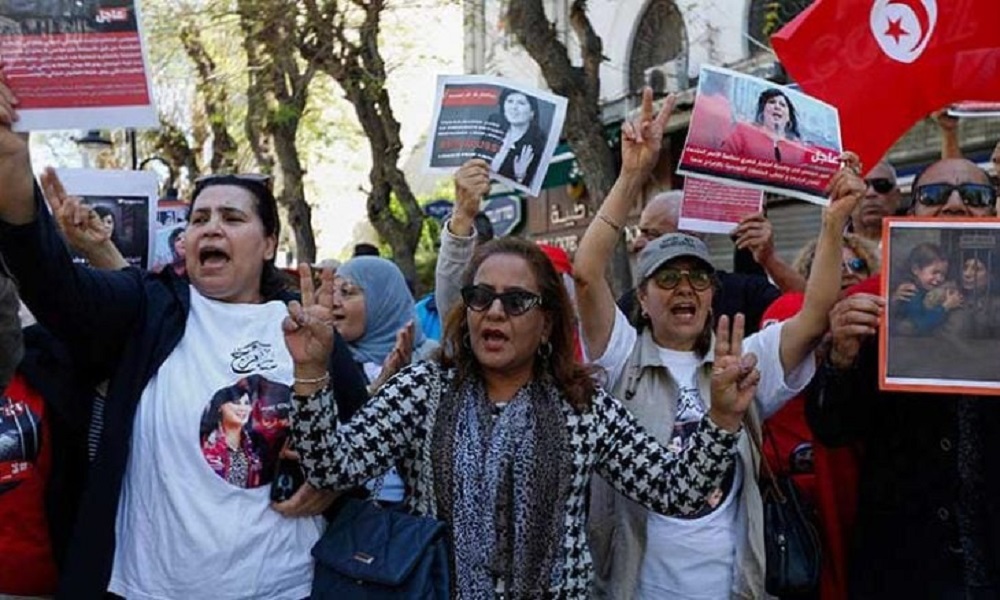
Widespread Controversy
Supporters of Moussi argue she committed no crime warranting imprisonment. They claim all she did was visit the presidential palace in Carthage to file a request for the annulment of a decree—an act permitted by law—before taking her case to the administrative court. Her critics, however, claim she violated the sanctity of a national institution and caused a public disturbance.
The case raises deeper concerns about Tunisia’s future amid the imprisonment of key political figures and the government’s reluctance to involve intermediary institutions like political parties and unions in governance. It also reignites debate over whether opposition trials meet fair trial standards.
Moussi’s trials—whether over the presidential palace incident or the electoral commission’s complaint—are not the first nor likely the last targeting opposition figures post–July 25, 2021. Tunisians remain deeply divided: some view these prosecutions as attacks on democracy, others see them as necessary to restore stability after years of chaos.
Houssam Al-Hami, spokesperson for the opposition coalition “Etilaf Sumoud,” told Al-Quds Al-Arabi:“What’s happening in Tunisia now is unprecedented. Even under Bourguiba or Ben Ali, political prisoners were at least treated with minimal dignity. What we see today—dispersing detainees and sending them far from their families—is a form of collective punishment not only for the prisoners but also for their children, relatives, and defense lawyers who now must travel great distances.”
He added:“Moussi, a lawyer and political detainee, is being punished simply for expressing her views. She was first sent to Nabeul, then to Bulla Regia, over 200 km from Tunis. This makes family visits nearly impossible.”
Al-Hami also referenced other political detainees, including journalist Mourad Zeghidi, who has spent over 400 days in prison. His sister Meryem recently revealed that despite the legal retention period expiring, his detention was extended by four more months. She warned that with the judicial recess approaching, Zeghidi may remain jailed without regard for humanitarian concerns.

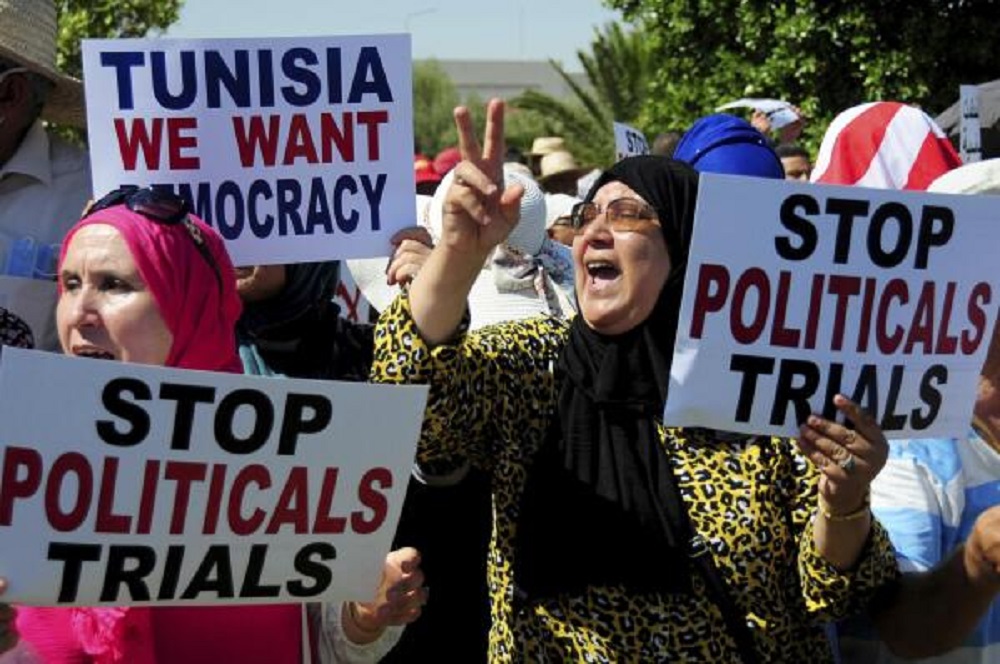
Political analyst Walid Ben Youssef commented that what’s unfolding in Tunisia today was once unthinkable:
“Rival factions of the past—former regime loyalists and Islamists—now find their leaders behind bars. Even figures from Tunisia’s so-called democratic forces, like Issam Chebbi, Ghazi Chaouachi, and Khayam Turki, are imprisoned.”
He also pointed to the sidelining of the Tunisian General Labour Union (UGTT), once a powerful political player, and asked:“With major parties and unions excluded, who will hold the executive accountable?”
Ben Youssef continued:“True, the parties failed in past years and helped drive the country into crisis, but excluding them entirely undermines the democratic path. The government should have demanded reform and accountability—not elimination.”
-
-
-

-
-
-