U.S. Veto on Gaza Ceasefire Sparks Global Outrage at UN Security Council
Washington blocks resolution calling for immediate ceasefire and unrestricted aid to Gaza, triggering widespread condemnation from global diplomats.
Watan News
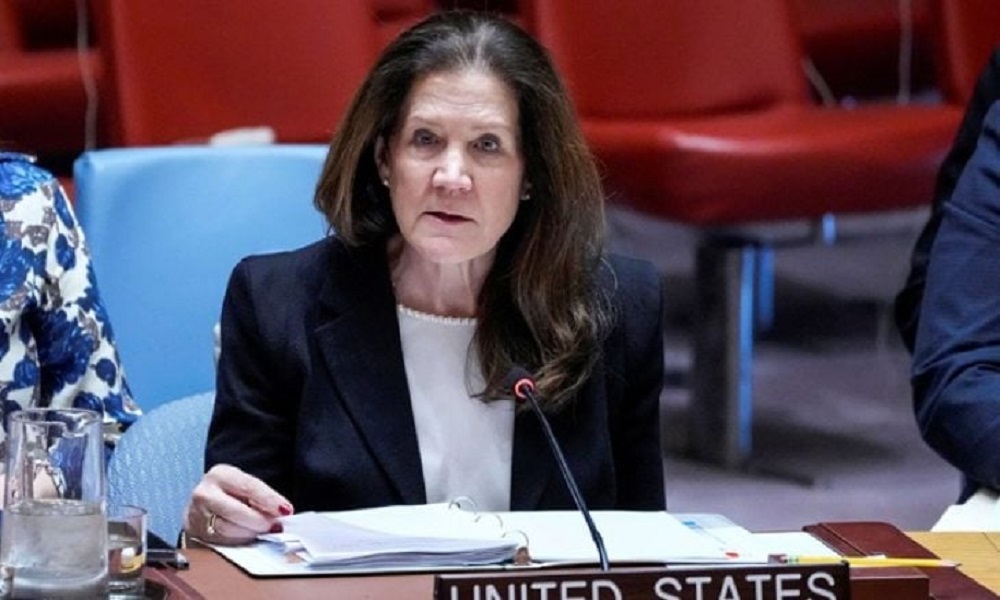
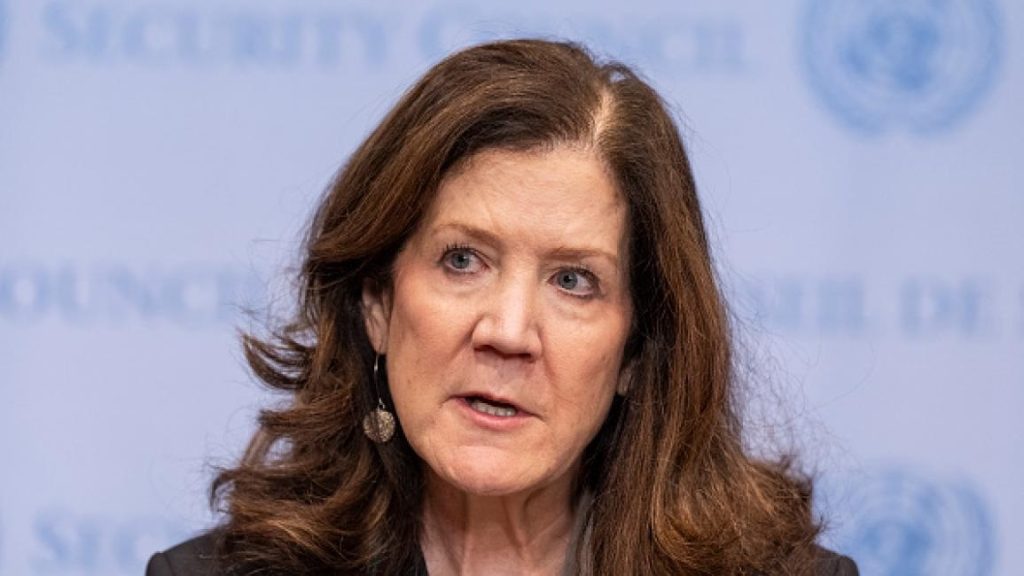
U.S. Ambassador Dorothy Shea
Watan-The United States sparked anger among other members of the UN Security Council on Wednesday by using its veto power to block a draft resolution calling for a ceasefire in Gaza and unrestricted humanitarian aid access to the besieged territory. Washington defended its stance by claiming the resolution undermines ongoing diplomatic efforts to resolve the war.
Pakistan’s ambassador Asim Iftikhar Ahmad strongly condemned the U.S. veto, calling it a “green light for genocide” in Gaza and a “moral stain on the conscience” of the Security Council.
Algeria’s Ambassador Ammar Ben Jamaa echoed this sentiment, saying, “Silence does not defend the dead, nor hold the hands of the dying, nor confront the repercussions of injustice.”
Slovenian envoy Samuel Žbogar stated: “At a time when humanity is being tested live on air in Gaza, this resolution was born from our shared sense of responsibility — toward civilians in Gaza, Israeli hostages, and history. Enough is enough.”
French and British ambassadors expressed “regret” over the vote’s outcome. Meanwhile, Chinese ambassador Fu Cong directly blamed the U.S., urging it to “abandon political calculations and adopt a fair and responsible position.”
This marks Washington’s first Security Council veto since Donald Trump returned to the White House on January 20.
Ahead of the vote, U.S. Ambassador Dorothy Shea said the resolution would “undermine diplomatic efforts to reach a ceasefire that reflects the reality on the ground and encourages Hamas.
Ahead of the vote, U.S. Ambassador Dorothy Shea said the resolution would “undermine diplomatic efforts to reach a ceasefire that reflects the reality on the ground and encourages Hamas.” She argued the draft falsely equates Hamas and Israel and is “unacceptable both for what it says and what it omits,” emphasizing Israel’s right to self-defense.
This was the first Gaza-related vote in the Security Council since November, when the U.S. under Joe Biden also blocked a ceasefire resolution. The last resolution passed on Gaza was in June 2024, backing a phased U.S.-led truce plan, which only took effect in January 2025.
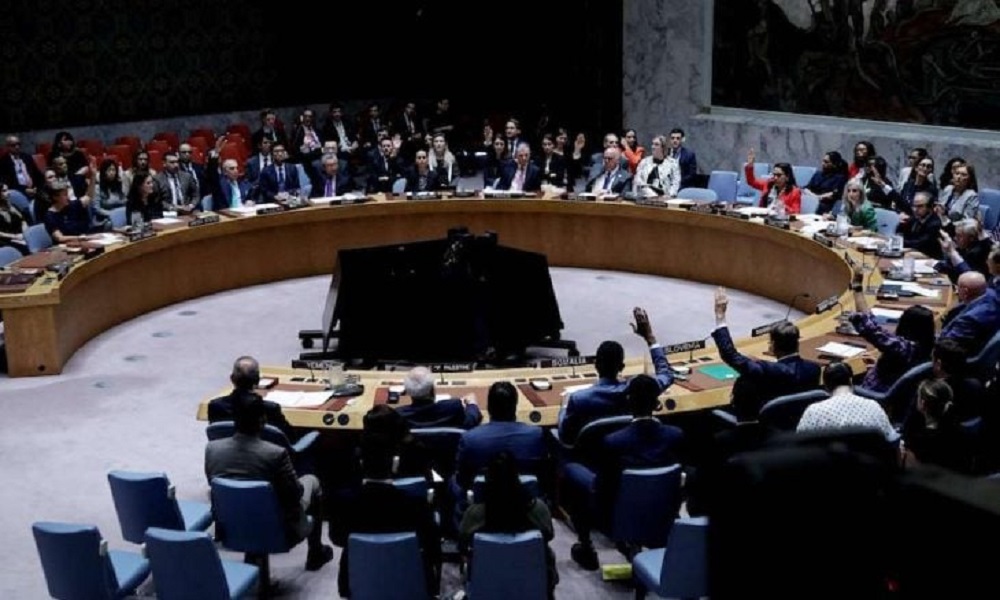
The latest resolution, proposed by the ten non-permanent members, received 14 votes in favor and one against — the U.S. veto. It called for an “immediate, unconditional, and permanent ceasefire” and the release of all hostages. It highlighted Gaza’s catastrophic humanitarian situation and demanded the “immediate and unconditional lifting of all restrictions” on humanitarian aid access and safe, unhindered distribution — including by the UN.
“History Will Judge Us”
After over two months of a crippling blockade, Israel allowed a limited number of UN trucks into Gaza starting May 19. The UN warned these are merely a “drop in the ocean” compared to the dire needs in a territory facing starvation due to ongoing war and siege.
Simultaneously, the U.S.-backed “Gaza Humanitarian Foundation” began distributing aid on May 26, but shut down its centers temporarily on Wednesday after dozens were killed near its facilities in recent days — reportedly by Israeli fire, according to Gaza’s civil defense.
Gaza ceasefire resolution
The UN refused to cooperate with the foundation, citing opaque funding sources and violations of core humanitarian principles. It described the centers as a “death trap” forcing hungry Palestinians to walk “through barbed wire, surrounded by armed private guards.”
Palestinian UN envoy Riyad Mansour urged action: “You cannot witness the outrage in the Security Council… and remain paralyzed. You must act,” referencing UN humanitarian coordinator Tom Fletcher’s speech calling to “prevent genocide in Gaza.”
He warned that if the veto is used, blame lies with those obstructing the Council’s responsibilities: “History will judge us all for what we did to stop this crime against the Palestinian people.”
Israeli and Hamas Reactions
Israeli ambassador Danny Danon dismissed the draft as a “gift to Hamas” and thanked the U.S. for “standing with what is right” by blocking it.
Hamas, in a statement on Telegram, condemned the U.S. veto, calling it “a manifestation of the American administration’s blind alignment with the occupation government” and a boost to Israel’s “crimes against humanity” in Gaza.
Israel faces growing international pressure to end its war in Gaza, which erupted after Hamas launched an unprecedented attack on October 7, 2023.