Watan-Since the signing of the Abraham Accords in 2020, the UAE has gone far beyond normalizing relations with Israel at the diplomatic level. It has plunged into building a complex network of soft and hard influence within Israel’s political and security establishment.
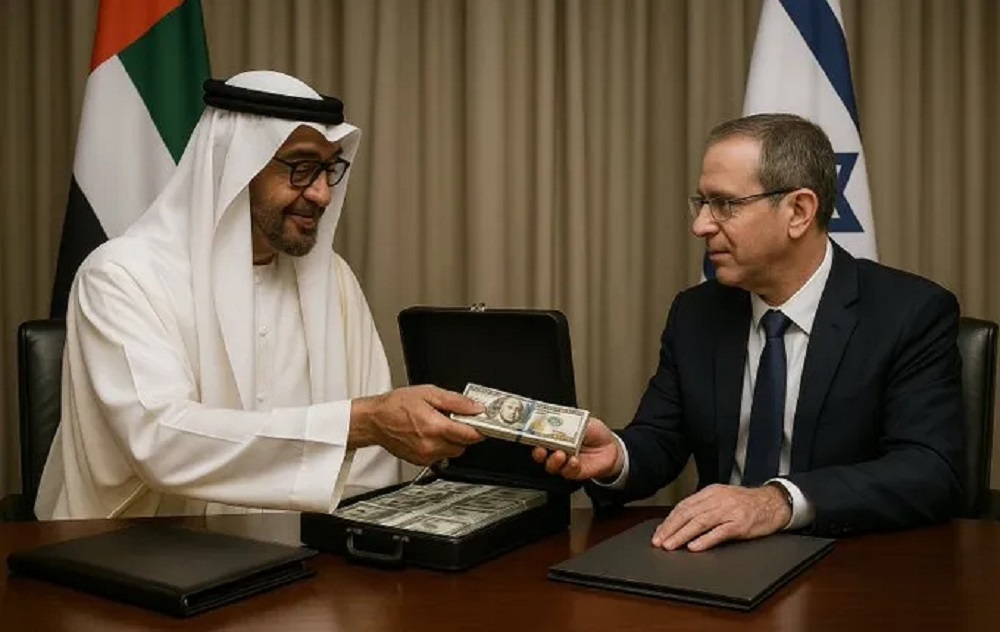
This influence wasn’t only built on formal cooperation. It took root through large-scale financial support aimed at buying loyalties, shaping decision-making, and securing political and security protection for Abu Dhabi.
The Soft Front: Masked Institutions and Wrapped Funding
Abu Dhabi operates a dual strategy. On the surface, institutions like Hedayah, the Forum for Promoting Peace, and Sawab Center promote glossy agendas like “countering extremism” and “spreading tolerance.”
But beneath that surface lies a deeper operation. These platforms serve as fronts for funneling Emirati money into pressure networks in Israel and the United States.

The UAE has funded conferences, academic awards, research centers, and intellectual forums as tools to solidify its presence among ruling elites and policymakers in Tel Aviv. However, this funding was far from innocent—it was camouflaged as “intellectual partnerships” and “interfaith dialogue,” while in reality channeling indirect funds to right-wing Israeli lobbying groups that share Abu Dhabi’s vision:
-
Crushing Islamist movements
-
Criminalizing Palestinian resistance
-
Justifying authoritarianism across the Middle East
Coordination Track: Al Nuaimi and Bennett’s Inner Circle
The turning point came in 2021 with Naftali Bennett’s rise to Israeli premiership.
Ali Rashid Al Nuaimi, as a close advisor to Mohamed bin Zayed, played a central role in weaving ties with Bennett’s team—particularly Tal Gan-Tzvi, Bennett’s chief of staff.
Their cooperation resulted in covert financial channels directing Emirati funds through organizations linked to key Israeli figures, while avoiding any official visibility.
These funds didn’t go directly to Israeli officials but were funneled through legal entities managing “joint programs.” Some of the main recipients included:
-
Kohelet Policy Forum
-
Shiloh Policy Forum
-
Institute for Zionist Strategies

While these institutions present themselves as think tanks, they are the main architects of far-right Israeli policies, including:
-
Judicial overhaul efforts
-
Settlement expansion
-
Curtailing the Supreme Court’s role
Empowered by UAE funding, they opened offices in Brussels and Washington, helping to internationalize Israeli state narratives while concealing the Emirati origins of their financial support.
-

-

-

-

-

-