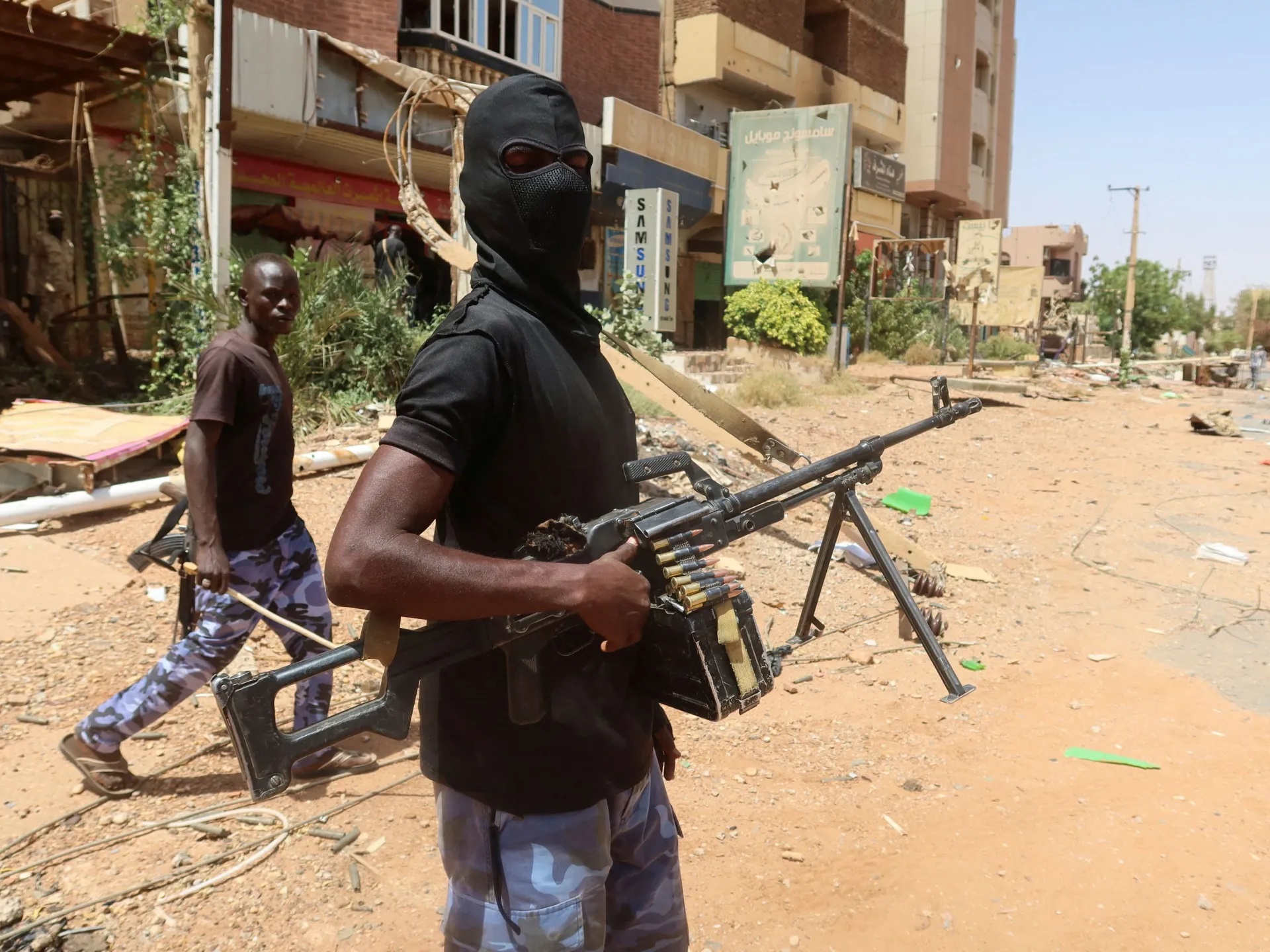
Watan-At least 19 Sudanese civilians, including children, were killed and 28 others injured on Sunday due to airstrikes by the Rapid Support Forces (RSF) targeting El Fasher city and Abu Shouk displacement camp in North Darfur, according to the Sudanese Doctors’ Network. Meanwhile, the army and its allied Darfuri movements have retaken the Atroun Oasis, located near the tri-border area between Chad and Libya in northwest Sudan.
El Fasher has remained under siege since May as the RSF attempts to seize the city—the army’s last stronghold and the historic capital of resource-rich Darfur.
The Sudanese Doctors’ Network condemned the continued RSF attacks on El Fasher and nearby camps, warning of ongoing mass killings of civilians over the past year. They reported that most medical facilities are non-operational, and the area continues to suffer from hunger and blockade. The group criticized the international community’s silence on the atrocities in Darfur, particularly in the north.

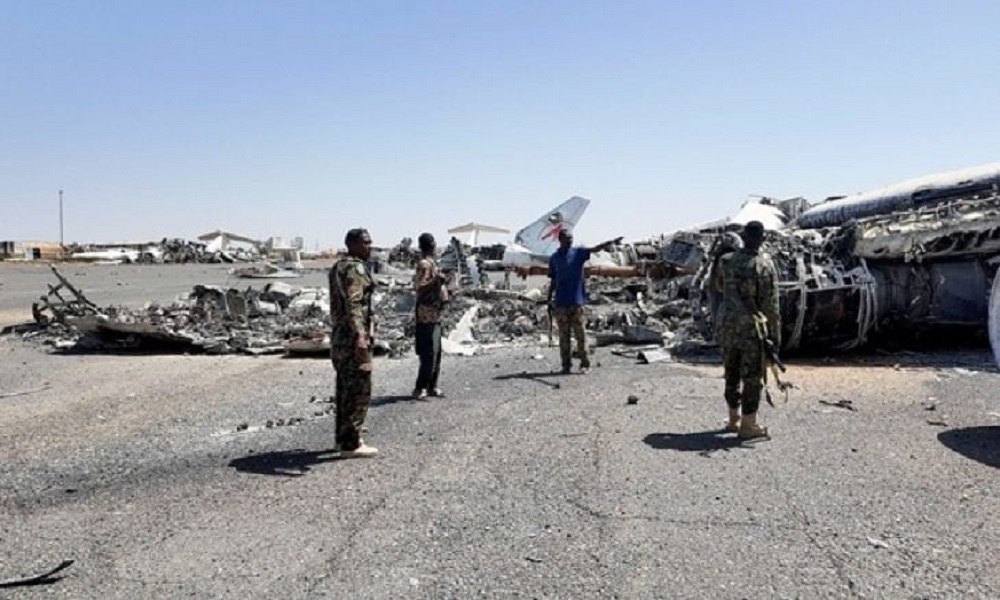
More than 350,000 children are reportedly facing hunger, disease, malnutrition, and insecurity in North Darfur. The ongoing bombardment has destroyed all semblance of life in El Fasher, placing over one million people at the mercy of airstrikes, drone attacks, and mass killings by the RSF.
North Darfur hosts around 500,000 displaced people. Tens of thousands have been displaced since fighting erupted in April 2023. Abu Shouk camp alone shelters over 75,000 families—about 480,000 individuals—who live under extremely difficult humanitarian conditions, as RSF assaults have disrupted aid delivery.
UN Humanitarian Coordinator in Sudan, Clementine Nkweta-Salami, warned on Sunday of the rapidly deteriorating humanitarian situation in El Fasher and surrounding areas. She stressed that without immediate, coordinated, and well-resourced intervention, the crisis will worsen. “Lives are at stake. Every moment counts,” she said, urging all parties to uphold international humanitarian law and allow unimpeded humanitarian access.
As RSF continues its bombardment in North Darfur and seeks to open supply lines through the Libya-Chad-Sudan triangle, the Sudanese army and allied Darfuri joint forces are working to secure the border area.
On Sunday, the army and its allies recaptured the Atroun Oasis near the border triangle. Darfur Region Governor Minni Arko Minnawi confirmed the military success in the desert front, announcing the liberation of the strategic oasis from RSF control.
Atroun belongs to the administrative unit of “Al-Wahat” in Malha locality, North Darfur. It is located on a road that links the border triangle to western Sudan and stretches northward to the Northern State.

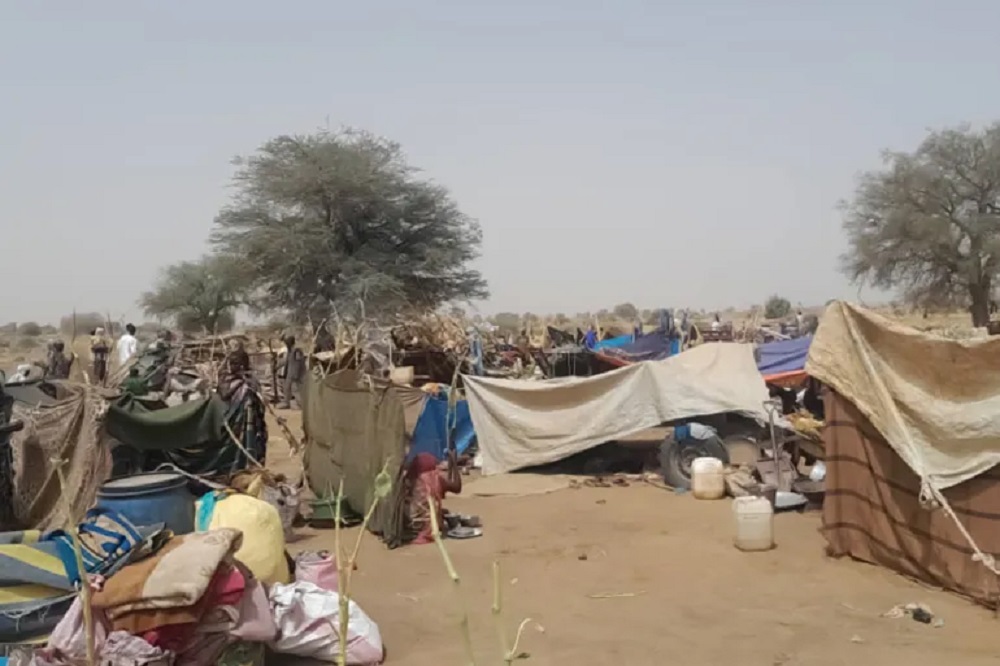
Spokesman for the joint Darfuri force supporting the army, Ahmed Hussein Mustafa, said the operation to retake Atroun was precise and resulted in significant RSF losses in personnel and equipment. He added that regaining Atroun is a pivotal step toward restoring security and stability in Darfur, and that the forces are now monitoring western border movements closely.
The Libya-Chad-Sudan triangle remains a key supply route used by the RSF since the outbreak of the Sudanese war in mid-April 2023 to bring in fighters and arms.
Over the past five months, the army has increasingly targeted RSF supply routes from this border region. In December, joint force intelligence and the army revealed that unprecedented weapons shipments from a European country were being funneled via Chad into El Fasher to topple the city.
A week later, the joint Darfuri force announced it had intercepted dangerous weapons reportedly sent by the UAE through Chad to support RSF operations in western Sudan.
On January 15, Sudanese forces destroyed three RSF convoys in the desert corridor near “Dreesha,” inflicting losses in manpower and equipment. The army confirmed the destruction of 54 combat vehicles and seizure of 67 more, armed with heavy weaponry.
Earlier that same month, the army seized 205 fully equipped combat vehicles and large quantities of weapons and ammunition while destroying another 67 RSF vehicles coming from the desert supply route.
These operations aim to seal off the RSF’s main logistical artery through the Sahara and limit incoming military aid.

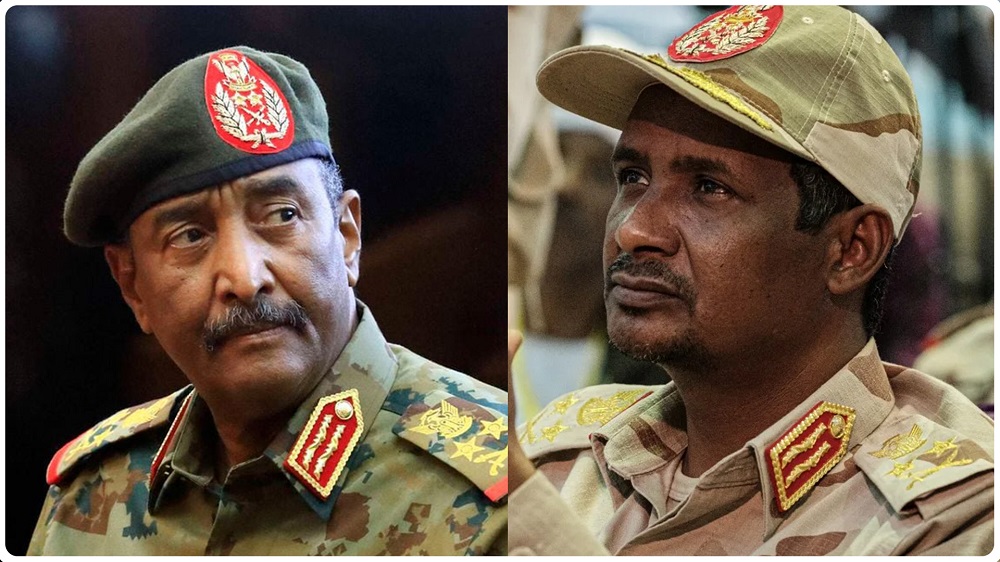
Meanwhile, RSF continues targeting civilian and military sites with suicide drones, especially in army-controlled areas. The army now holds more than 70% of Sudan following recent territorial gains.
On Sunday, the Sudan Shield Forces, led by Abu Aqla Kikel and aligned with the army, announced that their base in Jebel al-Abaytour in Al-Batana region (Gezira State, central Sudan) was hit by RSF drone strikes. The attack killed seven fighters and injured 14 others.
Before siding with the army, Kikel led RSF operations in Gezira State, which RSF overtook in December 2023. His defection marked a major turning point in the war, which had largely been confined to Khartoum and Darfur up until that point.
In October 2024, the army announced Kikel’s defection along with many of his fighters. In retaliation, RSF launched violent assaults on Gezira—Kikel’s home region—causing hundreds of deaths and village displacements. The army later regained control of the region as part of a wider campaign across central Sudan.
-
-
-

-
-
-