
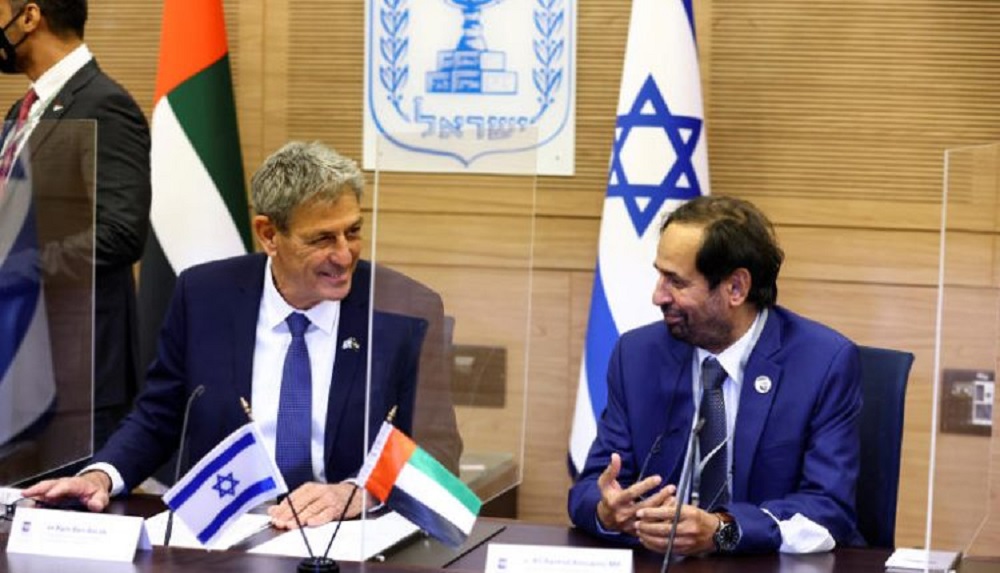
Watan-Israeli Economy and Industry Minister Nir Barkat has revealed that approximately 600 Israeli companies have launched operations in the United Arab Emirates since the 2020 U.S.-brokered normalization pact between Abu Dhabi and Tel Aviv.
According to Barkat, many of these companies have opened branches in the UAE and are “successfully” selling their products and services in the region—including in Saudi Arabia, which maintains no official ties with Israel.
Barkat emphasized that Israel is targeting new markets across the Arabian Peninsula and India, aiming to boost exports from $150 billion to $1 trillion within the next 15 years. He singled out Dubai—the region’s commercial and tourism hub—as a core pillar of Israeli expansion.
To streamline growth, Israel has appointed “cluster managers” to oversee sectors such as climate, desert tech, homeland security, advanced tech, and healthcare, aiming to connect Israeli innovation with on-the-ground opportunities in the Gulf. Israel’s tech ecosystem includes around 10,000 startups, making it a key export asset.
The growing economic integration between Israel and Arab states—especially the UAE—is a top priority for former U.S. President Donald Trump, who is seeking to expand the Abraham Accords to include Saudi Arabia and other nations. However, Israel’s ongoing war in Gaza has significantly hampered these efforts.
A U.S.-Jewish businessman, speaking anonymously, confirmed gradual Israeli-Saudi investment collaboration, modeled after the UAE experience. Previously involved in facilitating Israeli market access to the UAE, the investor has now relocated to Riyadh in anticipation of potential formal ties.
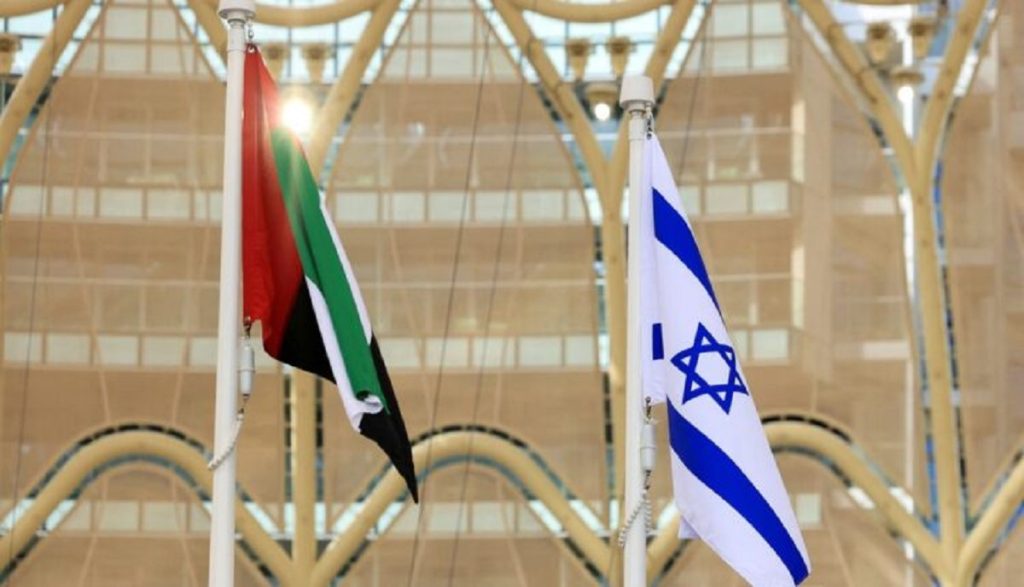
Official Israeli trade data shows that the UAE leads the region in commercial exchange with Israel, underlining the strategic alliance between Abu Dhabi and Tel Aviv.
However, figures also show a 52% drop in Israeli trade with 19 Arab and Muslim nations this past January, compared to the same month in 2024. Trade with Arab countries fell 9%, while trade with non-Arab Muslim countries dropped a staggering 80%.
In 2024, Israel’s trade with Arab and Islamic nations totaled $7.8 billion, down from $10.7 billion the year prior—a 27% decline largely due to Turkey halting trade with Israel in May 2023.

-
UAE: $3.2 billion
-
Turkey: $2.6 billion
-
Egypt: $579 million
-
Jordan: $478 million
-
Azerbaijan: $244 million
-
Indonesia: $111 million
-
Morocco: $110 million
-
Bahrain: $108.5 million
Israel’s total exports to these nations reached $2.555 billion, while imports stood at $5.666 billion, resulting in a $3.1 billion trade deficit. The largest deficits were recorded with:
-
UAE: $2.3 billion
-
Turkey: $1.4 billion
-
Jordan: $260 million
-
Bahrain: $96 million
-
Indonesia: $12 million
Despite boycotts following the Gaza war, Israel is aggressively marketing its goods in Arab and Muslim countries, using tactics such as label fraud, product “rebranding,” and collusion with local importers. This includes disguising Israeli products—especially food and household items—with false country-of-origin labels.
One stark example: Israeli dates infiltrating Arab Ramadan markets under the guise of being “Arab-grown,” with “Made in Israel” labels swapped out for countries like the UAE, Morocco, and Bahrain.
-

-

-

-

-

-