Watan-The Wall Street Journal published a report by Summer Said revealing that U.S. President Donald Trump has demanded that Egypt allow American naval and military ships to pass freely through the Suez Canal, in return for America’s role in defending maritime navigation in the Red Sea and countering the Houthis in Yemen—whose attacks, they claim, are in solidarity with Gaza and have pushed commercial ships out of the region.
The report states that Egypt faces a potential cut in its U.S. aid package, part of broader foreign aid reductions ordered by the Trump administration, adding new tension around the Suez Canal.
Trump is reportedly pressuring Egypt both publicly and privately to “compensate” the U.S. for its military operations aimed at securing the sea routes leading to the canal—an added political burden for a country already facing deep economic troubles and regional instability due to the Gaza war.
These American efforts mirror similar attempts to extract financial gains from foreign policy maneuvers in Ukraine and Gaza. They come weeks after a campaign of U.S. airstrikes against the Houthis in Yemen to stop them from attacking vital shipping lanes. However, Suez Canal authorities say U.S.-flagged ships account for only a small fraction of canal traffic. Analysts believe the cost of Trump’s demand would be relatively modest.
On Sunday, Trump posted on Truth Social:“American ships, both military and commercial, must pass freely through the Panama and Suez Canals! These canals wouldn’t exist without the United States of America.”


Despite Trump’s demands, major shipping companies have rerouted vessels around Africa instead of risking passage through the Bab al-Mandeb Strait due to ongoing Houthi threats.
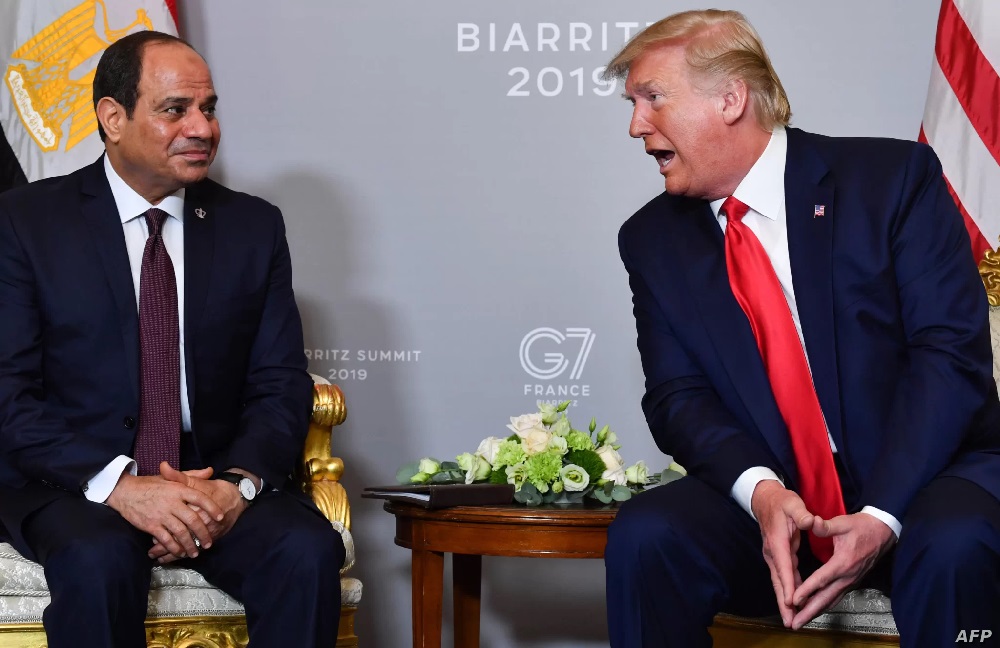
Trump reportedly raised the idea of free passage for American ships during a recent phone call with Egyptian President Abdel Fattah el-Sisi, according to sources familiar with the discussion. In the call, Trump offered U.S. military and intelligence support for operations against the Houthis—framing it as a way to restore canal traffic.
However, el-Sisi objected and stressed that a ceasefire in Gaza is the key to stopping Houthi attacks, those sources said.
National Security Council spokesman James Hewitt commented:“President Trump’s operation to restore freedom of navigation in the Red Sea will directly benefit American workers, consumers, and global partners—including Egypt.”
He added that costs should be broadly shared and that one such way is granting U.S. ships free passage through the canal. Egypt declined comment, but canal revenues are a sensitive issue, as the canal is a major source of foreign currency alongside tourism and remittances.
El-Sisi previously launched a parallel canal expansion costing $8.5 billion. It is viewed as a symbol of Egyptian sovereignty and independence from foreign powers.
Trump’s request for free passage comes amid separate U.S. pressure on Egypt to accept displaced residents from Gaza—part of Trump’s controversial proposal to turn Gaza into a “Middle East Riviera.” Egypt has firmly rejected this idea as a threat to its national security.
The report notes that Egyptian officials visiting Washington this spring were informed of potential significant cuts to U.S. economic and development aid.

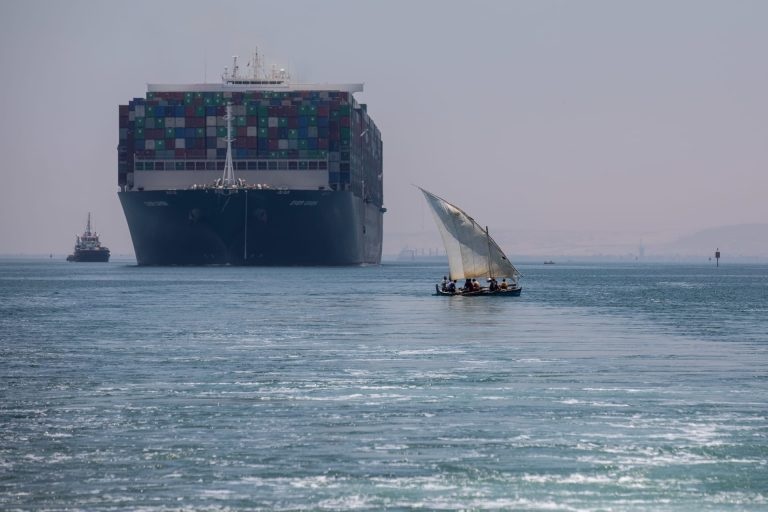
Michael Wahid Hanna, director of the U.S. program at the International Crisis Group and expert on Egyptian security policy, said Trump is “issuing sweeping declarations on sensitive matters for Egypt without a coherent foreign policy or coordination with the Egyptian government.”
As a result, Hanna noted, “Egypt is left to interpret what the statements mean and scramble for a response that protects its interests without provoking Trump.”
Historically, the U.S. played a role in defending the canal during the 1956 Suez Crisis, when Washington forced France, Britain, and Israel to withdraw. That same year, Egyptian President Gamal Abdel Nasser nationalized the canal.
While Trump claims the canal wouldn’t exist without the U.S., it was originally constructed by a French company.
Meanwhile, U.S. Central Command announced it has hit over 800 targets in Yemen since operations began last month.
The Pentagon has also deployed B-2 bombers and aircraft carriers to the Red Sea—a costly mission that has yet to convince commercial ships to resume using Suez-bound routes.
Private Signal chats among senior U.S. officials—exposed by The Atlantic’s editor-in-chief—revealed Trump’s keen interest in securing compensation for the operation. One participant, identified as Trump advisor Stephen Miller, said:“As you’ve heard, the president was clear: green light, but we’ll be clear with Egypt and Europe on what we expect in return.”
He emphasized that the U.S. expects economic benefits in exchange for restoring full navigation in the Red Sea.
-
-
-

-

-

-