Algerian Intelligence Breaks Silence in Historic Public Event
For the first time, Algeria’s intelligence agency holds a public event, signaling a shift in strategy to combat disinformation and reinforce national security.
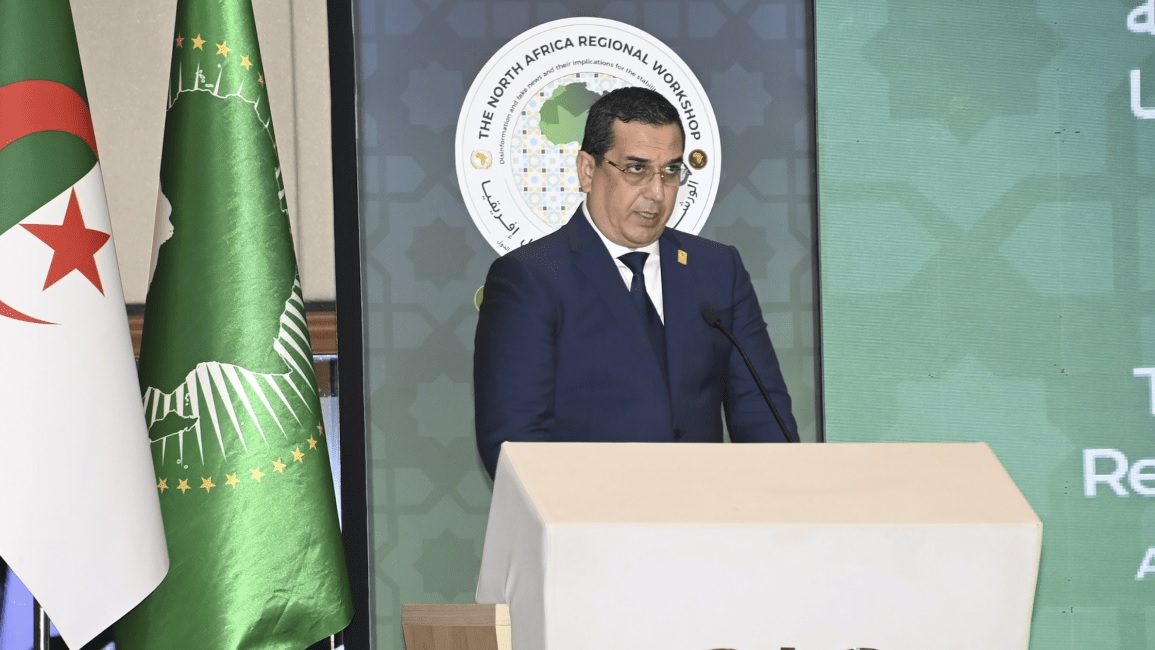
Watan-On Thursday, Algeria witnessed an unprecedented event in its security history as the intelligence agency organized, for the first time, a public event open to media coverage. The event was attended by delegations from African intelligence agencies and featured the first-ever official public statement by Algeria’s Intelligence Director, Brigadier General Rachid Fethi Moussaoui.
The event, held in the Algerian capital, took place during a workshop organized by the North Africa Office of the Committee of Intelligence and Security Services of Africa (CISSA), under the title: “Disinformation and Fake News and Their Impact on the Security and Stability of States.” It marked a significant shift in the long-standing policy of secrecy upheld by Algeria’s most prominent security body, which for decades remained out of the spotlight and away from media attention.
Moussaoui: Algeria Faces Existential Battle Against Disinformation
During the regional workshop, which included leaders from African intelligence and security services, Brigadier General Moussaoui—Director General of Documentation and External Security (the intelligence agency)—stated that Algeria is waging an existential battle against disinformation.
He emphasized that “the Algerian army is highly vigilant against all looming threats, especially media wars and cyberattacks aimed at destabilizing Algeria and eroding trust between citizens and state institutions.”
He highlighted the significant efforts of Algeria’s security services in countering misinformation, which he said has helped fortify national unity and raise public awareness to resist malicious campaigns targeting Algeria’s stability and national cohesion.
As head of the North Africa region within CISSA, Moussaoui stressed that “the fight against media disinformation is not a choice but a duty, imposed by our historic responsibility to protect our nations and peoples from attempts to sow doubt and division.” He added that “strengthening security and stability across the African region requires a joint will to confront challenges and threats to our national and regional security, foremost among them being the phenomenon of media disinformation and fake news.” According to him, such phenomena have become tools exploited by hostile entities to sow discord, incite unrest, and undermine public trust in state institutions.
“This phenomenon—exacerbated by rapid developments in technology, media, and communication—is no longer a simple media issue,” Moussaoui said. “Its dimensions have crossed all boundaries and now pose a direct threat to security and stability. It is used to influence societies, erode trust between peoples and governments, and manipulate public opinion to serve hidden agendas.”
Moussaoui: Media Now as Powerful as War in Undermining Stability
Moussaoui also warned of the dangerous role played by both traditional and modern media in destabilizing countries. “They have become equally as powerful as wars in their ability to influence public opinion and shape collective consciousness, especially with the rise of digital media that has overturned conventional concepts,” he explained. “The danger of modern media lies in the ease with which information is circulated without oversight or verification, leading to the spread of false news used to destabilize communities and states.”
He noted that “one of the main factors behind the spread of this phenomenon is the massive influx of users with limited education and awareness into social media platforms. Many of them lack sufficient understanding of the risks posed by fake news or the legal responsibilities that come with sharing misleading information.” This, according to him, requires everyone to verify sources before sharing or reposting news, as the resulting harm affects not only individuals but also institutions and the very stability of the state and its national security.
He further cautioned that North Africa is not immune to such orchestrated campaigns aimed at sowing chaos and weakening stability. He emphasized the need to adopt a unified strategy to combat media disinformation and called for “measures to enhance coordination and cooperation between our countries’ intelligence and security services to ensure the monitoring and analysis of false information and limit its harmful effects.”
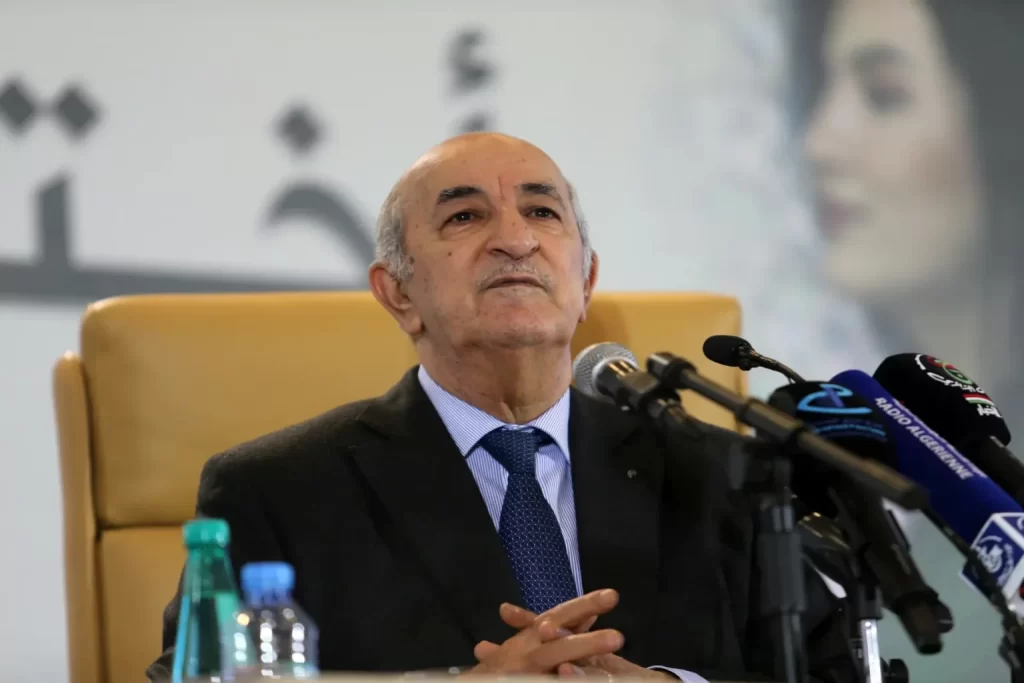
Algerian Spy Chief Urges Media Alliances Against Disinformation
Additionally, Moussaoui advocated for partnerships with media outlets and social media platforms to establish mechanisms for verifying news and combating disinformation. He called for the development of awareness programs to educate citizens on distinguishing between accurate and misleading information, protecting society from media exploitation, and strengthening legal and regulatory frameworks to counter the spread of fake news that threatens national security and social stability.
This event marks the first time that Algeria’s intelligence chief has spoken publicly at a regional forum in front of the press—an indication of a gradual shift from operating in the shadows to participating in open events, albeit on a limited scale. For decades, Algeria’s intelligence directors remained out of the public eye, even up to 2015, when state television would avoid showing images or footage of the intelligence chief attending National Security Council meetings or official presidential events.
It is also the first time that Algeria’s intelligence service has organized a public event bearing the agency’s name as a formal host—another sign of increasing openness that could significantly reshape public perceptions of the agency.