

Watan-After yet another hard day in Gaza, it’s time to state a few truths — including the uncomfortable admission that Prime Minister Netanyahu may be right about some things, while still steering Israel into an unsolvable crisis.
The idea that Hamas must not govern Gaza is a necessity. Hamas started this catastrophe with mass killings and remains committed to prolonging it. It is a genocidal organization. That hasn’t changed — and won’t. On principle, Hamas has signaled a willingness to relinquish power, but not seriously. Even moderate Arab states like Egypt say Hamas must surrender all its weapons — “every last Kalashnikov,” as they put it.
The issue is this: continuing the war right now doesn’t pressure Hamas to give up control. On the contrary, it elevates them as symbols of resistance and glorifies their role. And driving Gaza’s population into Israeli-run tent camps will not help matters. This is a complex strategic problem that demands long-term planning, cunning, and foresight. The government, of course, does none of this. It has no idea how to achieve its goals — especially given the army’s condition after nearly two years of war.
Lapid and Bennett argue: let’s minimize losses, reach a comprehensive deal, recover the hostages, and then weaken Hamas over time. The coalition answers: you won’t weaken them — you’ll just buy calm again, and temporary calm always becomes permanent. That’s a valid argument. But there’s another layer here: we are stuck between two options — a deal where Hamas claims to step aside but keeps its power behind the scenes, and a real deal in which Hamas disarms completely. According to Netanyahu, this is what we’re fighting for.

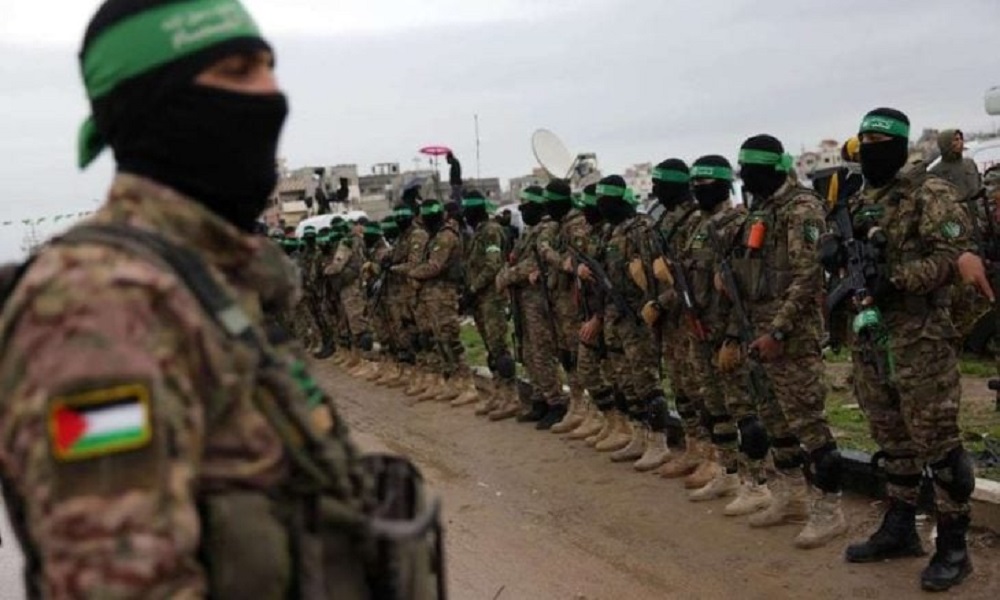
But who believes Hamas — the strongest force in Palestinian society (to both their tragedy and ours) — will truly surrender? Who will oversee disarmament? If not the Israeli army, it won’t happen. So what is Netanyahu talking about? Is he planning to “buy a used car” from Hamas?
For the IDF to ensure Hamas doesn’t govern Gaza, a military regime would be needed. That means seizing the entire Strip — risking the lives of the remaining hostages — and still not defeating Hamas.
Such military rule would require real control over a completely devastated region, plus responsibility for the welfare, health, and education of two million Palestinians, while Hamas continues its terror from the shadows.
Let’s summarize: the gap is between an obviously flawed deal where Hamas steps back but retains influence — and a slightly better deception involving limited disarmament and a more neutral façade. Or, a military regime. In all these cases, Hamas survives as a terrorist structure: either as a political-military force, or as a guerrilla insurgency.
It’s an incredibly difficult problem. That’s exactly why, from day one, many in the world (myself included) asked: what is the “day after” plan? That is the question. There is no victory without such a plan. The truth is, the government had no plan — and now we are paying the price. Otherwise, we wouldn’t be talking about refugee “camps” in Rafah.
At the same time, there are broader concerns — especially for most Israelis. The cost of fallen soldiers, shattered families, long-term trauma. More and more Israelis now recognize the tragedy of civilian deaths in Gaza. As I’ve written countless times: there are innocents in Gaza — civilians, children. Every child is innocent.
Even if the humanitarian disaster doesn’t move you emotionally, think strategically: the death toll in Gaza impacts not just Palestinian society, but Israeli society as well. Some argue this builds deterrence — that Gazans won’t dare repeat October 7. I think about pain, grief, rage — and generational reckoning.
If Gaza remains — and it will — who will the anger be directed toward? Us. Our children. Right or wrong, it doesn’t matter. That is reality. Recognizing it is rational — like Moshe Dayan’s eulogy for Ro’i Rotberg, but a thousand times more.

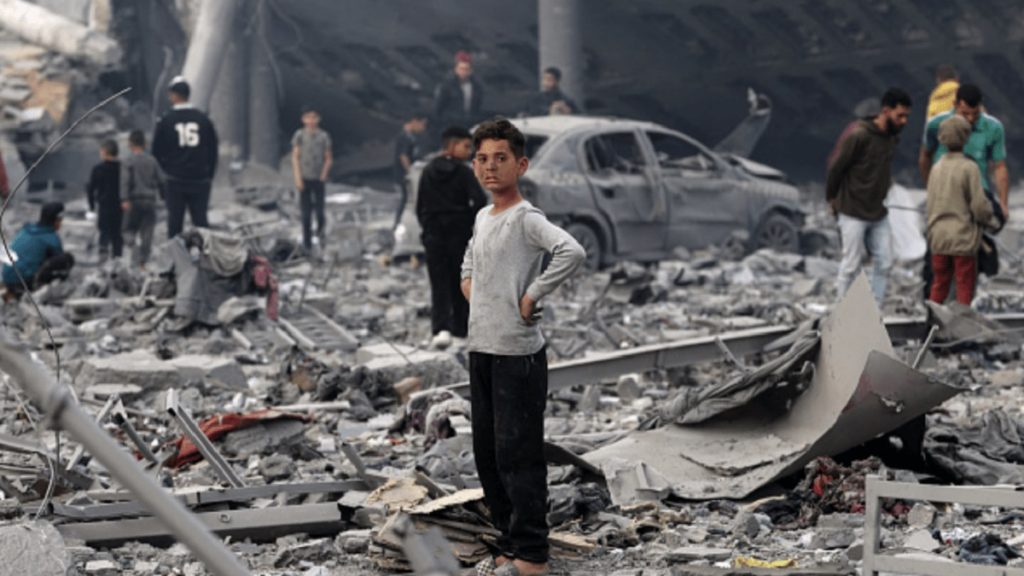
I haven’t forgotten what Hamas did on October 7. But Israeli thinking has become so intoxicated with power, so immature, that we’re defeating ourselves. “Victory” is not an abstract concept — unless your enemy chooses a different path entirely. Unless they stop trying — because they don’t want to fight anymore.
Germany was defeated. Japan too. They lost the will to fight and wanted to join the victorious global order. That is victory.
Some say that was only due to the massive destruction of Germany and Japan. Maybe. But Gaza is already destroyed — bombed, flattened. It hasn’t been defeated. For two reasons: because Israel is fighting jihadists — whose logic is different, who are willing to sacrifice everything, including themselves. And because defeating such an enemy requires not just a gun, but a strategy — including the readiness to extend a hand.
Israel tried to defeat Hamas without connecting to the Palestinian people. It took the government a year and a half to grasp what every occupier in history — including Israel in 1967 — learned immediately: you have to win over the people. Otherwise… what?
The coalition’s ideology was: all Gazans are guilty. No food, no Palestinian Authority, no divide-and-rule. No wonder we arrived where we did.
So what now? Israel has run out of good options — except perhaps a temporary deal. Netanyahu likely understands this. But again — without a long-term, organized, and yes, humanitarian strategy — Israel will crash back into the wall of reality. Deal or no deal.
-

-
-
-

-

-

