

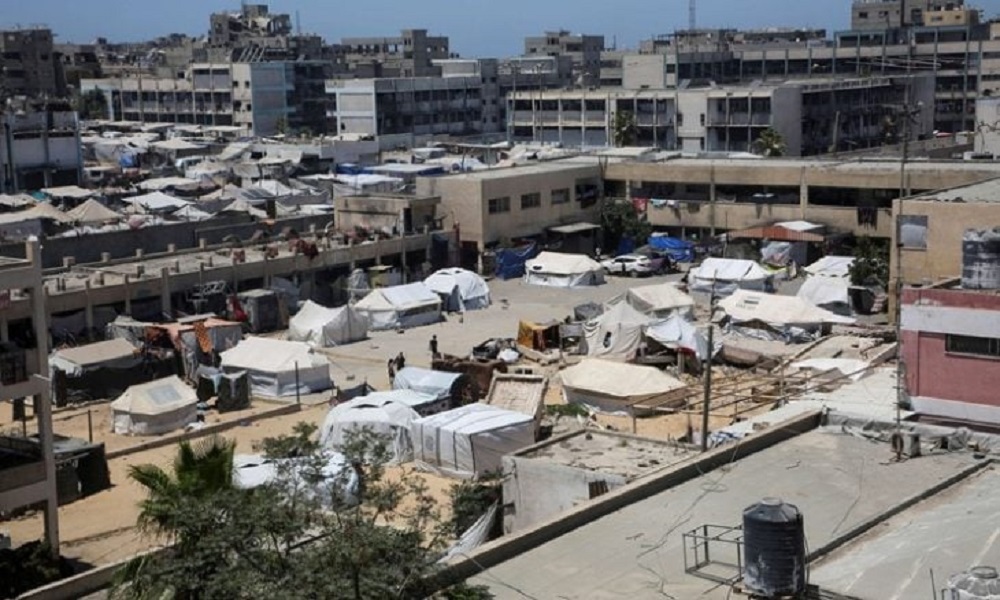
Watan-Israel is planning to establish a so-called “humanitarian tent city” on the ruins of destroyed Rafah, as revealed a week ago by its Minister of National Security, Israel Katz. Katz, who has long invoked the tragedy that befell his family during World War II under Nazi rule to garner global sympathy—often walking foreign diplomats through the halls of the Yad Vashem Holocaust Museum—has not hesitated to propose what critics call a Nazi-style ghetto, now repackaged in the language of “humanitarianism.”
According to the plan, hundreds of thousands of Palestinians would be forcibly gathered into this compound, as a prelude to pushing them into so-called “voluntary migration.”
A $4 Billion Ghetto of Tents
The projected cost of this ghetto, according to Israeli officials cited Sunday by Yedioth Ahronoth, ranges between 10 to 15 billion shekels (roughly $2.7 to $4 billion). In its initial stages, Israel would shoulder the entire cost. The original plan envisions a vast prison-like complex of densely packed tents, into which around half a million Palestinians would be forced. Anyone agreeing to move into the area would be barred from returning north, especially to regions beyond the designated ghetto perimeter.

Criticism from Security and Human Rights Groups
The plan has faced widespread criticism, especially from within Israel’s own security establishment, which views it as a form of military governance that would endanger Israeli soldiers’ lives. Human rights organizations, meanwhile, have denounced the plan as a de facto policy of forced displacement, especially given that many of the targeted civilians have already seen their homes obliterated.
Last week, Israel’s security cabinet (the “kabinett”) held multiple sessions to discuss the plan. During these meetings, IDF Chief of Staff Herzi Halevi reportedly clashed with Prime Minister Benjamin Netanyahu and Finance Minister Bezalel Smotrich, warning that laying the groundwork for such a plan would undermine the military’s core objectives in Gaza, including the defeat of Hamas and the rescue of hostages.
Despite these warnings, Netanyahu instructed the army to begin preparing plans for the tent city within days.
Preliminary Budget Approved Despite Doubts
Over the weekend, a meeting was held with Smotrich, who approved the initial budget allocations for the project. Officials estimated that total costs would ultimately range between 10 and 15 billion shekels, or even more.
The high cost, officials noted, stems from the design of the ghetto as a trap meant to lure starving and destitute Palestinians, who have been deprived of all basic means of survival, into the camp. There, they would be offered food, decent conditions, long-term accommodation tents, medical assistance, hospitals, and possibly access to education, according to Yedioth Ahronoth.
Hopes for Gulf Funding Unlikely
Sources within the security cabinet noted that the long-term idea is for Israel to recoup the expenses by seeking financial support from Arab states such as Saudi Arabia and the United Arab Emirates, under the framework of Gaza reconstruction once the war ends.
However, the same sources expressed deep skepticism, stating:“Few believe this city will actually be built.”
Official Deflection and Budget Politics
In response, the Finance Ministry issued a statement on Sunday dismissing the reports as an attempt to sabotage the Prime Minister’s humanitarian separation plan between Hamas and civilians, by inflating the projected budgets to intimidate and deter implementation.

The statement added:“Hundreds of millions have already been approved to prepare a safe zone for civilians. The war has already cost hundreds of billions, largely due to the mismanagement of aid supplies that have strengthened Hamas.”
The ministry asserted that:“Proper care for civilians and the strangling of Hamas is the best path to victory.”
It concluded with a warning:“If anyone is considering budgetary resistance, they should back off in advance.”
-

-
-

-

-

-

