
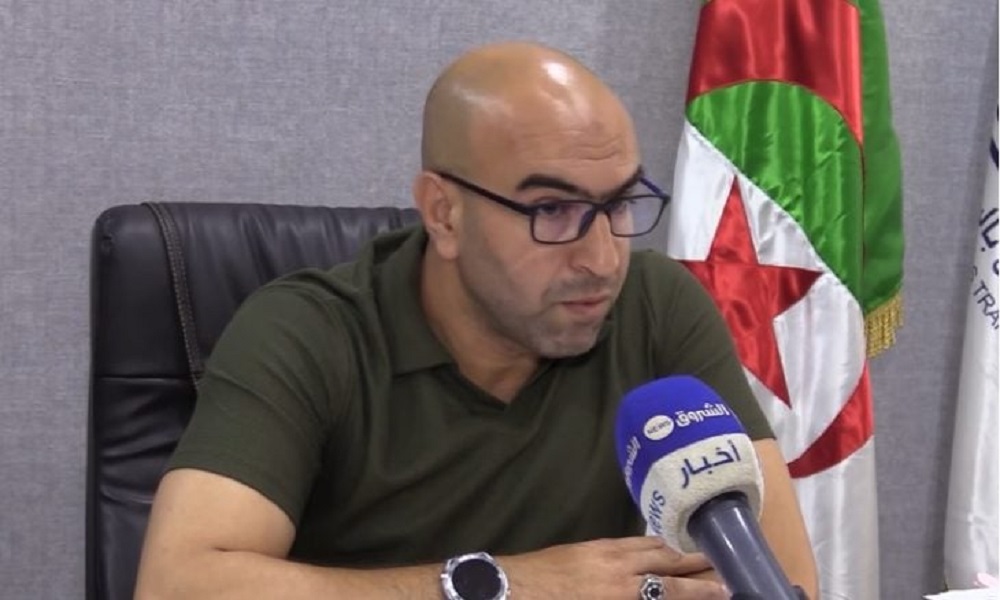
Watan-The detention of union leader Lounis Saidi, Secretary General of the National Federation of Railway Workers, has stirred a wave of political and unionist controversy in Algeria after he was placed in pre-trial detention on July 5, coinciding with Independence Day.
Saidi was arrested after signing a strike notice sent to the Ministry of Transport, announcing the federation’s plan to launch an open-ended strike starting July 7. The strike was aimed at demanding long-standing professional and social rights—such as the implementation of wage increases approved in 2023, improved working conditions, and ending what the union described as “repeated legal violations”, including interference in union affairs, obstruction of election processes, and lack of transparency in hiring and social benefits.
In response, the National Railway Transport Company (SNTF) issued a statement on June 26 asserting that the strike notice was illegal, citing the absence of a conciliation report or evidence of failed mediation with the labor inspectorate, as required by Algerian labor law.
The company went further by questioning the legitimacy of the signatories, claiming the notice did not represent the majority opinion within the union’s federal office and reflected a “unilateral decision.” The statement emphasized the company’s openness to dialogue, particularly concerning the renewal of the collective agreement, and praised the workers for ensuring continued public service operations.

However, the escalation of the conflict into the jailing of a unionist has provoked widespread condemnation, especially amid ongoing concerns over increasing restrictions on union freedoms in recent months.
The Workers’ Party, led by Louisa Hanoune, condemned Saidi’s arrest as a blatant violation of union immunity, which protects trade unionists from punitive measures while performing their duties. The party warned that this move sets a dangerous precedent, especially after attempts to “legitimize” the arrest by removing Saidi from his position, which the party sees as part of a broader strategy to suppress union activity and criminalize strikes.
The party linked the incident to new union laws adopted in 2023, which, it argues, restrict union activities and pave the way for arbitrary actions against unionists. It called for Saidi’s immediate and unconditional release and urged the government to respect union freedoms and end the systematic criminalization of labor activism.
Habib Brahimi, media officer of the Jil Jadid (New Generation) Party, also condemned the arrest, describing it as part of a pattern of silencing dissenters. In a Facebook post, he questioned the credibility of the government’s discourse on political and social dialogue, linking Saidi’s case to the harassment of well-known unionist Masoud Boudiba, and describing the trend as part of an ongoing “republican breakdown.”
Political analyst Najeeb Belhimer noted that the media blackout surrounding Saidi’s arrest is further proof of the absence of real public debate in Algeria. He questioned why such a significant incident received no coverage in national media, despite its gravity. He pointed out that the union issued a statement the day after the arrest, withdrawing the strike notice and attributing it solely to Saidi—interpreted by many as a move to delegitimize the strike and justify removing him from office.

This case is not isolated. In recent months, several prominent unionists have faced legal prosecution.
-
Masoud Boudiba, national coordinator of the CNAPEST teachers’ union, and
-
Boubaker Habit, national secretary of the same union, have been under judicial supervision for six months, after participating in a protest outside the Directorate of Education in M’Sila Province, demanding backdated allowances and bonus adjustments.
They are required to report to the police twice a week, a measure activists say constitutes undue pressure on union freedoms.
Additionally, Yamina Meghraoui, president of the Confederation of Independent Trade Unions, was recently referred to the Cybercrime Court after a year-and-a-half-long investigation. She faces charges of “spreading false news that could harm public security,” under Article 196 bis of the penal code, due to posts and statements related to union activity.
These developments unfold amid growing controversy over Algeria’s new strike law, which came into effect in 2023 and is widely considered one of the most restrictive in the region. The law imposes a lengthy and complex process before any strike can be declared—including prior notification to the labor inspectorate, conciliation procedures, and exhausting all avenues of mediation. It also mandates internal union votes with strict thresholds on participation and approval.
Independent unions argue that these conditions effectively block the right to strike, even though Article 69 of the Algerian Constitution explicitly guarantees it “within the bounds of the law.”
-
-
-
-
-

-

