
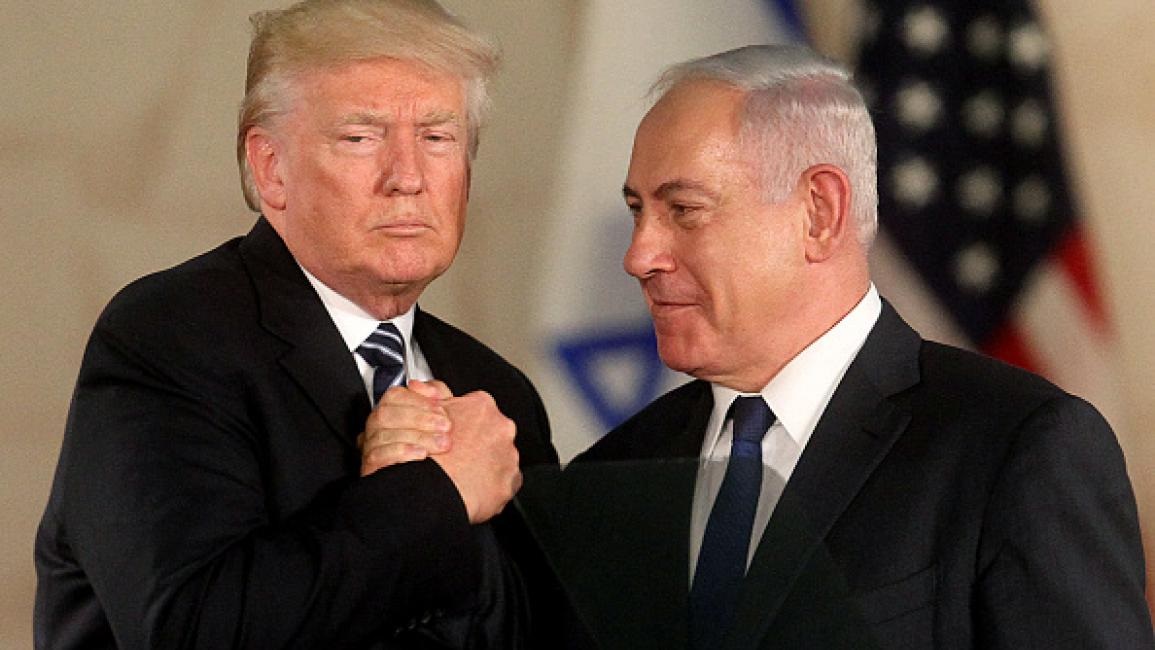
Watan-U.S. President Donald Trump said on Sunday that there is a good chance of reaching a deal this week with the Palestinian resistance movement Hamas for a “hostage release” and ceasefire in the Gaza Strip.
Speaking to reporters before leaving Washington, Trump stated that such an agreement could result in the release of “a considerable number of hostages.”
Trump is expected to meet Israeli Prime Minister Benjamin Netanyahu on Monday at the White House.
According to the news site Axios, Trump is aiming to reach a deal with Netanyahu during their White House meeting that would outline a path to ending the ongoing war in Gaza. The site quoted U.S. officials as saying that Trump intends to capitalize on the momentum created by the recent ceasefire between Israel and Iran, pushing for a potential political breakthrough in Gaza after months of stalled negotiations.
The current proposal reportedly includes a 60-day ceasefire, during which there would be an exchange involving the release of 10 living Israeli hostages and the return of the remains of 18 others. Trump hopes this deal will be a first step toward a broader resolution, although Netanyahu has not yet expressed willingness to sign a final agreement to end the war.


Meanwhile, indirect talks were held Sunday in Doha between Israeli and Hamas negotiators, under Qatari and Egyptian mediation, aiming to overcome remaining obstacles in the negotiation process. Netanyahu, before departing Israel, said he hopes his meeting with Trump will help finalize the deal. Trump also told reporters he believes an agreement could be reached within the week.
However, according to Axios, the greatest challenge lies after the temporary ceasefire, when negotiations would shift to discussing Gaza’s postwar governance. The United States is pushing Israel to agree on who would govern the Strip in the absence of Hamas, and how to guarantee that Hamas does not return.
Trump and Netanyahu are scheduled to hold a working dinner Monday evening at the White House, where the “day after” file is expected to top the agenda. Preliminary discussions on this issue began last week between Netanyahu’s adviser Ron Dermer and U.S. envoy Steve Whitkoff.
A U.S. official said Trump wants to hear Netanyahu’s vision for Gaza’s future and reach a mutual understanding:
“We want an agreement on what comes next — at least a general framework for the day after.”
In the same context, Israel has softened its stance on the necessity of exiling Hamas leaders as a precondition to ending the war. It is now reportedly willing to settle for symbolic removal of a small number of senior military figures.
An Israeli official remarked that so few leaders remain that “a small boat would be enough to exile them.” Israel continues to demand the dismantling of Hamas’s military wing, but is reportedly willing to offer amnesty to many fighters who surrender their weapons.
Yet, the major unresolved issue remains who will govern Gaza after the war, according to Axios. Both Israel and the Trump administration reject a “Hezbollah model” for Gaza — where Hamas remains a shadow military power under a civilian government. Netanyahu reiterated before flying to Washington that his goal is to “eliminate Hamas’s military and governmental capabilities,” adding, “Hamas will not be there.”
Netanyahu also opposes Palestinian Authority control over Gaza. Instead, he proposes that Arab states jointly administer the territory alongside local Palestinian figures unaffiliated with either Hamas or the PA. However, Egypt, Jordan, the UAE, and Saudi Arabia have rejected this idea, insisting on a role for the PA and political guarantees for Palestinians in any postwar plan.

European and Arab states are pushing to link Gaza’s “day after” plan to a two-state solution, but Netanyahu’s government firmly opposes this, complicating international efforts to form a comprehensive political vision for the next phase.
-

-

-

-

-

-

