
Trump Hesitates on Iran Strike Over Doubts About Bunker-Buster Bomb’s Power
U.S. President Demands Proof GBU-57 Can Destroy Iran’s Deep Underground Fordow Site Before Approving Attack.
Watan-The Guardian published an exclusive report by its Washington correspondent Hugo Lowell, revealing that U.S. President Donald Trump’s hesitation to strike Iran stems from his doubts about the effectiveness of the bunker-buster bomb planned for use in the operation.
According to sources familiar with the deliberations, Trump told U.S. defense officials that the U.S. would not attack Iran unless there were guarantees that the Fordow uranium enrichment facility—buried deep inside a mountain—could be destroyed.


Officials informed Trump that the GBU-57 bomb, weighing 30,000 pounds (13.6 tons), would be capable of destroying the site, but he remained unconvinced and refrained from authorizing the strike. Trump is reportedly hoping that the mere threat of war will pressure Iran into accepting his terms.
The report notes that the effectiveness of the GBU-57 has been a point of contention within the Pentagon since Trump’s second term began. Two officials familiar with the discussions said that only a tactical nuclear weapon would guarantee the destruction of Fordow, which is buried deep in the mountains.
However, they clarified that Trump has not considered using nuclear weapons, and such a scenario was never discussed during a White House Situation Room meeting attended by Defense Secretary Pete Hegseth and Joint Chiefs Chair Gen. Dan Kane.
Briefed officials were told that even deploying a large number of GBU-57 bombs would likely fail to reach the necessary depth to collapse the tunnels completely and bury the facility. Israeli intelligence estimates Fordow lies 90 meters (approximately 300 feet) underground.
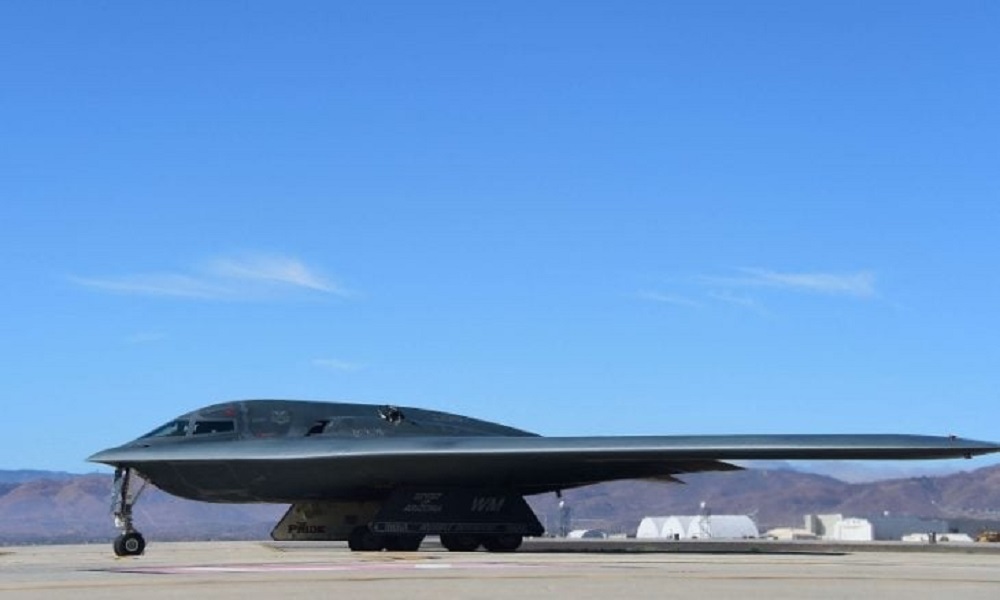
The briefing indicated that total destruction of Fordow would require “softening” the earth with conventional bombs, followed by a B-2 stealth bomber delivering a nuclear bomb — a scenario Trump is unwilling to consider at this time.
The U.S. Defense Threat Reduction Agency, responsible for reviewing the GBU-57’s capabilities, provided the assessments. The bomb has been evaluated specifically for use against fortified underground facilities, highlighting the extreme complexity and challenge of such a mission.
While deploying the GBU-57 may set Iran’s nuclear efforts back by years, it likely would not destroy the program entirely. Halting Fordow’s operations — militarily or diplomatically — is seen as essential to preventing Iran from developing nuclear weapons. The International Atomic Energy Agency (IAEA) recently confirmed uranium enrichment at Fordow has reached 83.7%, close to the 90% threshold needed for weapons-grade material.
Experts emphasized that any attempt to eliminate Fordow would require direct U.S. involvement, as Israel lacks both the munitions and aircraft capable of penetrating such depths. Two officials said the main challenge lies in the nature of the facility — built deep inside a mountain — and that the GBU-57 has never been tested in a similar scenario.
Retired General Randy Manner, former deputy director of the Defense Threat Reduction Agency, stated: “This won’t be a one-and-done strike.” He added that Fordow could be rebuilt, with the program delayed only six months to a year.
The GBU-57, often called the “Massive Ordnance Penetrator,” is designed for bunker destruction but can only be deployed by a B-2 stealth bomber. It requires a strong GPS signal to guide it, and Israeli sources claim they’ve achieved air superiority over Iran. However, to ensure the strike’s success, electronic jamming of GPS defenses must occur beforehand.
Iran built Fordow underground to shield it from airstrikes. In contrast, Israel bombed an above-ground Iraqi nuclear site in 1981. In recent years, Israel prepared multiple plans to strike Fordow without U.S. help — including one scenario where special forces would infiltrate the facility by helicopter and destroy it from the inside, a plan reportedly rejected by Trump.