Netanyahu Declares War on Iran: “Rising Lion” Operation Targets Tehran’s Nuclear Program
Israel Launches Preemptive Strikes Against Iran, Framing Attacks as Existential Defense While Pursuing Political and Strategic Objectives.
Watan News
Israeli PM Netanyahu announces "Rising Lion" operation to prevent Iran from acquiring nuclear weapons.
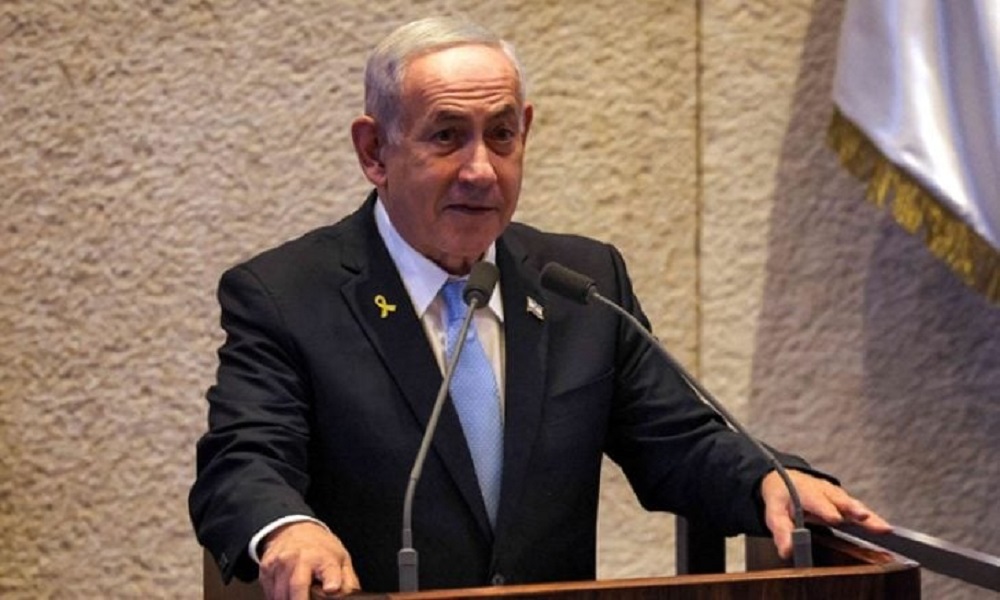
Watan-Israeli Prime Minister Benjamin Netanyahu stated that the attack, named with biblical symbolism as the “Rising Lion” operation, aims to prevent Iran from obtaining a nuclear bomb. He claimed that Israel had no option left but to act in defense of its citizens, threatening further strikes.
In a televised address, Netanyahu justified the dangerous war against Iran by claiming that recent intelligence shows Iran approaching a “point of no return.” He pointed to Iran’s production of enriched uranium and the development of underground enrichment capabilities that could allow Tehran to attain military-grade nuclear fuel in the near future.
He added that in recent years—especially since the outbreak of war—there has been noticeable progress in Iran’s efforts to develop weapons capable of carrying nuclear warheads. Netanyahu claimed that the regime had worked for decades to acquire a nuclear weapon and that all diplomatic efforts by the international community had failed to deter it.
Netanyahu’s Hidden Agenda: Regime Change, Personal Redemption, and Biblical Branding
In a bid to further demonize Iran, Netanyahu revealed—for the first time, he said—that the Iranian regime had been secretly pushing a technological advancement plan in all sectors of nuclear weapons development. Without presenting any concrete evidence, he alleged that Iranian nuclear scientists had covertly developed components necessary for a nuclear-capable air force. He asserted that the past few months had seen an acceleration of this plan, bringing Iran significantly closer to a functional nuclear system.
Netanyahu Syria negotiations
However, beyond the declared goal of halting Iran’s nuclear ambitions, there appear to be undeclared objectives behind Israel’s direct military action, including attempts to destabilize the Iranian regime and provoke popular uprising. The pattern of Israeli airstrikes suggests an intent to deliver a crippling blow to Iran’s leadership, potentially inciting the Iranian public to revolt and overthrow the ruling system—perhaps even steering Iran away from hostility and back to the era of alliance and cooperation that existed before the 1979 Islamic Revolution.
Netanyahu is also pursuing personal political gain, seeking symbolic victory to salvage his image after the disgrace of October 7. His speech hinted at this, as he framed himself as Israel’s “security savior,” “the Israeli Churchill,” still reeling from the failures of the Gaza war. The Torah-inspired name “Rising Lion” serves to imbue his military campaign with existential and historical weight, stressing the operation’s supposed importance for the future of Jewish children and grandchildren in Israel.
Shock and Setback: Israel’s Surprise Strikes Expose Iranian Vulnerabilities and Strategic Missteps
The initial success of the strikes was made possible by disinformation and deception reportedly coordinated with U.S. President Donald Trump in recent days. The operation involved intense planning, targeting key military sites, leadership hubs, and causing chaos and paralysis within Iran. Israeli forces capitalized on Iran’s vulnerabilities, achieving surprise and psychological shock.
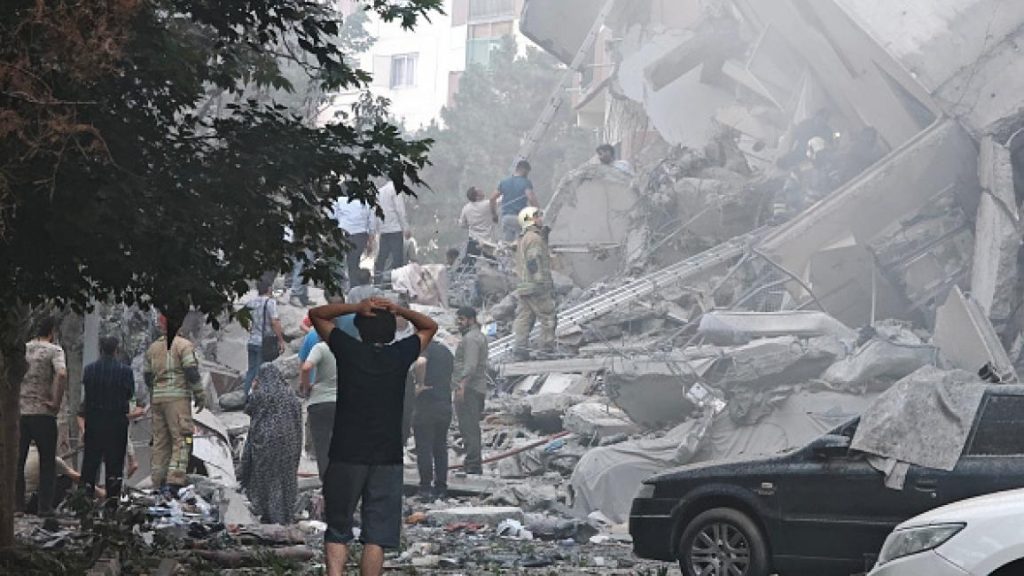
Despite frequent threats of retaliation from Iran and mounting signals in recent days, Tehran remained passive, issuing only empty threats of massive response if attacked. Iran’s failures included lack of security precautions and the continued presence of scientists and military leaders in known locations—making them easy targets. The strikes resulted in painful losses and humiliation for Iran, with images of flames, destruction, and the assassination of senior Iranian figures inside their own territory.
Many are now questioning why Iran did not learn from Iraq’s experience when Israel destroyed the Osirak nuclear reactor near Baghdad in 1981 with just 8 planes. Today’s assault involved over 200 jets, each requiring multiple refueling stops to cover the 1,500 km journey over roughly two and a half hours—jets that could even be seen by the naked eye as they flew through Jordanian and Syrian airspace.
Destruction in Nobonyad Square following the Israeli bombing, Tehran – June 13, 2025
While Iran had dispersed its nuclear sites across various underground locations to avoid a similar fate, it appears to have underestimated Israeli threats, which were backed by indirect U.S. support. Iran also seems to have failed to learn from past operations, such as the assassinations of Ismail Haniyeh in Tehran or Hezbollah’s Hassan Nasrallah in Lebanon, and from the general tactics of wars based on deception and surprise.
Despite the clear setback for Iran in June 2025, which some have dubbed “Iran’s October 7,” the situation is still evolving. Iran retains multiple options, and the test now lies in its ability to safeguard the crown jewel of its strategic vision—its nuclear program—and to respond in a way that restores its dignity and deterrence power beyond symbolic attacks like those launched last October.