U.S. Veto Blocks Gaza Aid Resolution Despite 14-1 Global Support
Washington vetoes UN Security Council resolution calling for ceasefire and unrestricted humanitarian access to Gaza, drawing global rebuke.
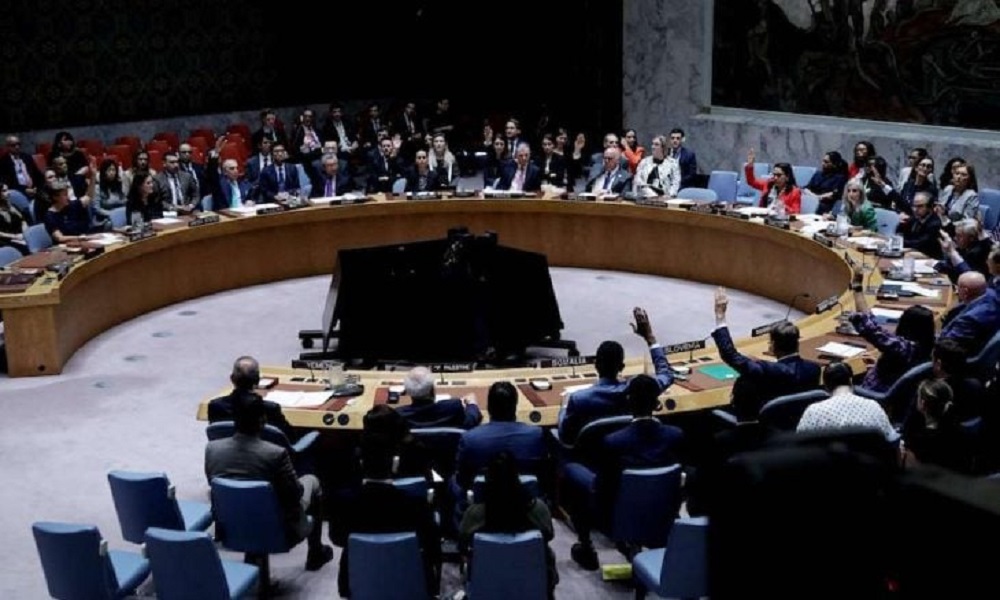
Watan-The United States vetoed a draft resolution on Gaza submitted by the ten elected members of the UN Security Council, using its veto power through its representative Dorothy Shea—despite the draft receiving 14 votes in favor.
The resolution called for the immediate and unconditional lifting of all restrictions on the delivery of humanitarian aid to the Gaza Strip. It also urged a ceasefire, the release of all hostages without preconditions, and unhindered aid access.

Slovenian Ambassador Samuel Žbogar, coordinator for the ten elected states, spoke before the vote, stressing that the resolution had been thoroughly negotiated with all members and was balanced in content.
Following him, Shea justified the U.S. veto by stating the draft “fails to condemn Hamas or demand it disarm and leave Gaza.” She added that the Council had yet to designate Hamas as a terrorist group, insisting Israel had a right to defend itself and could not feel secure as long as Hamas remained in Gaza and vowed to repeat the October 7 attacks.
She also mentioned that President Donald Trump’s administration is currently working on a ceasefire agreement with Qatar.
Ben Jamaa (Algeria): “Silence Does Not Protect the Dead”
In an emotional address, Algerian Ambassador Ammar Ben Jamaa declared:
“Silence does not protect the dead, hold the dying, or confront injustice.”
He added:”We must speak not for mere posturing, but for memory, morality, and the human spirit.”
Ben Jamaa emphasized the resolution, even in its failure, reflects the urgent need to revive multilateralism, describing the elected members as “the true moral compass of the world.”
He added:“This resolution was not the voice of a few, but a collective global will—North, South, East, and West.”
Ben Jamaa accused Israel of fearing no justice because it is always shielded, adding:
“The victims are buried nameless, headline-less, and unaccounted for. No justice is sought. None is expected.”
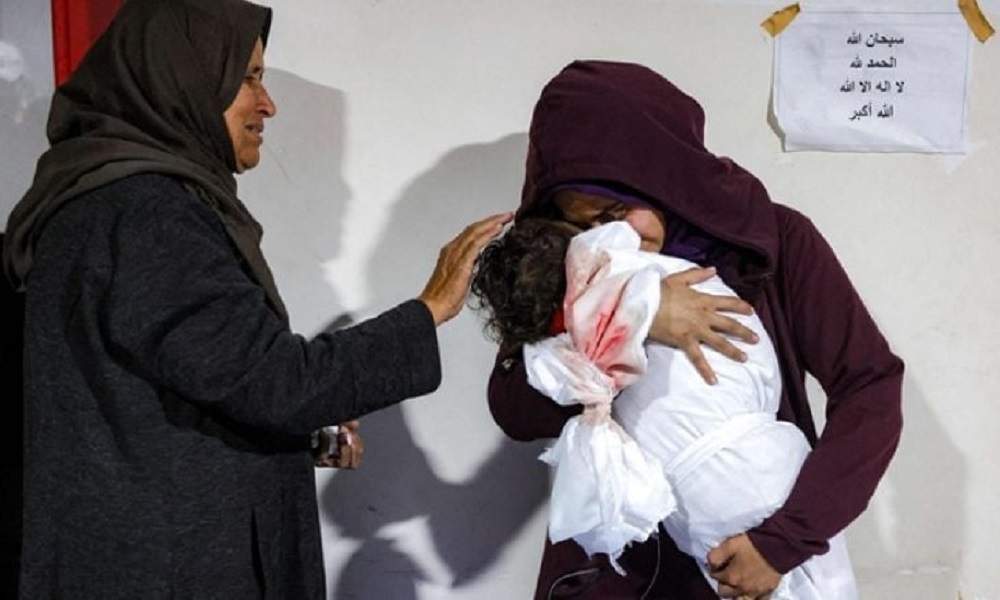
“So that killing children does not become a hobby, this Council must act to enforce a ceasefire. So that hunger isn’t legitimized as a weapon, this Council must act. So future generations do not grow up despising international law, this Council must act.”
He concluded:“Algeria will never abandon Palestine. We will return to this Council again and again… for the children, the women, the starving, for dignity. We are not tired. We are not giving up… We will return. And soon.”
Žbogar (Slovenia): “All That’s Left Is Ashes and Grief”
Slovenian Ambassador Samuel Žbogar explained his country’s support for the resolution came after an increasing number of UN briefings filled with sorrow and despair.
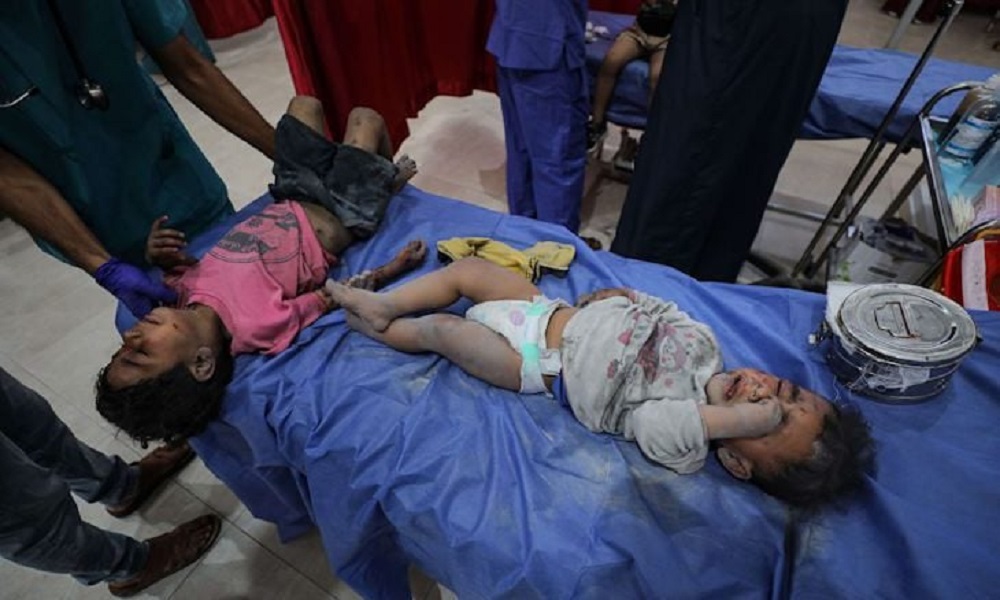
“All that’s left is ashes and grief.”
He said the draft was in response to global humanitarian pleas and aimed solely at building consensus on aid access:
“Starving civilians is inhumane and cannot be justified by any military objective.”
He concluded:“Fourteen votes carry a powerful message: Enough civilian suffering. Enough using food as a weapon. Enough, enough, enough. We tried—and we will keep trying.”
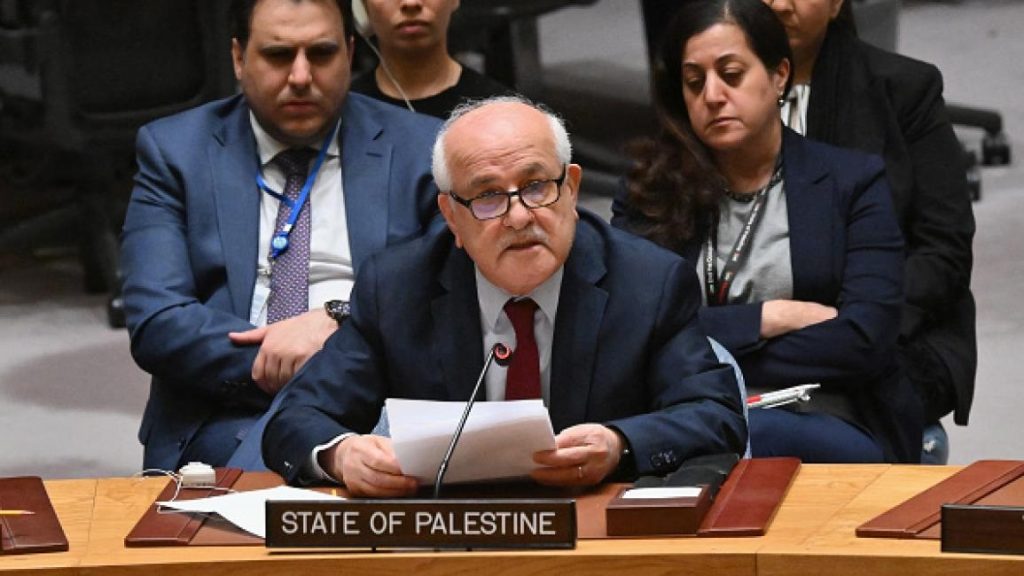
Riyad Mansour (Palestine): “We’re Going to the General Assembly”
Palestinian Ambassador Riyad Mansour stated the vote was a clear message from the majority of the world against massacres and starvation.
He stressed that Palestinians would not remain passive:
“We will soon go to the General Assembly to pass a similar resolution.”
Mansour accused Israel of continuing atrocities and breaking international law:
“Israel is deliberately starving two million people. It violates ICJ orders, Security Council resolutions, and basic human principles.”
He asked in frustration:“Can this Council say nothing about these crimes?”
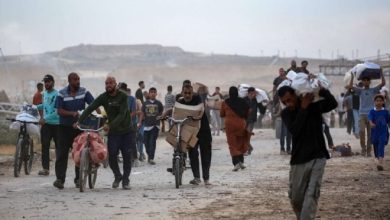
Mansour emphasized that the resolution came after months of a total blockade on aid and systematic killing of children and women.