
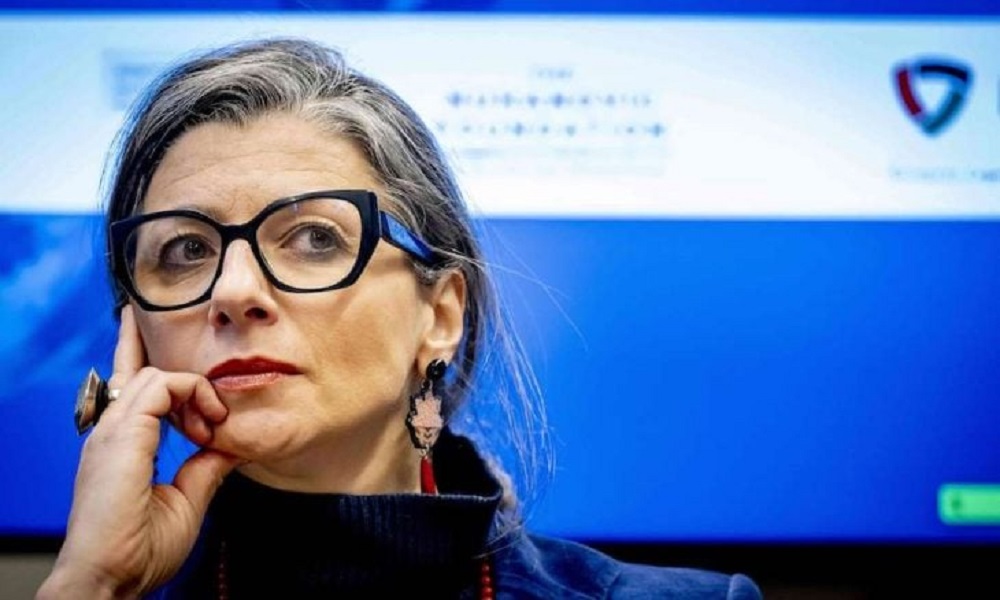
Watan-The decision to extend the mandate of Italian human rights expert Francesca Albanese, the UN Special Rapporteur on the situation of human rights in the Palestinian territories, until 2028, has sparked a wave of official and media outrage in Israel.
Albanese has held this position since 2022. Her reappointment was automatically supported by the 47-member UN Human Rights Council, despite failed attempts by Israel, Hungary, and Argentina to block the decision.
On Friday evening, the UN Human Rights Council voted in favor of keeping Albanese in her role, marking a setback for an intense pressure campaign led by pro-Israel organizations seeking to prevent her reappointment, largely due to her criticism of acts of genocide against Palestinians in the West Bank and Gaza Strip.

Israel Slams UN Over Albanese Reappointment
Reacting angrily to her reappointment, Israel’s Permanent Representative to the United Nations, Danny Danon, described the move as a “disgrace and a moral black mark on the UN.”
In a post on X (formerly Twitter), Danon accused Albanese of “repeating antisemitic statements”—a charge Israel frequently uses against any state, organization, or individual who criticizes its actions against Palestinians.
Danon called on UN Secretary-General António Guterres to “reverse the decision to extend Albanese’s mandate,” claiming that she holds “racist views.”
The Israeli daily Maariv described the decision to extend Albanese’s tenure as a “black day for Israel,” labeling her a “demonic figure.” The paper said that Albanese had previously sparked controversy by accusing Israel of being behind the 2015 Paris attacks, comparing Prime Minister Benjamin Netanyahu to Adolf Hitler, and describing Gaza as the largest concentration camp of the 21st century. It also claimed she had “repeatedly made antisemitic remarks.”

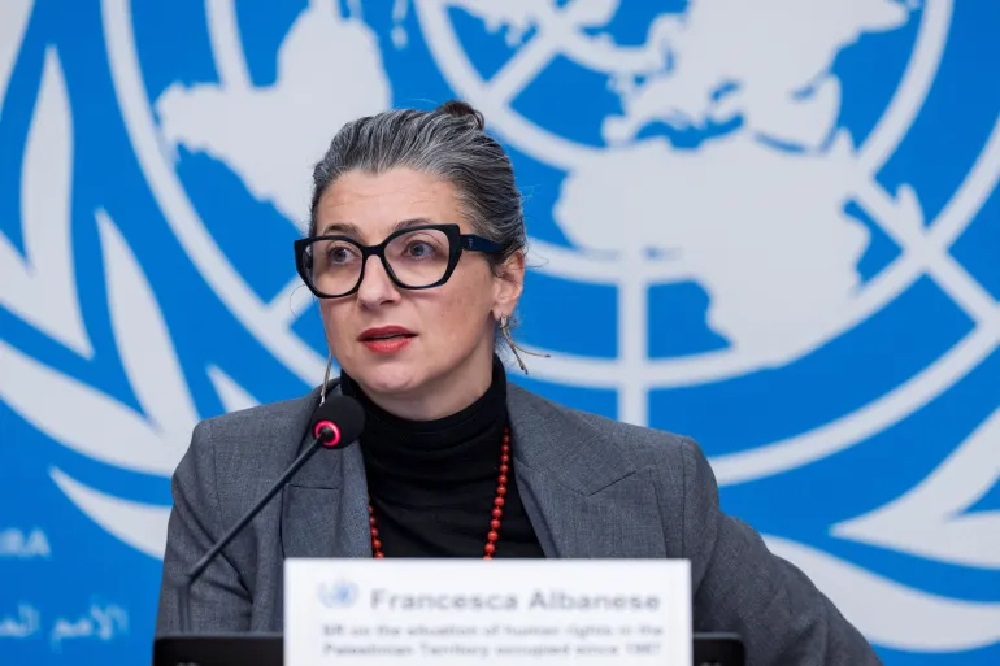
Israeli Media Blasts UN Over Albanese’s Gaza Report
Another Israeli outlet, Yedioth Ahronoth, covered the development with the headline: “The UN Extends the Mandate of the Envoy Who Denied Hamas Crimes and Compared Israel to the Nazis.” The article criticized the UN for portraying Albanese as a “neutral expert” despite what it called her biased stance against Israel. It also cited Albanese’s remarks affirming the Palestinians’ right to resist occupation, and accused her of claiming the U.S. is enslaved by the Zionist lobby.
The Times of Israel, for its part, referenced Albanese’s latest report titled “Anatomy of a Genocide,” which concluded that Israel is conducting a “settler-colonial enterprise aimed at ethnic cleansing” in Gaza. The paper alleged that Albanese “represents a broader bias within the UN system against Israel,” and said that the Human Rights Council “has more permanent investigative bodies focused on Israel than on any other country.”
Albanese responded by reposting a message by Iranian-Swedish writer and activist Trita Parsi, which read:
“Congratulations to the outstanding Francesca Albanese for her stellar performance. Despite unfair efforts to unseat her, the UN Human Rights Council voted to retain her as Special Rapporteur on the Palestinian territories until 2028!”
In a previous statement, Lex Takkenberg, a former UN official who worked with Albanese, denounced the campaign launched by Tel Aviv against her. He said:“For the past three years, they have tried to obstruct Albanese’s work through various means.”
He added that any criticism of Israeli policies is met with suppression attempts by Israel and its allies, “often through populist right-wing politicians or members of the U.S. Congress.” Takkenberg emphasized that Special Rapporteurs are not UN employees, and therefore are not subject to its hierarchy or political pressures. This is why they are free to speak the truth. Albanese does so consistently, and she is a vital part of the human rights system.”
-

-

-

-

-

-

