Unforeseen Consequences: Debating the Impact of Cloud Seeding on UAE’s Recent Floods
Watan-A widespread debate erupted on social media after the spread of information alleging that the operation of cloud seeding technology—by electrifying clouds using drones to seed clouds in Dubai’s sky—resulted in the destruction and floods that recently submerged the UAE due to the unsafe consequences of using salts, chemicals, and electrical waves in this project.
Cloud seeding in the United Arab Emirates is a method of weather modification, with the government stating it employs it to address the country’s water challenges. However, it seems to have turned into an unexpected disaster, according to some descriptions.
Did the cloud seeding project cause the recent floods in the UAE? The UAE supports so-called “rain enhancement” by allocating $15 billion to this project since 2017.
A tweet accompanied by a video circulated, revealing the operation of the artificial rain station in Abu Dhabi seeding clouds in Dubai’s sky eight days ago.
🚨🇸🇦 Extreme Flooding in Saudi Arabia
Did someone mess up again in the Cloud Seeding Control Centre?
See next post. pic.twitter.com/6Ns4FcPUjc
— Concerned Citizen (@BGatesIsaPyscho) April 10, 2024
Cloud Seeding
The United Arab Emirates is among the first countries in the Gulf region to utilize cloud seeding technology.
Cloud seeding is a process by which clouds are seeded, typically by adding small particles of silver iodide, a crystalline salt similar in structure to ice, for cold clouds (-5 degrees), and sodium chloride for warm clouds. This process is usually conducted using an ordinary or unmanned aircraft.
Forecasters and scientists estimate that cloud seeding operations can increase rainfall by up to 30-35% in clear atmospheric conditions and up to 10-15% in more humid atmospheres.
This practice has raised concerns about its environmental impact because long-term global effects are difficult to predict, as seen recently in Dubai.
Dr. Khalid bin Mufleh Al Hamed, Assistant Professor at the Comparative Jurisprudence Department at the Higher Institute of Judiciary, previously mentioned in a research paper published by the Saudi newspaper “Al Riyadh” that this practice is not permissible according to Sharia law and poses a danger to human and animal health.
In Dubai, artificial rain technology is triggered by electroshocking the clouds with drones. The United Arab Emirates has been supporting rain production by allocating $15 billion to this project since 2017.#Rain #Artificial #Technology #Future #Dubai #Drones pic.twitter.com/vzDHNKAfle
— Techtuv (@techtuv) April 8, 2024
He called for the suspension of the cloud seeding project due to the proven harm caused by this technology to human, animal, and plant life, stating that the materials used in cloud seeding are toxic according to international organizations’ classifications.
He stated: “According to the purpose intended by cloud seeding in terminological usage, and the methods used therein, cloud seeding refers to two things: first, accelerating rainfall from specific clouds over areas in need of it, rather than having it go to areas that do not need water due to their natural conditions suitable for natural drainage. The second considers increasing cloud drainage beyond what it could naturally produce, pointing out that the term cloud seeding, or cloud condensation, is not an accurate translation of the process. The term Cloud Seeding refers to the seeding of clouds, not cloud condensation.”
Zayed’s policies caused some in the UAE to gloat
Since yesterday, the scenes of floods and submerged streets and airports in the UAE have sparked widespread debate among activists on social media, with many not hiding their glee at Mohammed bin Zayed’s destructive policies in the region, which have destroyed Arab and Islamic countries.
In this context, the well-known Egyptian writer Ayat Araby commented on the massive floods that hit Dubai: “These are not the streets of a remote city untouched by urbanization in the Middle Ages… These are the streets of Dubai, whose ruler, bin Zayed, excelled in destroying Islamic countries and fighting Islam and Muslims more than the Zionists.”
كل الدعوات لأهلنا في الإمارات بالسلامة
لكن هناك بعض الأسئلة لمدير سكاي نيوز عربي
فين استثمارات الذكاء الاصطناعي الخطير؟
فين المستقبل اللي على بعد 3 ساعات من غزة ؟
هل تلقيح السحب اللي استثمرت فيه الإمارات هو أحد الأسباب؟
#منخفض_الهدير#دبي_الان #الامارات #الأمطار_الغزيرة pic.twitter.com/CNoJoaRCmD— Osama Gaweesh (@osgaweesh) April 17, 2024
She added: “With all this money they spend on financing military coups and supporting anyone who fights Islam, this money has not helped them in anything, neither in infrastructure nor in administrative machinery, nor in plans to deal with crises like these floods that the Emirates have never witnessed before.”
Drowning Gods
The “Towards Freedom” account commented on a photo of what was said to be one of the Hindu gods drowning in Dubai floods: “The gods for whom the UAE built the largest Hindu temple were seen floating in yesterday’s rains. Do gods drown?!”
Ibrahim said: “O Allah, not to gloat, but this is the fate of those who fight against Allah and His religion and seek to corrupt the earth. Ibn Zayed must know that there is a Lord above him who will hold him accountable in this world and the hereafter.”
The “Al Uroh Al Wathqy” account said: “Skyscrapers and tall towers, false civilization and sophistication won’t benefit you. The prayers of the oppressed and downtrodden, in every country you have ruined with your corrupt money, will not be in vain.”
He added: “This is what the sons of Zayed have earned through the leadership of the Arab devil.”
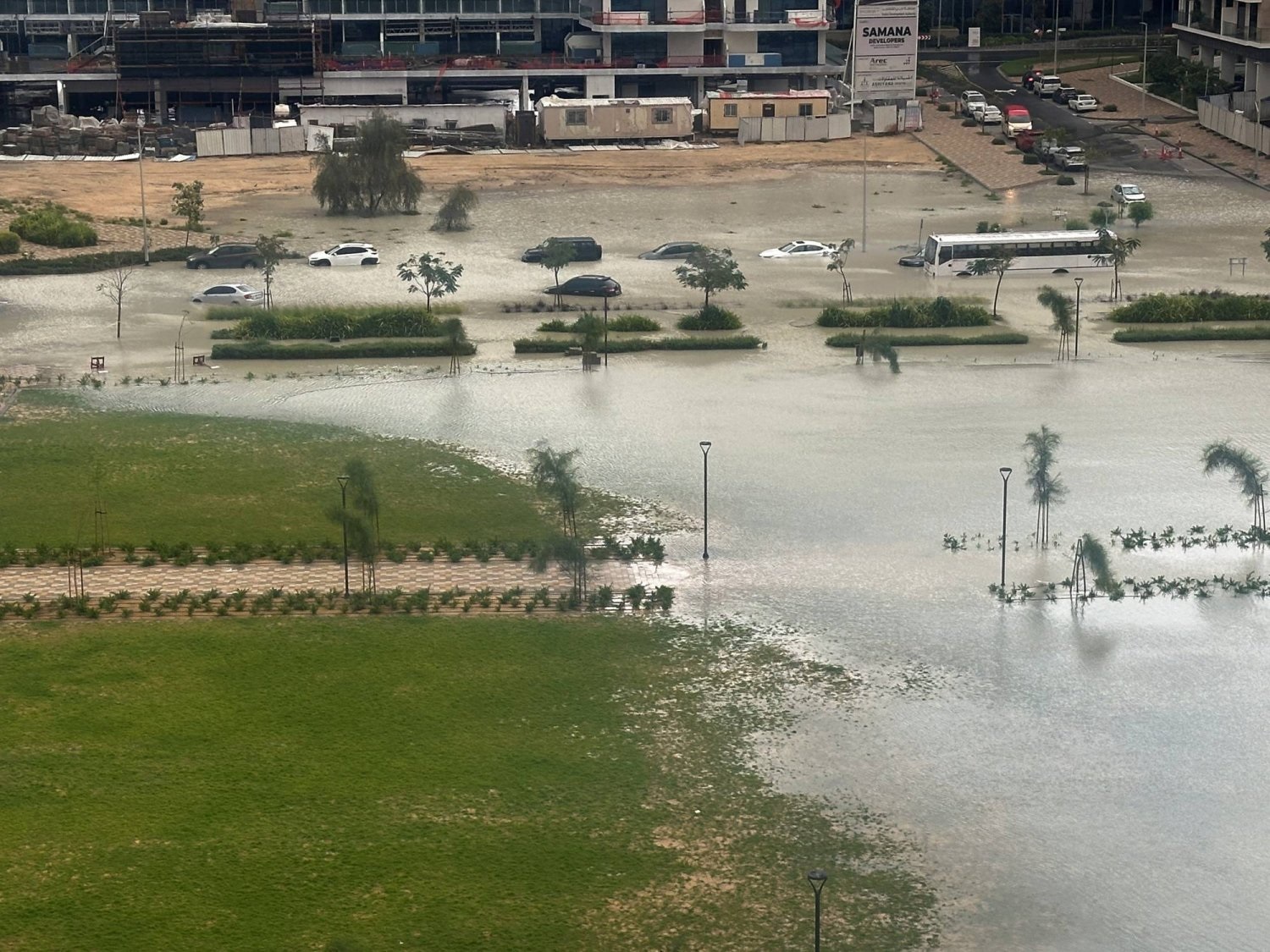
On Wednesday, most areas of the UAE experienced varying degrees of heavy rainfall, accompanied by lightning, thunder, and sometimes hail in some areas, leading to the flow of valleys and unprecedented floods in scattered areas.
As a result, the National Emergency Crisis and Disaster Management Authority in the UAE urged citizens and residents to stay indoors during the weather conditions and not to go out except in cases of extreme necessity.