Relative Calm in Banias After a Day of Sectarian Violations and Killings
Calm Returns to Banias After a Day of Violent Clashes and Civilian Deaths; Investigations Ongoing into Sectarian Violence.
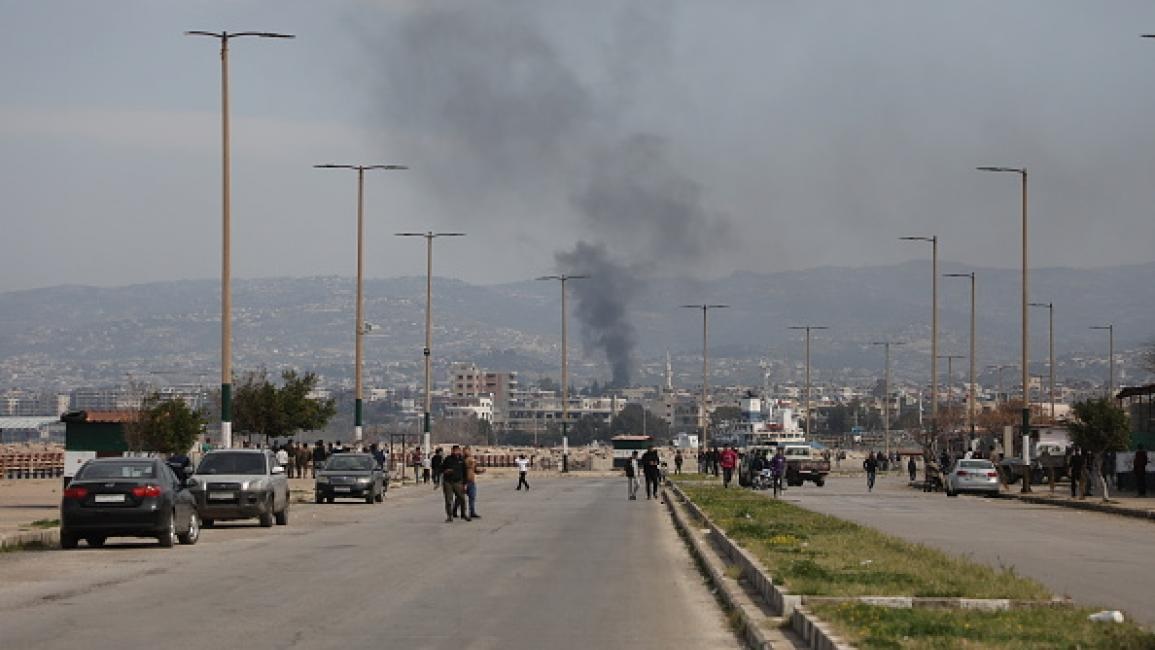
Watan-Relative calm returned to the city of Banias in the western countryside of Tartus province, Syria, on Saturday, after a day of violations and killings of civilians based on sectarian motives, as well as looting that affected neighborhoods within the city.
A large security force arrived in Banias today and set up checkpoints within the Al-Qusour neighborhood, which witnessed killings and executions of civilians yesterday, Friday.


Fadl Abdul Ghani, the director of the Syrian Network for Human Rights, told Al-Araby Al-Jadeed that the network recorded civilian killings in the Al-Qusour neighborhood in Banias, which has an Alawite majority, on Friday, and also documented some cases today. He mentioned that verifying the exact numbers is difficult, but what is confirmed is the occurrence of these violations.
Clashes and Violations in Banias: Security Forces Respond Amid Sectarian Tensions

He added that the Ministry of Interior did not deny the violations, as Syrian President Ahmad al-Sharaa had discussed them on Friday. The network also documented the killing of 100 members of the General Security forces in planned ambushes and 26 civilians by armed individuals loyal to the former regime. Simultaneously, the network documented the killing of 125 civilians by the Syrian army and its loyalists who came with the army from other areas. Abdul Ghani explained that the network would release a new report after verifying the documentation.
Omar Hudayfeh, a notable figure from Banias and a member of the Syrian Islamic Council, acknowledged that violations occurred on Friday in the Al-Qusour neighborhood, stating that these took place during clashes with armed groups loyal to the fallen regime around Banias. He added, “While the General Security forces and the Syrian army were busy, undisciplined armed groups with no connection to the new Syrian army carried out these violations without any coordination with the Ministry of Defense.”
Hudayfeh mentioned that some armed groups headed to the coast driven by a sense of “vengeance” after crimes committed by remnants of the regime against their families in the area. He confirmed that “some of the media reports are exaggerated, but the General Security forces acted quickly to contain the situation, secured the evacuation of families from Al-Qusour to their destinations, and assured those remaining in the neighborhood that their lives and property would be protected.”

Since yesterday, social media has been flooded with obituaries, photos of the dead, and people talking about the killing of their relatives in Banias within the context of sectarian killings. It was not possible for Al-Araby Al-Jadeed to verify the accuracy of these reports or the actual number of fatalities.
Banias is a city with a diverse sectarian makeup of Sunni Muslims, Alawites, and Christians. In 2013, the city witnessed one of the most horrific massacres by the Assad regime when regime forces, supported by local sectarian militias, stormed the Ras Al-Nabeh neighborhood and the Bayda area, killing civilians, most of them women and children. The number of dead at the time ranged between 300 and 450, according to a United Nations investigative committee, and 248 people according to a report by Human Rights Watch.