
Healing Amidst Desolation: The Sole Orthopedic Doctor of Northern Gaza
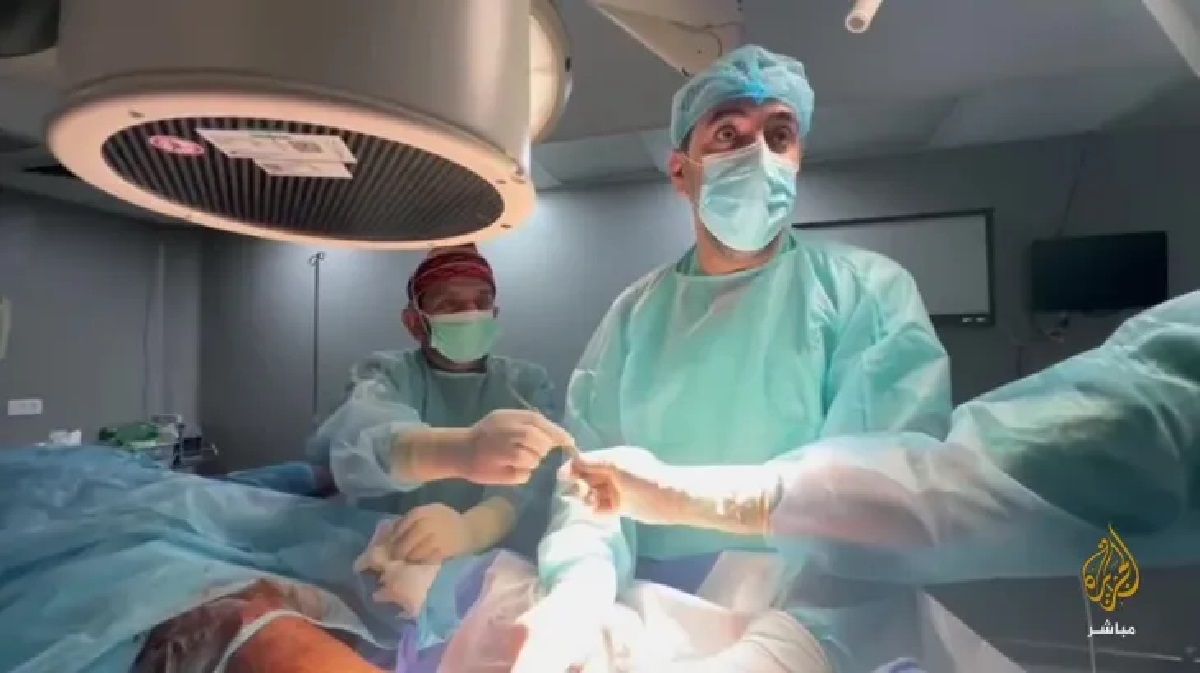
Watan-The health situation in the Gaza Strip, particularly in the northern areas, is experiencing a severe collapse due to the ongoing war waged by the occupying forces on the territory.
In a scene that encapsulates the tragedy of Gaza, there is only one orthopedic doctor in the northern areas of the Strip who witnesses the catastrophic conditions these areas are going through due to the Israeli war.
The sole orthopedic doctor in northern Gaza is Dr. Mohammed Aubeid, working at Al-Awda Hospital, who narrated the magnitude of difficulties and challenges he faces with his patients amidst the war and blockade.
Aubeid told Al-Jazeera, “We were besieged for more than 20 days, but we dealt with dozens of cases, and since people learned about the lifting of the siege three days ago, we received 20 cases.”
He added that 18 surgical operations were performed on complex limb fractures, in addition to abdominal exploration surgeries with the general surgery department.
Mohammed Aubeid highlighted the severe shortage of medical staff, with only one orthopedic doctor, one anesthesiologist, one general surgeon, and a nursing staff of no more than 3 or 4 individuals.
He confirmed that the shortage of resources, with delays in their arrival for days and up to two weeks, led to decisions to amputate limbs of several patients due to blood poisoning in their limbs, which could have been avoided if addressed early.
Furthermore, Aubeid pointed out that the operations now take much longer due to the scarcity of equipment. He revealed that most wounds are inflamed and extensive, requiring reconstructive and cosmetic surgeries, in addition to bone samples that they cannot perform due to resource shortages in the laboratory.
The Israeli occupation army is expanding its bombardment of hospitals, medical centers, and treatment facilities in an attempt to completely eliminate healthcare services, aiming to force residents to evacuate their areas.
The World Health Organization had previously warned that what is happening in the Gaza Strip is a vivid and real manifestation of a humanitarian crisis.
The organization urged all influential and effective political leaders in the international community to assume their responsibilities by intervening immediately to stop the war in Gaza and address the humanitarian and health catastrophe unfolding there.
Richard Brennan, the Emergency Program Director at the organization’s Regional Office for the Eastern Mediterranean, stated, “There were 36 hospitals operating before the outbreak of the conflict in the Gaza Strip, and now there are 9 hospitals partially operating, all in the south, and 4 hospitals operating at a minimum capacity in the north.”
Brennan warned that “more cases of infection may emerge due to overcrowding, lack of sanitation, lack of food and water, and the disruption of vaccination programs.”