Sudan Investigates U.S. Chemical Weapons Allegations Amid Sanctions and Trump’s Push for Peace
Khartoum forms national inquiry committee as Washington enforces sanctions over alleged chemical weapons use; Trump administration signals renewed diplomatic initiative for Sudan peace process.

Watan-The Sudanese government announced Thursday that it has begun taking practical steps to address U.S. allegations that the Sudanese army used chemical weapons during the ongoing war that erupted in April 2023. Officials also noted that Washington had expressed readiness to provide Sudan with the necessary data and technical details in the coming period.
Meanwhile, both the “Samood” Coalition and the National Umma Party welcomed remarks made by President Donald Trump, in which he confirmed his administration is working to support peaceful settlement efforts in Sudan.
What Are the Sanctions?
In June 2025, U.S. sanctions against Sudan officially took effect, including:
-
Suspension of all non-humanitarian foreign aid
-
Ban on arms sales and their financing
-
Denial of U.S. government-backed loans and financial assistance
-
Prohibition on exporting sensitive goods and technologies related to national security
According to Washington, these sanctions will remain in place for at least a year, subject to further notice, and will be implemented by the relevant U.S. agencies.
These sanctions followed a May 21 accusation by the U.S. that Sudan had used chemical weapons in 2024, under the Chemical and Biological Weapons Control and Elimination Act of 1991.
Although the Sudanese government denied the charges, Sovereign Council Chair Abdel Fattah al-Burhan issued a decree to form a national committee to investigate the matter. The committee includes representatives from the Foreign and Defense Ministries, along with the General Intelligence Service.
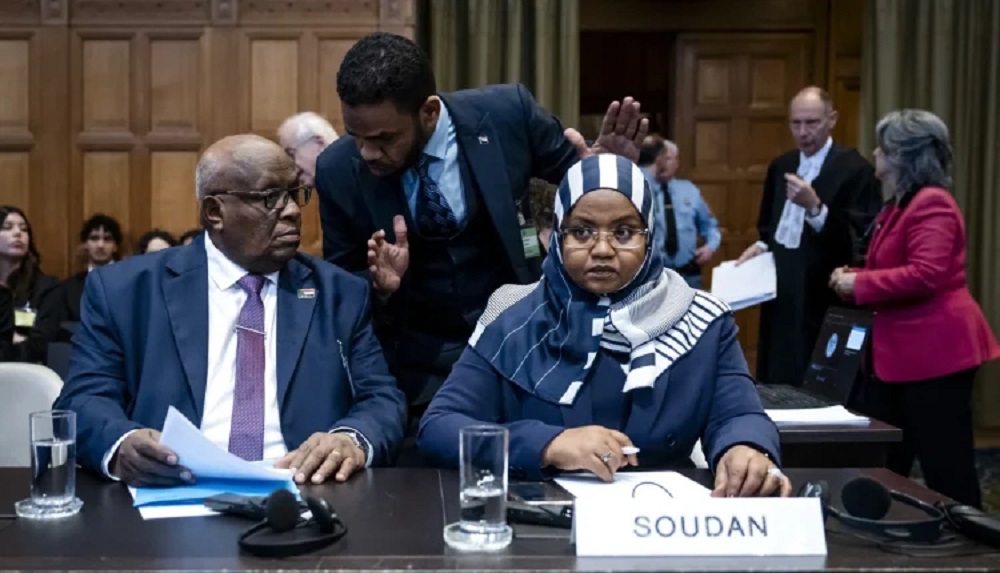
Sudan also participated in the 109th Executive Council session of the Organisation for the Prohibition of Chemical Weapons (OPCW) in The Hague, where the American claims were reviewed based on requests for clarification submitted by several member states.
Sudan’s delegation reiterated its firm stance on the Chemical Weapons Convention, stating that it is fully embedded in the country’s legal framework and that Sudan categorically and fundamentally rejects the use of such weapons. The government emphasized its seriousness and transparency in addressing the allegations and has started taking concrete steps, including the formation of a technical committee authorized to investigate upon receipt of relevant data.
The government stressed the need for objective handling of such claims, which requires access to the evidence upon which they are based—something Sudan is currently pursuing through technical channels with the U.S., which has reportedly agreed to share details soon.
Sudan also called on the OPCW Executive Council to allow the ongoing process to proceed constructively, reaffirming full compliance with the convention and readiness to cooperate with all stakeholders to prevent the use and spread of chemical weapons and to bolster global peace and security.
Trump: Pushing Peace in Sudan and Libya
This understanding on information exchange aligns with recent statements by U.S. President Donald Trump, who said his administration is advancing a new strategy for peaceful resolution in both Sudan and Libya, aimed at promoting regional stability through political dialogue and economic cooperation.
These comments came during a mini-summit held at the White House with several African leaders.
Simultaneously, Cairo hosted a tripartite meeting involving officials from Sudan, Egypt, and Libya to discuss the growing threat posed by the Rapid Support Forces’ control of the border triangle linking the three countries and other joint security challenges.
Cautious Optimism from Sudanese Civil Movements
The Democratic Civil Forces Coalition “Samood” welcomed Washington’s announcement of a peace initiative. Coalition spokesperson Jaafar Hassan Othman praised Trump’s comments at the summit as a “positive and commendable direction.”
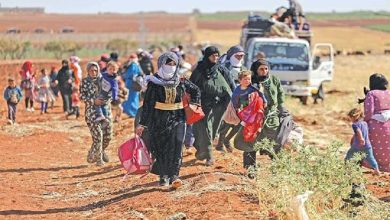
He urged the international community to support a negotiated political solution to end the war, which has killed thousands, destroyed infrastructure, and displaced millions. Othman called for an immediate halt to the violence and noted that U.S. involvement could strengthen the path toward a just political settlement and democratic transition, aligned with the aspirations of the Sudanese people.
The National Umma Party also welcomed Trump’s remarks, describing them as timely and positive amid a critical moment in Sudan’s history. The party highlighted the worsening humanitarian disaster, economic collapse, and the threat the war poses to national and regional stability.
It emphasized that any peace initiative must be rooted in Sudanese national will, supported by international stakeholders, and must reflect the people’s demand for justice, accountability, and the construction of a civil democratic state.
The party also called on the U.S. and global actors to listen to the voices of Sudanese victims, who bear the brunt of the war daily, and to push for a sustainable political solution that addresses the roots of the crisis and ends the cycle of coups and violence.
They expressed hope that Trump’s comments would signal a genuine shift in the U.S. administration’s stance and a clear commitment to the Sudanese people’s call for freedom, peace, and justice, affirming their openness to all serious international efforts aimed at halting the war and preserving Sudan’s unity.
The Jeddah Talks: A Missed Opportunity?
Shortly after the war began in April 2023, Saudi Arabia and the U.S. launched a negotiation platform in Jeddah between the Sudanese army and the Rapid Support Forces (RSF). On May 11, both sides signed agreements on humanitarian arrangements and several short-term ceasefires.
However, the talks eventually collapsed, and negotiations were suspended indefinitely.