Severe Water Crisis Hits Gaza Amidst War and Infrastructure Collapse
Muhammad Naeem and Gaza Residents Struggle to Secure Daily Water Amidst Devastating Israeli Attacks.
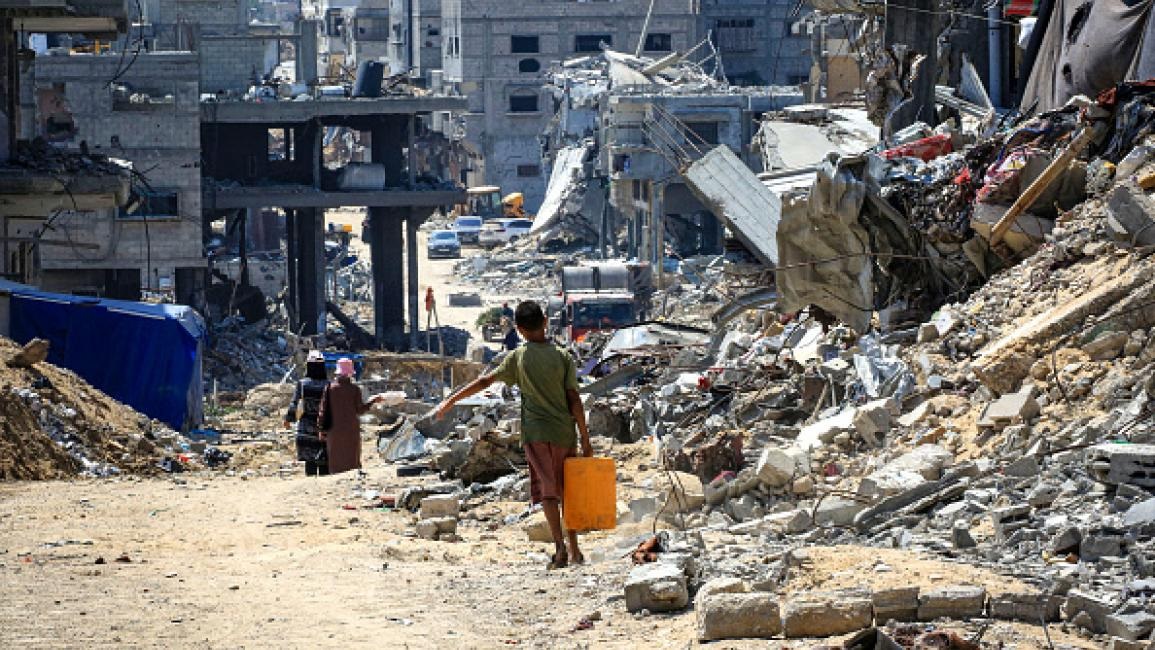
Watan-Under the scorching July sun and suffocating humidity in Gaza, Muhammad Naeem stands with his children behind him in a long queue stretching tens of meters. The line includes men and women of all ages, waiting in front of a large truck carrying a water tanker dedicated for household use.
They hope to secure enough water to last until this truck returns in five days. His situation mirrors that of most Gaza residents—whether displaced or still in their homes—due to the war’s devastating effects on infrastructure, especially water lines and wells.
Severe Thirst
Muhammad, a freelance journalist, has endured exhausting and painful displacement journeys with his family since the war began. The conflict has also worsened his health; he and his younger brother suffer from a chronic bone and spinal disease and have been denied treatment since the war started. They now endure the disease’s effects without regular medication.
He told Al-Quds Al-Arabi, “I am forced to stand in this long queue.” He explains that water, once readily available in Gaza, has become extremely difficult to obtain. Everyone in Gaza longs to see water flowing from taps again. Currently, people ration their water usage strictly to conserve the limited gallons they have until supply trucks arrive.
Local authorities have set schedules to provide water once a week to neighborhoods whose water lines were heavily damaged by Israeli airstrikes. They also deploy tanker trucks to supply areas without functioning water pipelines. This is particularly noticeable in western Gaza City, where many displaced people have gathered following evacuation orders by the Israeli occupation forces.
Muhammad and his extended family live in a shelter center west of Gaza City after being forced to flee their hometown, Beit Hanoun, again on March 19, the second day of renewed aggression. They returned briefly during a period allowing movement from southern displacement areas but then lived in a tent after their family home was destroyed. Previously, they stayed in tents near Khan Younis and an evacuation school in Rafah. During these times, access to water was a constant struggle.
“Life turned upside down since October 7,” he says. “What used to be normal is gone; what we have endured was unimaginable.” He points out that residents have endured airstrikes, hunger, and disease but cannot survive without enough water. Sometimes they must walk long distances to fill a single gallon for household use. Families ration water carefully, allocating only small amounts for bathing and even less for washing dishes and clothes.
Recently, social media circulated images of an elderly woman in her eighties and small children carrying gallons of water from distribution points to displacement tents to meet their daily needs.
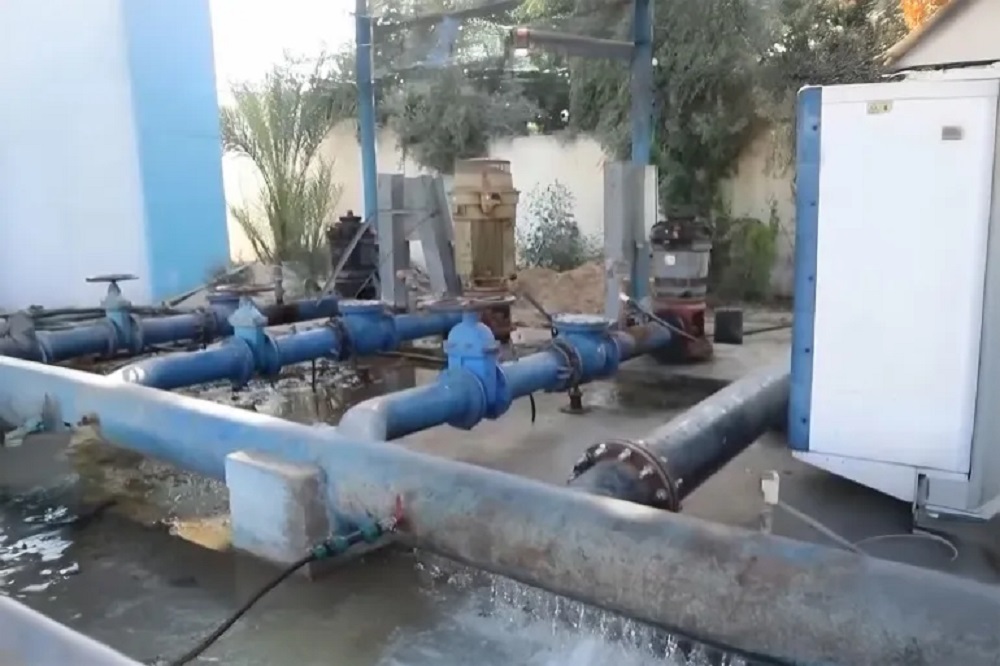
The Gaza municipality, responding to inquiries about water shortages, attributes the crisis to the occupation’s destruction of the desalination plant, wells, and water tanks. The municipality has had to reduce essential services, including water supply, due to fuel shortages needed to operate electric pumps. The crisis worsens as Israeli forces prevent maintenance crews from repairing damaged water wells. Authorities warn of a “severe thirst crisis” amid rising summer temperatures and ongoing displacement, noting thousands of families east of the city have had no water for a week.
Only 3 Liters per Day
Currently, available water represents only 10-20% of pre-war amounts, and supplies fluctuate based on fuel availability. The Palestinian Water Authority reports that 85% of water and sewage infrastructure has sustained heavy damage due to the war. Gaza is now described as a “dying thirsty zone.”
The United Nations, citing local partners, states that water production has dropped by 20% on top of previous decreases because of fuel shortages affecting groundwater pumping.
Despite soaring summer heat causing heavy sweating, individuals in Gaza receive only minimal water for bathing, sometimes once a week. The Water Authority previously declared that each Gazan barely has access to 3 liters daily amid ongoing aggression. Water availability varies widely by location, the damage to infrastructure, and displacement patterns.
The Water Authority notes the minimum survival water requirement is approximately 15 liters per person per day and emphasizes that Gaza suffered a severe water crisis even before the war.
Spread of Lice and Illness
At the crowded shelter west of Gaza City, 37-year-old Samah complains about the return of lice in her 10-year-old daughter’s hair, attributing it to infrequent bathing. She told Al-Quds Al-Arabi that this problem is no longer shameful, affecting most displaced people regardless of age. Despite efforts to clean her daughter’s hair manually, lice persist due to the lack of special detergents and regular washing.
When asked if help was available, a shelter supervisor replied, “We can barely provide food or drinking water for the displaced… how can we provide cleaning supplies? The crossings and siege have destroyed everything.”
UNRWA, the largest UN relief organization serving Gaza residents, reports that accumulating waste during the war contributes to disease spread.
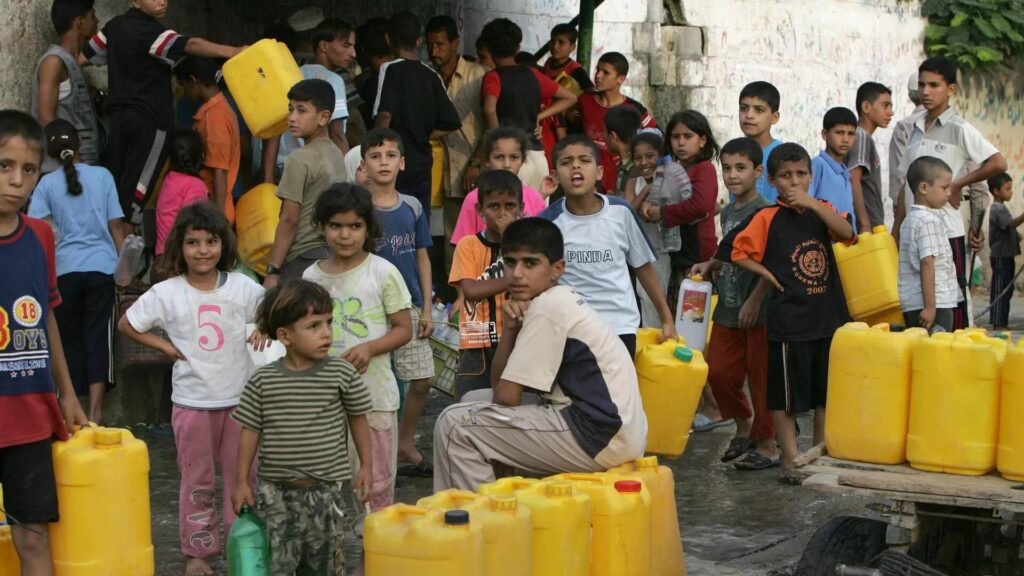
This grim reality affects displaced and resident populations alike, confined by Israeli orders to less than 20% of the already narrow Gaza Strip. Many suffer the most when trying to obtain potable water, especially after destruction of desalination plants and shutdowns due to fuel shortages. This situation creates overcrowding at water distribution trucks, which only allow each family one gallon.
Drinking Water in Limited Quantities
Muhammad Al-Maghari from Nuseirat camp in central Gaza explains that only a small, insufficient water station serves the many residents and displaced people there. Drinking water is now strictly rationed. He notes that people do not feel quenched due to drinking small amounts in the heat, worsened by the lack of refrigeration caused by power outages. “Everyone dreams of drinking cold water,” he says. “It has become just a dream.”
Water is delivered to residential and displacement areas for no more than four hours at best, once a week. Water stocks quickly run out due to insufficient gallon containers, which are scarce in the market due to the Israeli blockade. Al-Maghari describes the hardship of waiting for water delivery day to fill all household containers, hoping rationed water lasts through outages. He adds that plastic containers often break due to heavy use and weather changes, a complaint common among residents.
“We live compounded crises; every crisis is followed by dozens of others… Israel is killing us today with the weapons of hunger and thirst,” he says.