UAE’s Deep Role in Israel’s “New Middle East” Vision: From Secret Coordination to Strategic Execution
How Mohammed bin Zayed Al Nahyan Became a Key Player in Advancing the U.S.-Israeli Plan to Redefine the Region.
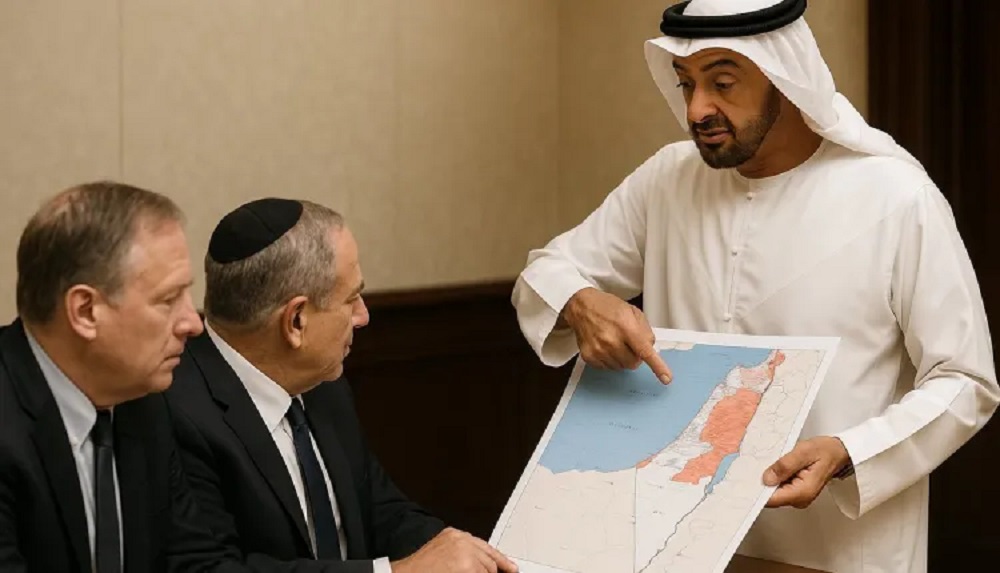
Watan-Since the early stages of what later became known as the “Deal of the Century,” the United Arab Emirates (UAE) was never far from its core details. In fact, it was one of the primary regional actors that adopted, promoted, and helped institutionalize the plan. Crown Prince Mohammed bin Zayed was not merely briefed on the project—he became one of its chief strategists, helping to turn the Israeli-American vision into a new regional reality.
2019 Meeting: The Turning Point
In 2019, during closed-door deliberations at Abu Dhabi’s royal palace, bin Zayed received a detailed briefing from his state security team. The plan, developed by a joint U.S.-Israeli committee at the “Zionist Institute for National Security” in Tel Aviv, was titled “A Post-Settlement Middle East”—which later became the informal blueprint of the “Deal of the Century.”


The Plan’s Four Core Tenets:
-
No Palestinian majority in historic Palestine—neither in the West Bank, Gaza, nor within Israel.
-
No Arab governments opposing Israel or obstructing its regional agenda.
-
No disputed maps—boundaries are to be finalized in Israel’s favor.
-
A new regional leadership led by Israel with gradual Arab endorsement.
This “New Middle East” envisions a resistance-free region dominated by Israel, with Arab states subordinated through wealth and external influence.
Mohammed bin Zayed: From Observer to Enabler
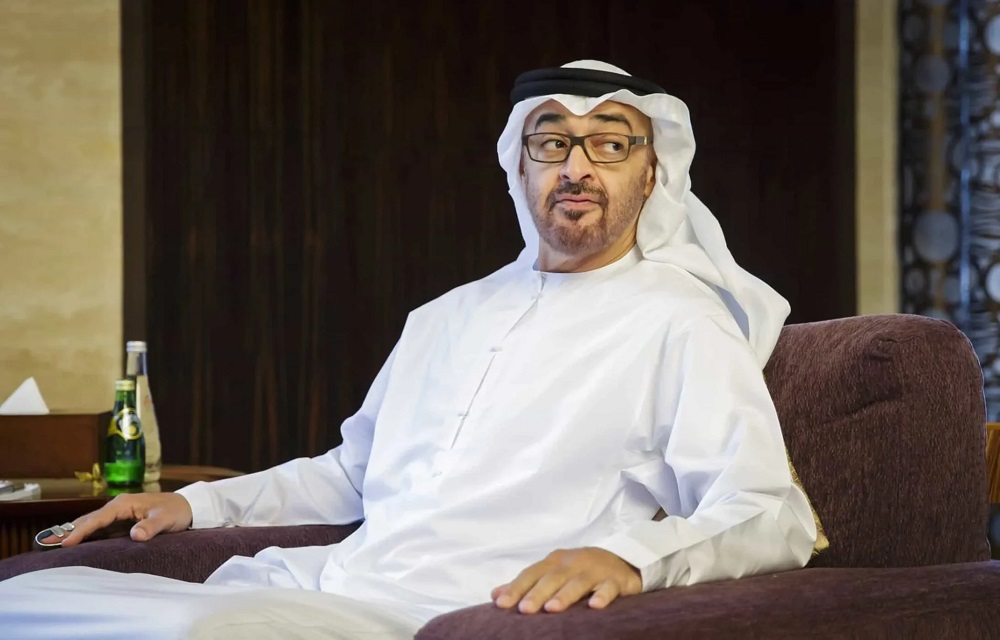
Bin Zayed saw the proposal as an opportunity to redraw regional alliances amidst perceived U.S. withdrawal and rising Israeli dominance. He opened covert channels with Israeli leadership, ran PR campaigns around “peace for prosperity,” and normalized ties in 2020 through the Abraham Accords.
May 2021 Document: Political and Security Alignment
A leaked classified document from May 2021 revealed deeper UAE involvement:“The equation is clear: Israel wants land without Palestinians and obedient neighboring states. To achieve this, Iran must be dealt with first.”
The UAE fully backed the initiative, promoting it in Morocco, Bahrain, Egypt, and nudging Saudi Arabia to follow suit—though Riyadh remained cautious.
Gaza and Forced Displacement Disguised as Aid
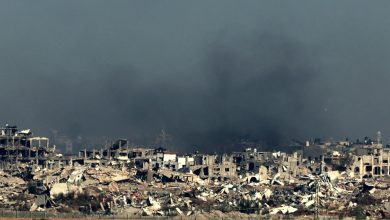
In Gaza, the UAE’s role shifted toward weaponizing humanitarian aid. Reconstruction projects became tools to alter demographics and prevent displaced Palestinians from returning. Unlike previous post-war rebuilding, UAE efforts now included conditional development, direct Israeli coordination, and exclusion of Palestinian authorities.
Beyond Gaza: Expanding the Strategy
Israel’s vision extended to:
-
Downsizing the West Bank through settlements and security lockdowns.
-
Economically and politically pressuring Palestinians into migration.
-
Arabizing Israel’s regional image via cultural outreach and soft power.
The Iran War: A Calculated Escalation
Bin Zayed wasn’t surprised by the Israel-Iran war. He had long viewed Iran as the final obstacle to Israeli dominance and supported military action to solidify a new Middle Eastern order.
Palestinians Left Out of the Equation
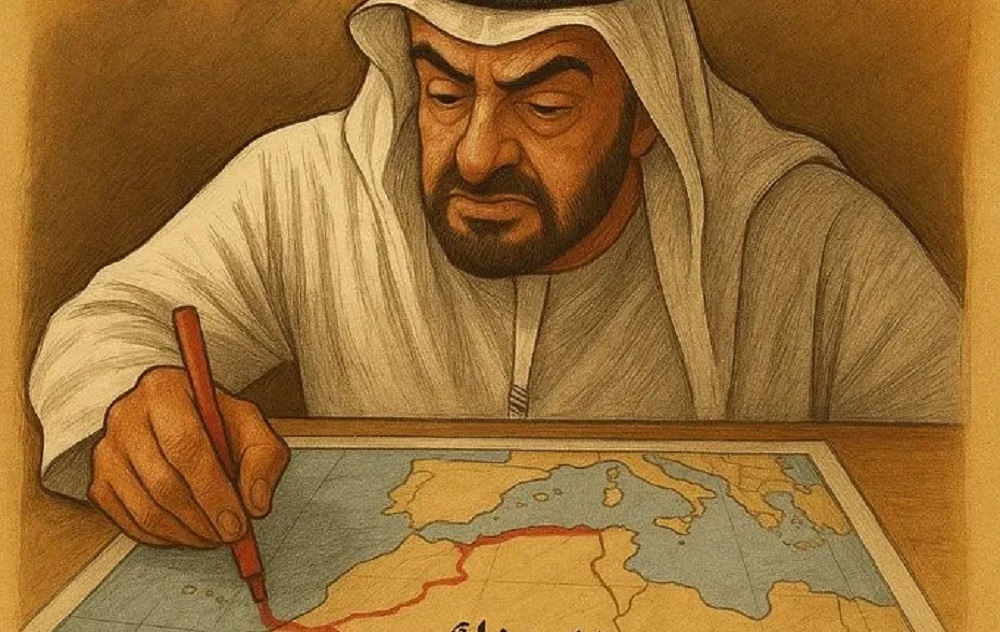
Amid all the scheming, Palestinians were sidelined. Their fate was decided from above, with maps redrawn without their input. Bin Zayed seeks to reshape the Palestinian cause into a fragmented, powerless issue serving Israel’s peace narrative.
The UAE’s involvement in Israel’s grand design is not a temporary alliance, but a strategic commitment. The “New Middle East” Israel envisions finds in Abu Dhabi a fervent partner ready to pay the price for a front-row seat in the emerging regional system. And that price, it seems, is Palestine.