
Israel Strikes Yemen’s Hodeidah Port in Long-Range Naval Assault
Israeli warships target Houthi-linked infrastructure in Red Sea using Sa’ar 6 vessels, signaling a new phase of extended military operations.

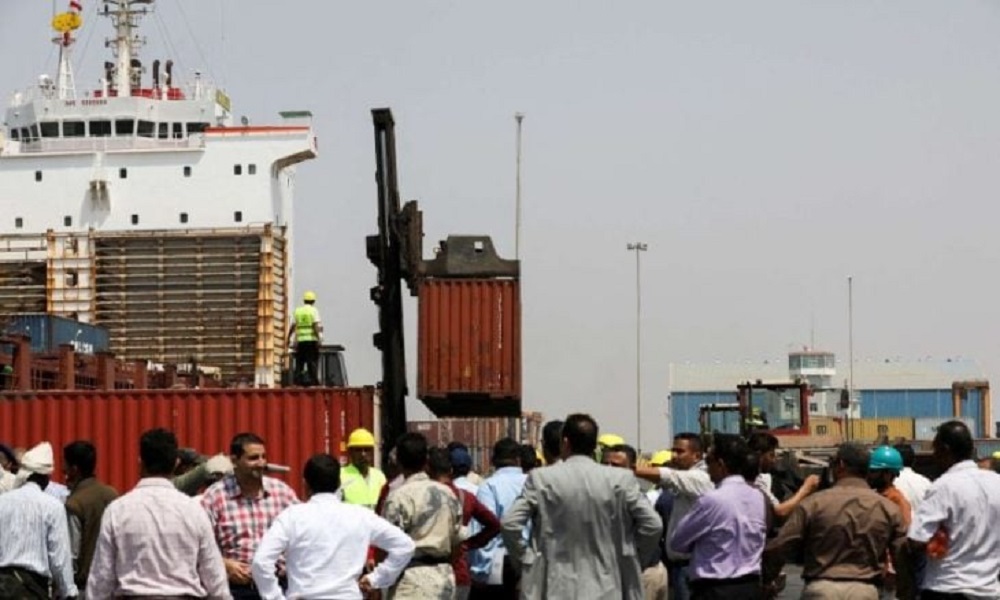
Watan-Hebrew media revealed new details on Tuesday regarding Israel’s naval assault on Yemen’s Hodeidah port. According to Yedioth Ahronoth, the Israeli Navy’s Shayetet 3 unit executed the operation using advanced Sa’ar 6-class warships, along with other vessels stationed in the northern Red Sea.
The report said the vessels fired two long-range precision missiles loaded with large explosive payloads at 7:00 AM (Jerusalem time), targeting the port’s critical infrastructure. The strikes reportedly hit their intended targets. The operation aimed to destroy vital docking and entry areas of the port, which Israel claims are central to transferring weapons and military equipment to the Houthis. Israeli security officials consider the port a major “bottleneck” in Houthi armament operations.

The Israeli military designated the port as an active combat zone, describing the strike as part of a long-term campaign to degrade Houthi infrastructure and hinder their missile-launching capabilities.
The newspaper noted that unlike Air Force operations, which require nearly three hours of round-trip flight time, missile ships offer prolonged presence in the Red Sea, allowing sustained operational flexibility. An unnamed Israeli security official said, “The sea was calm,” and confirmed the operation had to address challenges such as maritime conditions, long-range logistics, and operating in a region with multiple active forces.
Israel’s military is now preparing for various scenarios, including possible Houthi retaliation, and continues to operate through both overt and covert means.
The report emphasized that the operation was meticulously planned under the direction of the Israeli General Staff. The strike included air force and intelligence support to ensure maximum accuracy in target selection. It also involved deception and camouflage tactics due to the complexity of operating in the Red Sea and the Suez Canal—areas with significant international military presence.
The Israeli army believes that repeated strikes on Hodeidah’s ports have reduced the number of commercial ships docking there. While the Houthis still possess missile-launching capabilities, Israeli assessments claim that port damage has disrupted the steady flow of both commercial goods and weapons.
Israeli military officials further asserted that continuous strikes, alongside other measures, are limiting Houthi operational capacity and forcing them into more cautious strategies. “The goal is to deepen infrastructure damage to the point where international shipping companies view these ports as high-risk destinations,” one source said.

According to Israeli officials, this attack demonstrates Israel’s long-range operational capabilities in both distance and duration, enabled by missile ships that can strike from hundreds of kilometers away while maintaining a constant presence. They confirmed the assault is part of a broader, ongoing military campaign against the Houthis, with more operations—including attacks on additional ports and critical infrastructure—expected in the future.