Tunisian Journalists’ Union Joins Nobel Peace Prize Nomination for UN Palestine Rapporteur Francesca Albanese
Francesca Albanese praised for moral clarity, independence, and her stand against Western bias as Tunisian civil society backs her 2025 Nobel Peace Prize nomination.
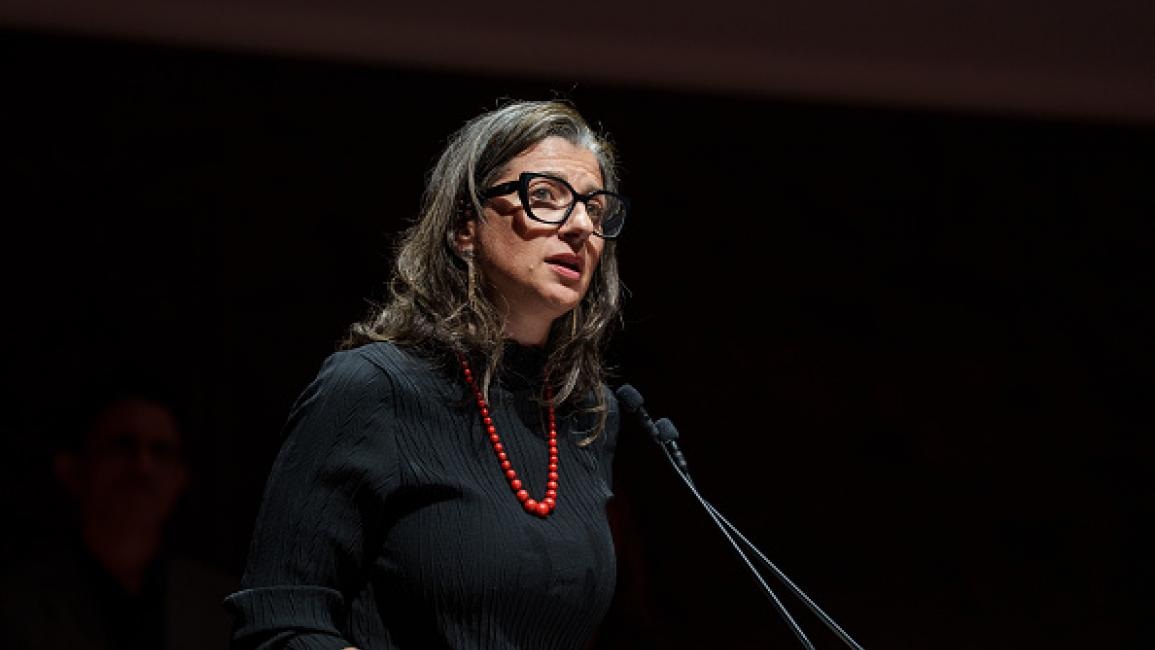
Watan-The Tunisian Journalists’ Syndicate announced its official participation in the national dialogue quartet’s nomination of Francesca Albanese, the UN Special Rapporteur on Human Rights in the Occupied Palestinian Territories, for the 2025 Nobel Peace Prize.
The quartet—which won the 2015 Nobel Peace Prize—includes the Tunisian General Labor Union (UGTT), the Tunisian Union for Industry, Trade and Handicrafts (UTICA), the National Bar Association, and the Tunisian Human Rights League.


The journalists’ syndicate explained that its support stems from Albanese’s courage, clarity, and principled stances, especially her exposure of double standards in the global human rights system. The union emphasized that Albanese has restored a humanitarian, moral, and legal dimension to the UN Special Rapporteur’s role, which had been lacking in recent years.
The syndicate praised her for bringing ethical and political clarity to the United Nations, particularly during the Israeli genocide in Gaza that began on October 7, 2023. It accused some UN officials of ambiguity or complicity, contrasting this with Albanese’s unflinching defense of international law.
Francesca Albanese has also been hailed as a model in confronting Western and American support for Israeli occupation, and for upholding universal human rights principles even under pressure. The union commended her resistance to defamation campaigns and refusal to yield to the political interests of major powers within the UN.
The statement stressed that Albanese’s work goes beyond monitoring events in Gaza and the occupied territories—it offers a clear legal and political framing of the conflict. She describes Israel’s regime as one of apartheid, calls for accountability, and rejects superficial solutions that equate occupiers with the occupied.
The nomination, according to the union and its partner organizations, is both a tribute to Albanese’s bravery and professionalism, and a symbolic acknowledgment of the Palestinian people’s legitimate struggle for self-determination and statehood.

They concluded by saying that awarding Albanese the Nobel Prize in 2025 would send a strong global message in favor of inalienable rights, the rule of international law, and the rejection of double standards—especially at a moment when peoples across the world, including in Europe and the U.S., are standing with Palestine and the universal values of human rights.