
Trained Dogs Can Detect Parkinson’s Disease with 98% Accuracy by Smelling Skin, Study Finds
A groundbreaking UK study reveals that trained dogs can sniff out early signs of Parkinson’s disease using skin swabs, offering hope for earlier, cheaper, and non-invasive diagnosis.
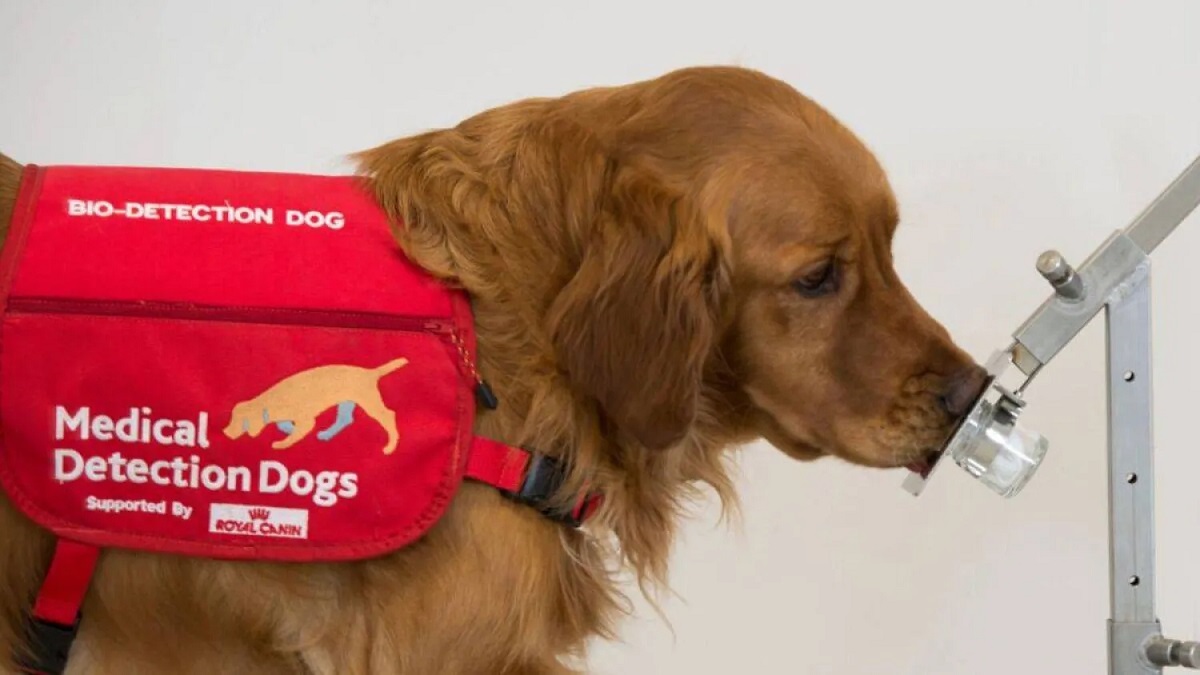
Watan-A recent British study has found that trained dogs are capable of detecting Parkinson’s disease by smelling skin, with an accuracy rate of up to 98% — a promising step that could help diagnose the condition earlier.
The study was conducted in collaboration between the University of Bristol, the University of Manchester, and the charity Medical Detection Dogs, which specializes in training dogs to detect diseases. The findings were published Tuesday in the journal Parkinson’s Disease.

Parkinson’s disease is a neurological disorder that primarily affects body movement and is caused by the damage or loss of specific nerve cells in the brain responsible for producing dopamine — a neurotransmitter that plays a key role in regulating movement and balance.
Key symptoms include tremors in the limbs, slowed movement, muscle stiffness, difficulty with balance and walking, as well as psychological changes such as depression and memory issues. Parkinson’s is a chronic condition with no known cure, but medications and surgical interventions can help alleviate symptoms and improve patients’ quality of life.

In the study, the research team trained two dogs — a Golden Retriever and a Labrador — to differentiate between skin swabs taken from the sebum (an oily substance secreted by the skin) of individuals with Parkinson’s and those of healthy people.
Using a double-blind trial method to ensure scientific accuracy, the dogs demonstrated a sensitivity of 80% (i.e., correctly identifying patients who had Parkinson’s) and a specificity of 98% (i.e., accurately ruling out individuals who did not have the disease), even when the samples came from people with other medical conditions.
According to the researchers, one of the most remarkable findings was that the dogs could identify Parkinson’s even in samples from people with unrelated health issues — suggesting the existence of a unique scent “signature” for the disease that could potentially be used in clinical diagnosis.
Currently, there is no definitive early diagnostic test for Parkinson’s. Diagnoses typically rely on observing symptoms that may not appear until 10 to 20 years after the disease has already begun to affect the body. Using trained dogs and skin swabs could allow for early detection, giving patients a better chance to begin treatments that may slow disease progression and reduce its severity.

The researchers added that their findings support previous studies showing that Parkinson’s disease causes the release of certain chemical compounds through the skin. This opens up the possibility of developing electronic devices that mimic a dog’s sense of smell — known as an “electronic nose.”
They also noted that using dogs or skin swabs for diagnosis is less costly and less invasive than traditional methods like brain scans or complex neurological exams. This could make the technique suitable for wider use, particularly during preliminary screenings.