
Gaza’s Economy in Collapse: 85% of Businesses Damaged Amid Ongoing War, Chamber Chief Warns
Chamber of Commerce Head Calls for Urgent Aid, End to “War Profiteers,” and Full Border Openings to Revive Gaza’s Economic Lifeline.
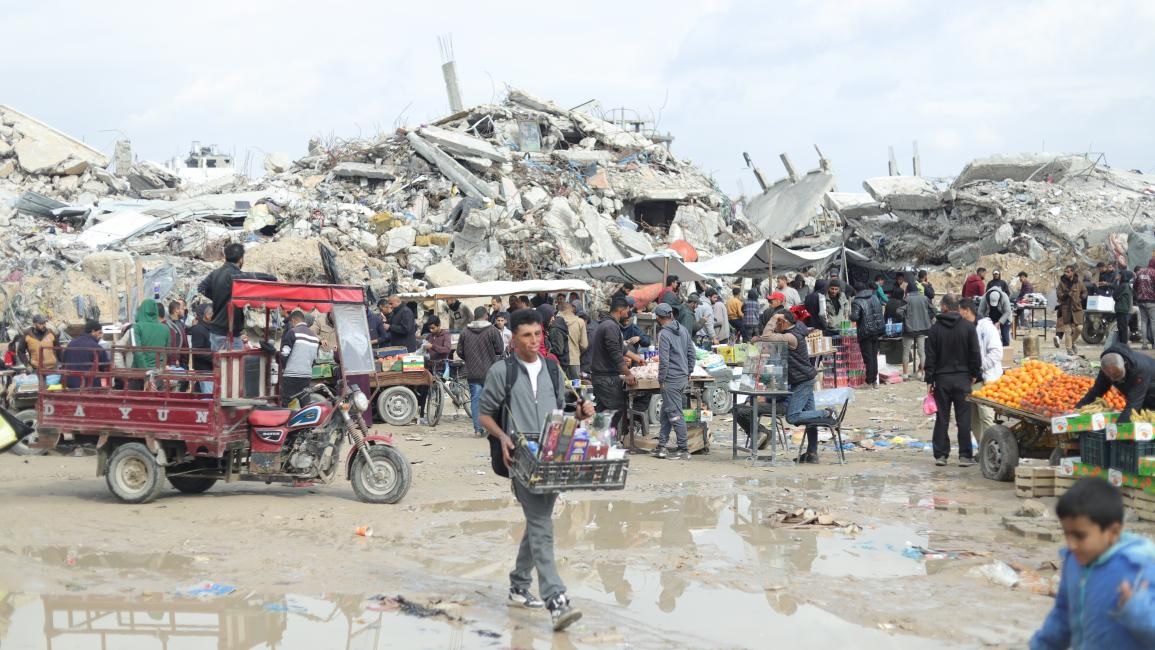
Watan-The head of the Chamber of Commerce in Gaza, Aed Abu Ramadan, has confirmed that Gaza’s commercial and industrial sectors are experiencing an unprecedented economic collapse, with over 85% of economic establishments either fully or partially destroyed since the Israeli assault began on October 7, 2023. He also warned that Israel is supporting “war profiteers” to ensure the economy remains in a state of perpetual chaos.
In an interview with Al-Araby Al-Jadeed from Gaza, Abu Ramadan emphasized that the next phase requires urgent reconstruction efforts, including emergency financing for traders to recover a portion of their losses, and full reopening of border crossings to allow the movement of goods and construction materials that would help restart Gaza’s crippled economic cycle.


Abu Ramadan said that around 90% of Gaza’s traders are out of business, while the remaining few are drowning in debt and unable to recover funds from the market—further worsening the economic crisis.
He described the current state of Gaza’s commercial sector as the worst in decades, citing war, ongoing border closures, resource scarcity, and import restrictions as primary reasons for the collapse of the economic cycle.
Those traders still trying to operate face daily obstacles, including skyrocketing prices of raw materials, declining consumer purchasing power, currency instability, and a severe liquidity crunch, turning even basic commercial activity into a dangerous gamble.
The Chamber has reactivated its commercial arbitration center to resolve disputes and facilitate financial settlements. Abu Ramadan also called for an end to the phenomenon of “war traders” who exploit the crisis by unjustifiably raising prices, often with covert support from Israel, which he accuses of deliberately seeking to destroy Gaza’s social and economic fabric.“The economy should be separated from the conflict,” he stressed. “Traders need stability and clear regulations to resume production.”
He called for active international protection of the Palestinian economy, which, he says, is being systematically drained not only by the destruction of infrastructure but by targeted policies undermining the entire economic system.
According to Chamber statistics:
-
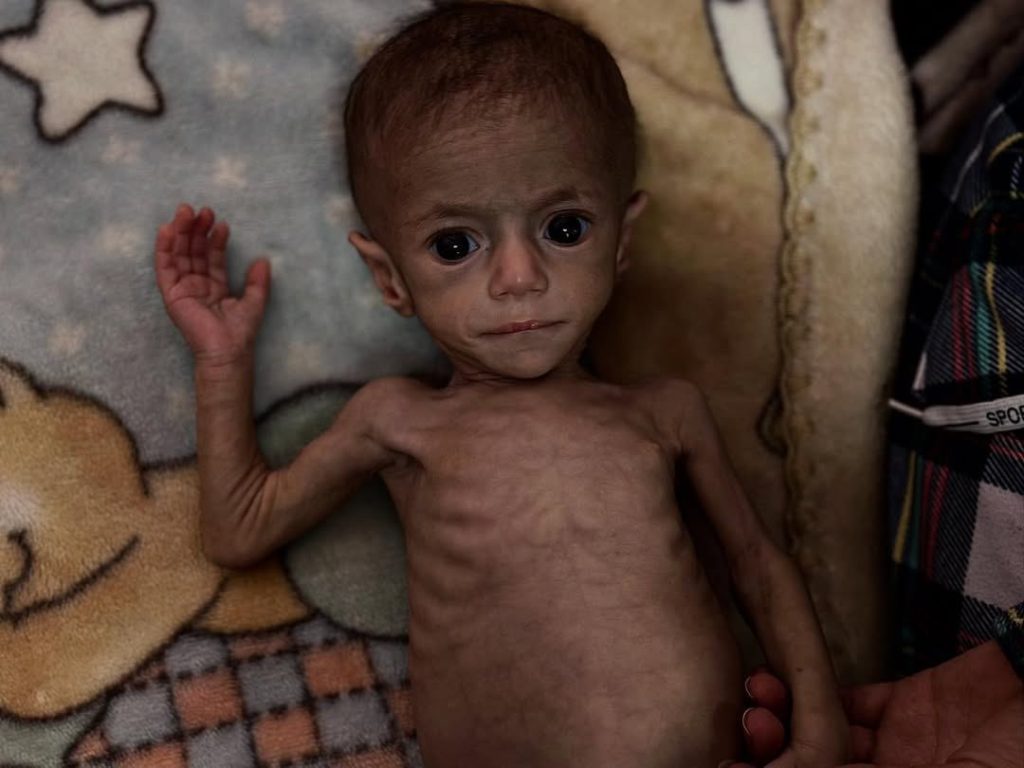
The shortage in basic goods is severe.
-
In May and June, the flour deficit reached 43%, while food item shortages hit 80%.
-
Gaza needs 4,600 tons of flour weekly, but only 2,625 tons entered.
-
The need for food supplies is 2,417 tons weekly, while only 482 tons were delivered.
As for the cash liquidity crisis, he noted that some traders are hoarding cash and selling it at up to 45% premiums, exploiting citizens’ urgent needs. The continued circulation of worn-out currency with no replacements for two years has worsened the situation.
However, Abu Ramadan noted a slight improvement, as commission rates on liquidity recently fell from 45% to 36%, hinting at a fragile recovery. Still, he warned that this will not last unless the war ends and crossings reopen to allow unrestricted flow of goods.
The Chamber is now focused on monitoring and public awareness, urging traders to maintain ethical pricing and protect Palestinian consumers from additional hardship.
The Chamber also launched two responses:
-
Educating traders on the risks and illegality of exploitative cash practices.
-
Receiving citizen complaints on price gouging and forwarding them to authorities.
“Israel’s control doesn’t stop at blocking essential goods,” Abu Ramadan added. “It’s fostering economic chaos through indirect tools, namely ‘war traders’ who raise prices insanely and break down trust between traders and consumers.”
He accused Israel of orchestrating this chaos and deliberately targeting Gaza’s security forces, which previously helped regulate the markets and prevent price manipulation.
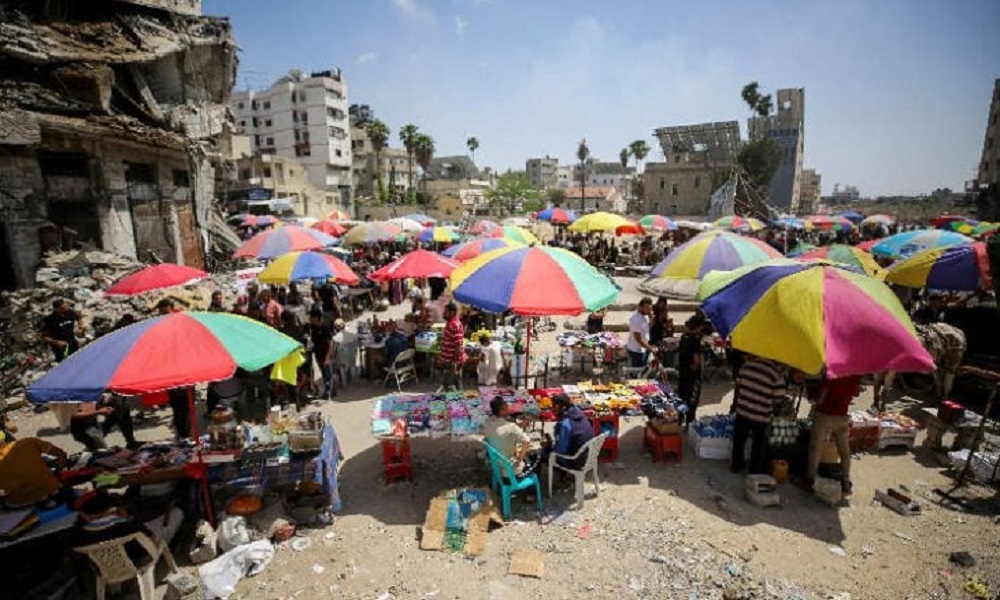
On the issue of “coordination fees” (new customs-like charges paid to middlemen in Israel and the West Bank to allow goods into Gaza), Abu Ramadan blamed Israel directly, accusing its “economic arms” of running networks profiting from this wartime scheme. Over $800 million was reportedly paid in coordination fees during the war—raising commodity prices sharply and heaping extra burdens on civilians.
He rejected the system outright and called on the international community to intervene and end this economic blackmail.
On the U.S.-backed aid distribution centers, Abu Ramadan also voiced firm opposition to any role in facilitating their operations, alleging these centers are used as tools to displace Gazans—from the north to the south, and eventually out of the Strip entirely. He warned against the militarization of aid and its use as leverage over civilians.
In closing, Abu Ramadan emphasized that market stability and financial recovery are inseparable from ending the war and consistently reopening crossings. He noted that commission rates on cash have already started dropping with rumors of a ceasefire, and are expected to continue falling once a truce is in place.