Wombs Under Siege: Gaza’s Pregnant Women Face Starvation and Medical Collapse
UN Warns of Catastrophic Crisis as Pregnant Women in Gaza Go Days Without Food; Doctors Report Fetuses Feeding on Mothers’ Bones Amid Total Healthcare Breakdown
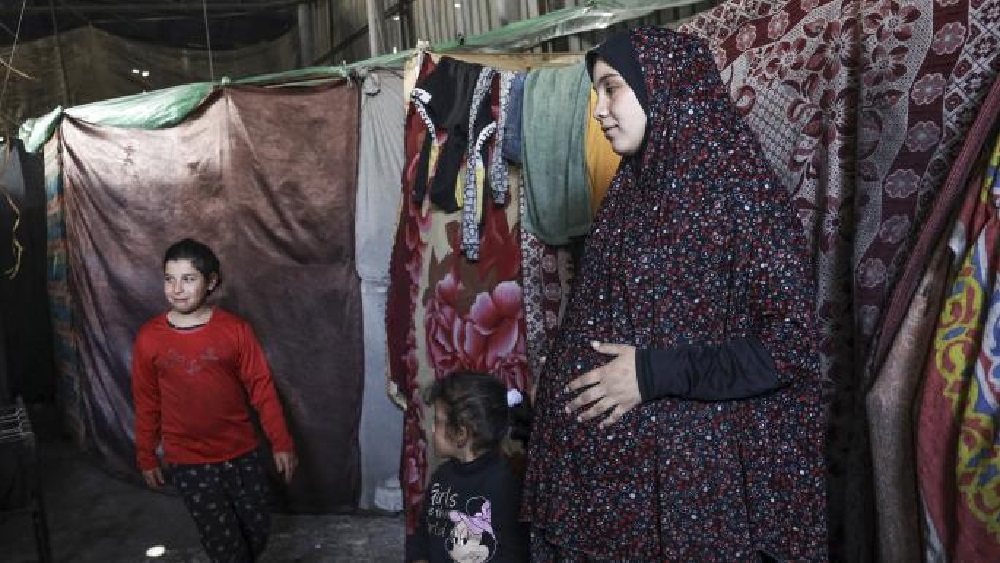
Watan-The United Nations Population Fund warned that over 50,000 pregnant and breastfeeding women in Gaza have gone days without food. Children are being born dangerously premature and face a lifetime of health issues or death, as famine and siege ravage the healthcare system.
At Nasser Medical Complex in Khan Younis, south Gaza, 34-year-old Taghreed Awad lies on a worn-out mattress surrounded by empty cans. Her emaciated body and pale face tell a story of hunger that words cannot capture.

When asked by her doctor about the last proper meal she had, she quietly pointed to a cold can of beans beside her:“I’m three and a half months pregnant, and I haven’t eaten anything beneficial. We survive on lentils and canned food at best. No vegetables, no fruit, not even bread.”
Attempting to stand, her legs shook violently. A volunteer steadied her, explaining:“Her blood count is dangerously low, her blood pressure drops suddenly, and there are no vitamins or iron supplements. She lives on darkness and hope — and even hope seems to be fading.”
Speaking to Al-Quds Al-Arabi, Taghreed wasn’t complaining—she was documenting a silent tragedy:“People think pregnancy is just a bellyache and childbirth. But here in Gaza, pregnancy is a daily death from hunger. I feel like my baby is eating my bones to survive.”
Between Wombs and Starvation
In Gaza, women carry more than babies. They carry hunger, fear, and displacement. In this relentless war, wombs once full of life now resemble hanging coffins—trapped between bombed skies and empty kitchens.
Ruqayya Mohsen, 31, six months pregnant, sits inside a classroom-turned-shelter with her toddler:“Since I got pregnant, I’ve lived on cold, tasteless canned food. No meat, no fruit, no vegetables. My little girl asks for an apple, and I can’t even ask for a sugar cube for myself.”
She shares a single room with three other families. There’s no bed, clean water, or balanced food.
“I have anemia, constant dizziness, and exhaustion. I can barely move,” she says through tears. “But I’m not scared for myself… I’m terrified for the baby inside me. I haven’t given him anything useful to live on.”
Mothers Without Medicine
In Al-Aqsa Martyrs Hospital, which barely manages emergency needs, OB-GYN Dr. Omar Abu Mohsen flips through patient files with a heavy face.
“We see dozens of pregnant women every week. Over 90% suffer from severe anemia. Their hemoglobin levels and iron stores are catastrophically low.”
Standing beside a woman about to deliver, he explains:“When pregnant women don’t eat, the body starts pulling calcium and nutrients from their bones to feed the fetus. Literally, the baby feeds on the mother’s body. This isn’t exaggeration — it’s biology.”
Caesarean sections are now more common, not only due to medical complications but because mothers are too weak to give birth naturally — yet hospitals lack the basic tools, from sterilizers and blood units to painkillers.
A Silent Famine Inside the Womb
According to the World Health Organization, there are over 55,000 pregnant women in Gaza, a third in high-risk categories. About 130 babies are born daily, many of them premature, underweight, or with severe complications.
Since Israel closed all Gaza crossings on March 2, 2025, no medical supplies for mothers and infants have entered the Strip — including:
-
Anesthesia and pain relief
-
Incubators for premature babies
-
Pediatric ventilators
-
IV fluids and antibiotics
-
Over 180,000 doses of routine vaccines for children under two
These critical items remain blocked at the borders, while the need grows inside delivery rooms.
Gaza’s famine is not just a calorie deficit — it’s a complete nutritional collapse. According to a recent report from the Nutrition Cluster in Palestine, 10–20% of 4,500 surveyed pregnant and breastfeeding women are suffering from severe acute malnutrition.
Meanwhile, 21 therapeutic nutrition centers have ceased operations due to bombing or forced evacuations, depriving over 350 children of life-saving care.
Mothers once supported with supplements now fall silent, and even infant formula has disappeared. Hunger may not speak — but it’s heard in the fetal heartbeats struggling to survive.
A Cry from the Shadows
In Khan Younis, Noha Khaled, seven months pregnant, sits under a tent made of tarp scraps.
“Before the war, I went to the UN clinic regularly and got iron and vitamins. Now there’s no clinic, and no medicine.”
She speaks of sleepless nights, stomach pain, and fear of losing the baby:“I don’t know if my baby is okay. I have no ultrasound, no doctor. My last delivery was a C-section, and I fear going through that again without any strength or medical help.”
Asked if she’d consider fleeing Gaza, she quietly replies:“Where would we go? Even death is blocked. We’re dying slowly.”

A Warning to the World
What Gaza’s pregnant women face is not just a health crisis—it’s a deliberate, prolonged atrocity, says Dr. Munir Al-Bursh, Director General of Gaza’s Health Ministry.
“Gaza’s unborn are feeding on their mothers’ bodies because food is blocked, aid is withheld, and the world stands idle. Medicine is denied for political reasons, and food is starved like the souls inside the wombs.”
He warns that without immediate intervention, the consequences will be irreversible:“These women are not just fighting hunger — they’re fighting for their babies not to start life already broken. But if no one helps, if the siege continues, if medical aid doesn’t arrive, famine will devour the living flesh — and the child will fall from the mother before the missile from the sky.”