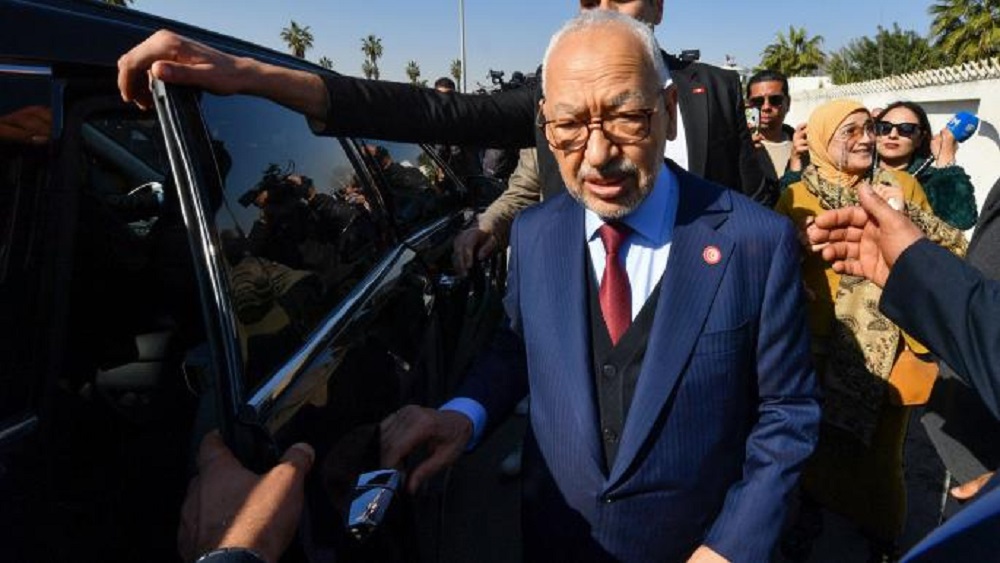
Watan-Tunisian radio station Mosaique FM reported that a court on Tuesday issued prison sentences ranging from 12 to 35 years against prominent politicians, including Rached Ghannouchi, the head of the Ennahda Movement, and former security officials, on charges of conspiracy—a move critics say reveals President Kais Saied’s use of the judiciary to entrench authoritarian rule.
Among those convicted of conspiring against the state in this case is Nadia Akacha, former chief of staff to President Saied. She was sentenced in absentia to 35 years in prison, having fled the country.
Mosaique noted that former Prime Minister Youssef Chahed, who is also accused in the case, has appealed the indictment referral to the criminal court, meaning he is not currently included in the sentencing pending the appeal outcome.
Ghannouchi, aged 84 and the longtime leader of the Islamic Ennahda party, was sentenced to 14 years in prison. Ghannouchi, who also served as speaker of the parliament dissolved by Saied, has been imprisoned since 2023 and has received a total of 27 years in prison in three separate cases over recent months.
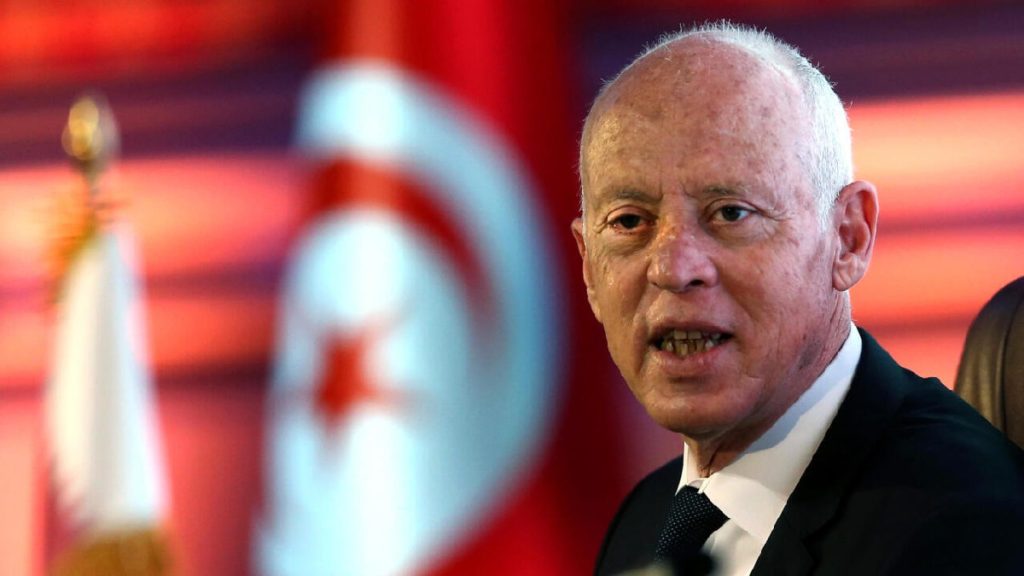
Tunisian President Kais Saied
A total of 21 individuals were charged in the case—10 of whom are already imprisoned, while 11 have fled the country.
The court sentenced former intelligence chief Kamal El-Kaïzani, former Foreign Minister Rafik Abdessalem, and Ghannouchi’s son Moaz to 35 years in prison each. All three are currently abroad.
President Saied dissolved the parliament in 2021 and began ruling by decree. He later dismantled the independent Supreme Judicial Council and dismissed dozens of judges—actions the opposition calls a coup that undermined Tunisia’s budding democracy, which was seen as the spark of the 2011 Arab Spring uprisings.
Saied denies these allegations, insisting his actions are legal and meant to end years of chaos and widespread corruption among the political elite.
Since Saied consolidated power in 2021, most opposition leaders, several journalists, and critics have been imprisoned.
Earlier this year, another court sentenced opposition leaders, businessmen, and lawyers to between 5 and 66 years in prison on similar conspiracy charges—a case the opposition claims is fabricated to silence dissent.
Human rights groups and activists say Saied has turned Tunisia into an open-air prison and is using the judiciary and security forces to target his political opponents.
Saied, for his part, rejects these accusations, stating he will not become a dictator and that no one is above the law, regardless of their name or position.