
Netanyahu Rejects Hamas Amendments to Ceasefire Deal: A Push to Impose Israel’s Own Terms on Gaza
Palestinians accuse Israel of undermining negotiations by refusing essential demands, while analysts warn of a deeper plan to use the war to control and eventually displace Gaza’s population.

Watan-Israeli Prime Minister Benjamin Netanyahu—wanted by the International Criminal Court—did not surprise Palestinians or observers when he rejected the amendments proposed by the Palestinian resistance to the Qatari ceasefire proposal for Gaza. His objective, analysts say, is to impose his own terms and vision for a resolution.
A statement from Netanyahu’s office confirmed that he received, “last night, the amendments that Hamas requested to the Qatari proposal for a ceasefire,” and declared them “unacceptable.” However, it added that Israel has accepted the invitation to engage in talks aimed at retrieving hostages based on the original Qatari framework.

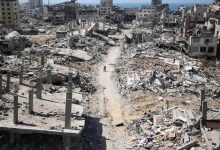
Hamas Sets Firm Conditions as Netanyahu Rejects Amendments to Gaza Ceasefire Plan
The statement noted that the Israeli negotiating delegation would depart for Doha today (Sunday) to resume indirect talks.
Hamas had submitted its official response to the proposal to mediators on Friday evening, following internal consultations and discussions with Palestinian factions.
According to Israeli Broadcasting Authority sources, Hamas insists on three core demands as conditions for modifying the agreement:
-
Returning to the previous model of distributing humanitarian aid.
-
Extending the ceasefire as long as negotiations continue.
-
A clear and tangible withdrawal of Israeli forces from the areas they currently occupy in Gaza.

From the perspective of Palestinian analysts, the current proposal does not guarantee a true or even temporary ceasefire, nor a clear mechanism for aid or reopening border crossings.
Political analyst Dr. Abdullah Aqrabawi, speaking to Al Jazeera, criticized the Israeli position, stating that Israel avoids even using the word “withdrawal”, preferring “redeployment.” He added that Israel resists any real cessation of hostilities, instead framing it as a halt to “offensive operations.”
Aqrabawi further argued that Israel’s refusal to change the aid distribution mechanism is designed to psychologically demoralize Gaza’s civilians, allowing for continued death and suffering. “Frankly,” he said, “the proposal presented to the resistance leads to neither a permanent nor a temporary ceasefire. It does not open the crossings or ensure the entry of aid.”
Many Palestinians remain deeply skeptical of the U.S. role, which they view as unconditionally biased toward Israel. Aqrabawi asserted that Washington has not offered any genuine guarantees for a lasting ceasefire, and that “the Americans are not neutral mediators, but partners in the crimes being committed in Gaza.”
Last week, U.S. President Donald Trump stated that he expected a deal “within the week,” yet failed to specify what would happen if negotiations collapsed during the proposed two-month truce window.
The Displacement Plan
Other analysts point to the core issues raised by Hamas—aid access, a real ceasefire, and troop withdrawal—as critical and non-negotiable.
Shadi Al-Sharafa, an expert in Israeli affairs, said on Al Jazeera that humanitarian aid should be guaranteed, but Israel is using it as a tool of blackmail against the Palestinian negotiating team.
Al-Sharafa believes Israel’s insistence on maintaining control from the Morag axis in the south to the Philadelphi corridor is part of a broader strategy to convert that region into a massive detention zone, paving the way for population displacement.
According to internal Israeli military and political calculations, these negotiations are an opportunity to fulfill war-time objectives, including:
-
The complete dismantling of Hamas,
-
Expulsion of its leadership,
-
Confiscation of weapons,
-
and the strategic goal of full population displacement—a goal that remains dependent on regional and international dynamics.
Although Netanyahu now claims to support negotiations, he has reportedly ordered the military to prepare plans to regain full control over Gaza, suggesting renewed military escalation remains on the table.
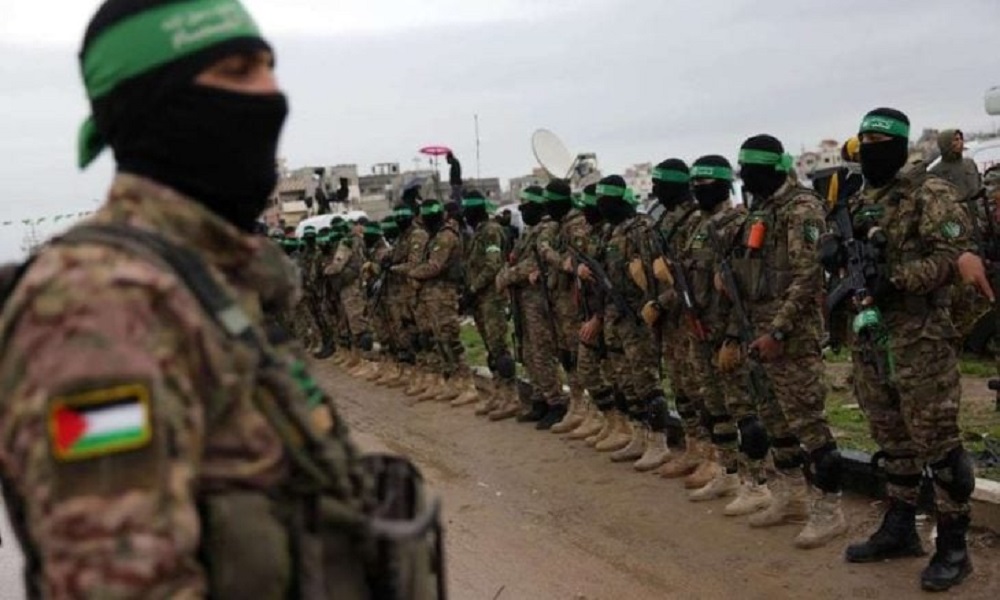
Political Calculations Above Peace
The Israeli newspaper Haaretz reported Sunday that Netanyahu continues to place obstacles in the path of a potential agreement, primarily to preserve his ruling coalition ahead of another parliamentary term. The phased and prolonged negotiation process is, according to the paper, the result of Israel’s deliberate intransigence.
Netanyahu is expected to travel to Washington on Monday to meet with President Donald Trump, as confirmed by Israeli media.