Iran Strikes at the Heart of Israeli Science: Weizmann Institute Among Targets in Escalating War
Overnight missile attacks by Iran hit strategic Israeli infrastructure, including the Weizmann Institute of Science—Israel’s premier research hub tied to defense and nuclear programs.
Watan-An unprecedented night unfolded in Israel as the country struggled to process the shock of Iran’s early Sunday morning missile barrage—retaliation for Tel Aviv’s ongoing war aiming to dismantle Tehran’s nuclear project, which had been central to negotiations with the United States.
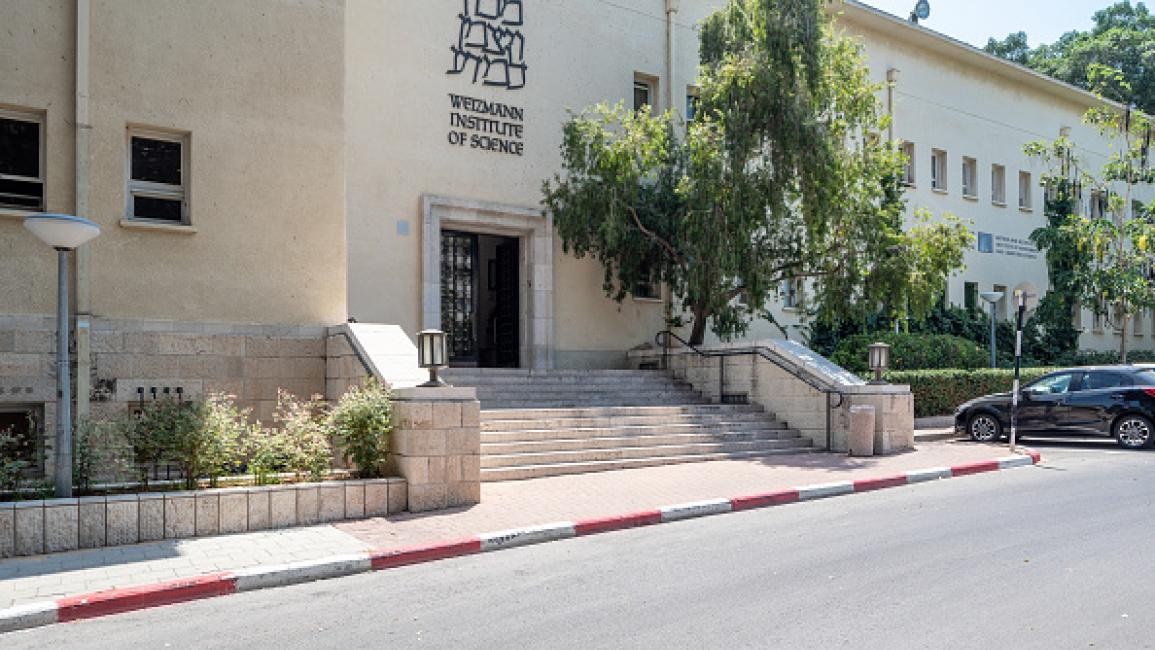
This night will be recorded in Israeli history not only for the extensive destruction caused by Iranian missiles in various regions, but also because one of Israel’s most prestigious scientific institutions—the Weizmann Institute—was directly targeted. What do we know about this institute?


From Ziv Institute to Weizmann Institute
The Weizmann Institute of Science, located in Rehovot, specializes in natural sciences and mathematics. It was Israel’s third institution of higher education after the Technion in Haifa and the Hebrew University in Jerusalem. Initially established in 1934 as the Ziv Institute, it was later renamed after Dr. Chaim Weizmann, the chemist and Zionist leader.
In its early years, the institute focused on research serving the needs of the Jewish agricultural settlement (Yishuv), emphasizing agricultural and botanical studies. Funding came largely from Lord Israel Moses Ziv and his wife Rivka, owners of “Marks & Spencer,” in memory of their late son.

It was built adjacent to the Jewish Agency’s agricultural station and on lands belonging to depopulated Palestinian villages like Zarnuqa. Dr. Ernst David Bergmann, Weizmann’s colleague from the UK, was its first scientific director.
Weizmann played a major role in employing displaced scientists fleeing Nazi Germany and fundraising for the institute’s growth. In 1946, he laid the cornerstone for the new campus with support from American Zionists, particularly Meir Weisgal.
During the 1948 Nakba, the institute hosted the “Science Corps” of the Haganah, the forerunner of Israel’s military-tech industry. Many of its early leaders, including Ephraim and Aharon Katzir and Israel Dostrovsky, later became pioneers in Israeli science and defense.
Institutional Structure and Budget
Renamed the Weizmann Institute in 1949, it now includes five faculties: Biology, Chemistry, Physics, Mathematics, and Computer Science—plus a graduate school granting Master’s and PhD degrees. Its 2022–2023 operational budget reached 2.1 billion shekels, sourced from technology commercialization (43%), state budget (25%), research grants (19%), and donations (12%).

Technology developed at the institute is marketed by Yeda Research and Development Company. Since 1959, it has registered nearly 1,400 patent families and launched 42 companies, with a current asset portfolio valued at over 9.5 billion shekels.
Scientific Contributions and Global Impact
Across decades, Weizmann has made landmark discoveries:
-
In mathematics and computing: It built Israel’s first computer (WEIZAC), created the first biological computer (2004), and led global advancements in cryptography.
-
In physics: It developed MOND theory for galactic dynamics, high-precision diamond lasers, and launched Israel’s first quantum computer in 2022 (“WeizQC”).
-
In medicine: It pioneered affinity chromatography, polymer science, and cancer diagnostics, and helped create blockbuster drugs like Copaxone and Humira. Professor Ada Yonath won the 2009 Nobel Prize in Chemistry for her ribosome research.

Defense and Military Applications
The Weizmann Institute is deeply integrated into Israel’s defense sector. It collaborates with companies like Elbit Systems and Rafael, supports the Defense Ministry’s Katzir Fellowship for tech-security leadership, and helped lay the foundations for Israel’s nuclear program through uranium research.
Its innovations feed into advanced military applications—from AI, surveillance, and precision targeting to cyber protection and satellite navigation systems.
A Strategic Target in Wartime
The institute’s military significance makes its targeting in Iran’s missile assault a symbolic and strategic move, signaling a new phase in the escalating Iran-Israel war. According to analysts, striking such infrastructure underlines Tehran’s intent to strike not just military but also scientific assets that support Israeli defense.