No Eid in Gaza: War, Hunger, and Displacement Strip the Joy from a Sacred Holiday
As Eid al-Adha approaches, Gazans endure their fourth holiday under relentless war, displacement, and starvation, with no celebrations, no sacrifices, and a collective memory fading into despair.
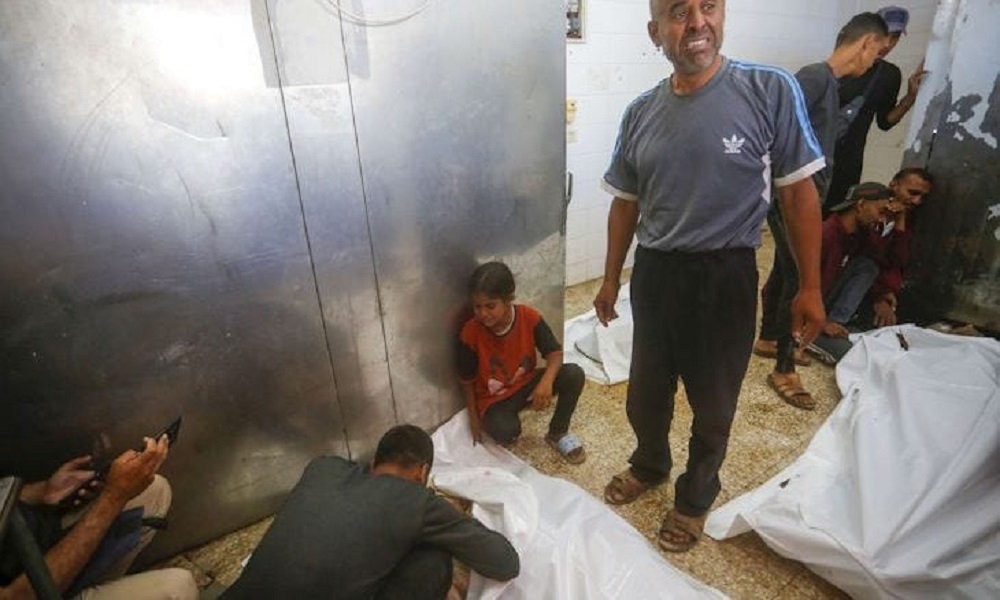
Watan-This year, Eid al-Adha arrives for Muslims—especially the people of Gaza—in the worst living conditions since the start of the ongoing war. Hardship, hunger, and poverty have stripped the holiday of any celebratory spirit. The devastating circumstances have overshadowed even the most cherished memories of past Eids.
Today, only around 20% of Gaza’s total area remains accessible for civilians, as the Israeli army has declared most of the Strip as military zones, launching incursions and applying a scorched earth policy. As a result, the dominant scenes across Gaza are those of overcrowded tent camps and shelter centers. The remaining partially damaged homes are overwhelmed with displaced residents and their extended families.

The Fourth Eid Under War
This marks the fourth Eid Gazans are experiencing during the war—two Eids al-Fitr and now a second Eid al-Adha. Each has felt more grim than the last, as conditions in the Strip continue to deteriorate in what is now the 20th month of war.
Ahlam Al-Masri, displaced from northern Gaza and now living with her family in a crowded tent area west of Gaza City, says she hasn’t celebrated Eid in her home since the war began. Her family has spent previous Eids in Rafah and Khan Younis, and now they are displaced yet again. “Eid days pass like any other day,” she tells Al-Quds Al-Arabi. “Nothing has changed—same clothes, same tent, same suffering.”
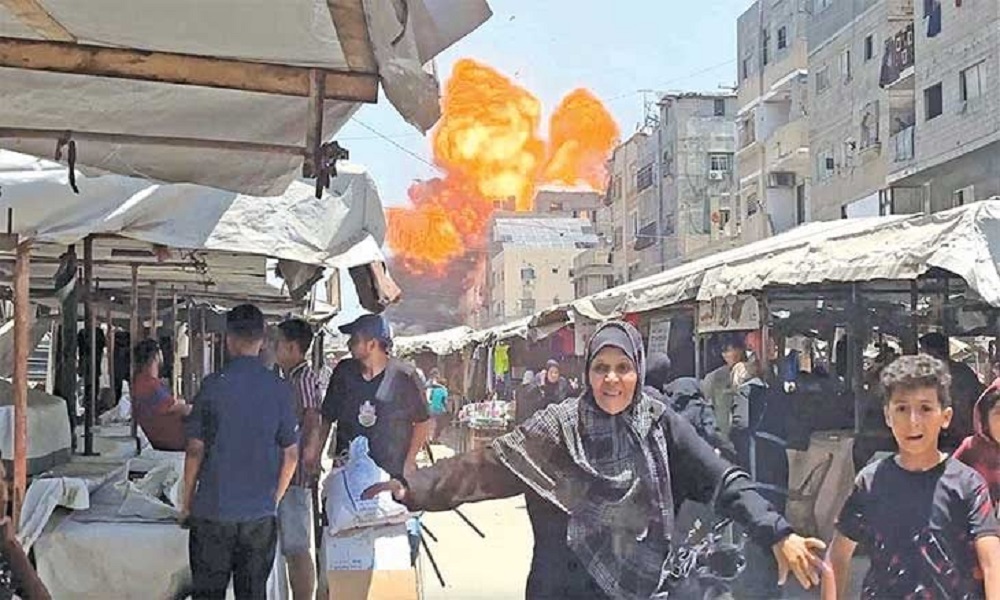
No Celebrations, No Sacrifices
For displaced families, the priority now is securing a single meal and safe drinking water. Ahlam, dressed in the same prayer clothes she wears daily, says neither she nor her children have new clothes for Eid. “Clothes stay the same, whether it’s Eid or not,” she says, echoing a broader reality where families can barely afford food, let alone holiday traditions.
She adds that like many in Gaza, she hasn’t had a peaceful day since the war began. “The burdens of life have erased our past memories,” she says.
The usual decorations and lights that once marked the arrival of Eid are gone. Streets, homes, and shops that used to sparkle with lights and colors have been destroyed in Israeli airstrikes, leaving behind rubble and ash.
One major absence this year, as in the last, is sacrificial animals. In years past, families joyfully slaughtered sheep on Eid morning, an act that brought families—especially children—together. This year, Mohammad Al-Astal from Khan Younis won’t be able to offer his sacrifice.
He recalls how just two years ago, his children played with the sheep days before Eid. Now, his neighborhood has turned into makeshift housing for displaced families, and his partially destroyed home stands in ruins. “No sacrifices this Eid,” he says. “Now I’m just trying to find any kind of food for my family.”
Longing for Meat, Remembering Life Before War
Once, Gazans received generous portions of meat from neighbors and relatives during Eid. Now, they crave even a taste of meat, which disappeared from markets months ago due to the Israeli blockade.
Israel has not allowed the entry of sheep or cattle into Gaza since the war began, and only occasionally permitted trucks carrying frozen meat. With local farms destroyed, livestock is gone, and poultry farms have ceased operations.
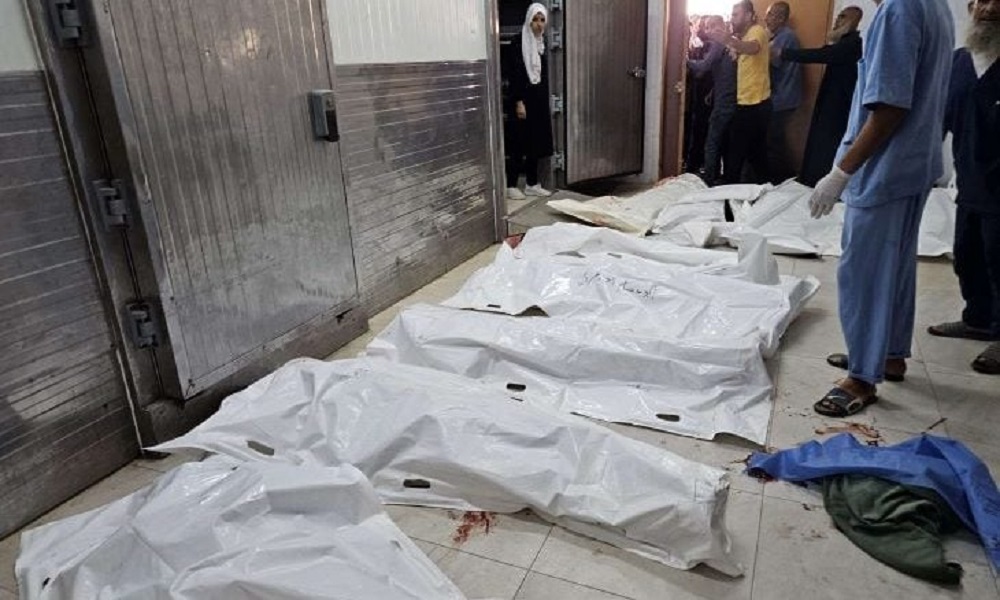
Sameer Aliyan says he hasn’t eaten red or white meat in three months, except for a small chicken portion he received from a charity during the last ceasefire. “Eid is just another day,” he says. “Destruction is everywhere, and the crisis keeps deepening.” He had hoped Eid would coincide with a ceasefire, amid growing talks of a truce—but those efforts collapsed. “We’ve forgotten what Eid even looks like,” he says while gazing over the devastation west of Gaza City. “Nothing is the same. We now expect death, not Eid.”
Denied the Pilgrimage Again
For the second year in a row, Gaza residents have also been denied the pilgrimage (Hajj) due to the ongoing war and closure of border crossings.