
Starvation Deepens in Gaza as Aid Falls Short and Bread Lines Grow
Despite limited aid entry, hunger spreads across Gaza as community kitchens struggle to meet demand, food prices skyrocket, and children collapse from exhaustion and malnutrition.

Watan-In Gaza, residents have felt no improvement after the limited entry of food and humanitarian aid in recent days. On the contrary, hunger has worsened as the small food reserves families once had have run out. This has driven growing reliance on charitable “takiya” (community kitchens), amid the continued closure of bakeries and skyrocketing food prices.
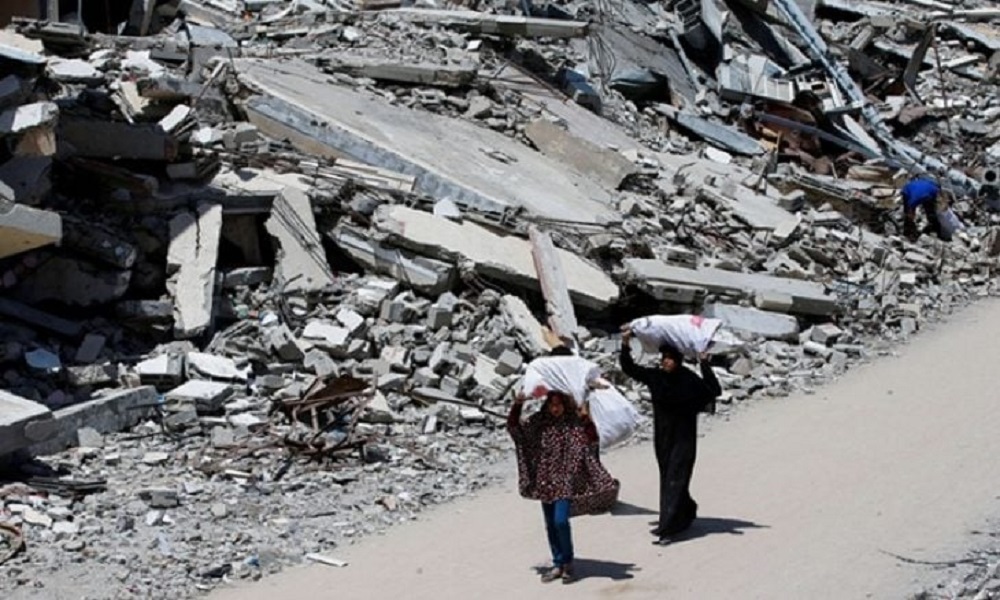
As forced displacement spreads from northern Gaza and large parts of Khan Younis, crowds now overwhelm the takiya kitchens, where people wait for small portions of basic cooked meals—typically lentils, rice, or pasta.

Bakeries Still Closed, Flour Unaffordable
As of Thursday, Gaza’s bakeries contracted with the World Food Programme (WFP) have not resumed operation since April, after running out of flour and fuel—supplies once provided by the WFP.
These bakeries, once selling 3 kg of bread for under $1, catered to poor families coping with wartime poverty and unemployment. But due to the Israeli blockade, flour now costs up to $20 per kilogram, a price well beyond reach for most, causing widespread hunger that has already claimed the lives of children and the elderly.
One bakery supervisor in Nuseirat refugee camp confirmed that no flour or fuel has reached them. Their staff is ready to resume work immediately if supplies arrive.
Despite Israel’s announcement last Monday permitting aid entry, UN agencies warn that the supplies are inadequate. Israel’s current mechanism puts drivers and humanitarian teams at risk, and the UN is calling for unrestricted aid access through open crossings.
Aid Bottlenecks and Growing Distrust
On Wednesday night, a limited number of flour and aid trucks reportedly entered Gaza, but only reached southern and central regions, as many were denied permits to reach Gaza City.
There is growing concern over Israel’s plan to hand over all aid distribution to a U.S.-founded body named the “Gaza Humanitarian Foundation”—bypassing the United Nations. The UN has refused to cooperate with this initiative, especially after the arrival of private U.S. security contractors in Israel, reportedly to oversee aid distribution under the Israeli plan.
Soaring Food Prices and Mass Starvation
Meanwhile, the cost of basic goods has become extreme:
-
One onion is selling for 50 shekels (~$15 USD)
-
A kilo of tomatoes exceeds $10
-
Chicken prices have surged from $5 to $110
With income sources gone, most Gazans cannot afford to buy food, further increasing pressure on charity kitchens already nearing collapse.
Crowds gather each day before food distribution starts. Children, women, and men wait with pots, often leaving empty-handed due to limited portions. In most cases, the cooked meals—prepared over firewood—run out quickly.
The Only Refuge: Takiya Kitchens
At a takiya in western Khan Younis, Samira Al-Najjar, a displaced mother of eight, filled less than half her pot with pasta after hours in the scorching sun. She sent one son to another takiya in hopes of securing a second portion—their only chance to avoid hunger that day.
“We have no flour left, no lentils. If he comes back empty-handed, we will sleep hungry tonight,” she said.
Small children, some under 12, were seen waiting from early morning, hoping to receive a meal. Videos showed them collecting leftovers scraped from cooking pots, or gathering spilled food from the ground. Other clips documented children crying after receiving nothing.

Falling From Hunger
UN reports describe heart-wrenching scenes of displaced children like Mais, who waited in line for lentils but left empty-handed. “How can I fill my plate? I can’t. This is our daily reality,” she said.
At another site in Gaza City, Mohammed Al-Helou, who supervises a community kitchen, said they cook 500 meals daily—nowhere near enough for the growing number of displaced people. “Half the people who come leave with nothing,” he added.
Children and the elderly can be seen shading their heads with empty pots while waiting under the sun, only to leave devastated when supplies run out. Some were filmed fainting from exhaustion and hunger during long walks of forced displacement.
UN Warning: Infants at Risk of Dying Within 48 Hours
Tom Fletcher, UN humanitarian coordinator, issued a stark warning:
“14,000 infants in Gaza may die within 48 hours if more humanitarian aid is not urgently allowed in.”
As the siege tightens and supplies dwindle, Gaza stands on the brink of a full-scale famine, while international silence remains deafening.