Why Is Palestinian Activist Mahmoud Khalil Still in U.S. Detention?
Despite Similar Cases Being Released, Federal Court Delays Leave Gaza Advocate Held for Over 70 Days.

Watan-The New York Times questioned why Palestinian activist Mahmoud Khalil remains detained in a Louisiana prison, even though students, lecturers, and activists facing similar charges related to pro-Palestinian activism have already been released.
In a report by Jonah E. Bromwich, the paper noted that Badr Khan Souri, a postdoctoral student at Georgetown University, was released after 58 days; Rümeysa Öztürk, a PhD student at Tufts University, after 45 days; and Mohsen Mehdawi, a Columbia University graduate, after just 16 days.


However, Khalil—one of the most prominent pro-Palestinian figures in the U.S.—has now spent 72 days in the Jena Detention Center in Louisiana. He awaits a decision from a federal judge in New Jersey on whether he may be temporarily released while his immigration case is resolved.
The Trump administration had used a rarely invoked law to justify that Khalil’s presence in the U.S. poses a threat to foreign policy goals aimed at combating antisemitism.
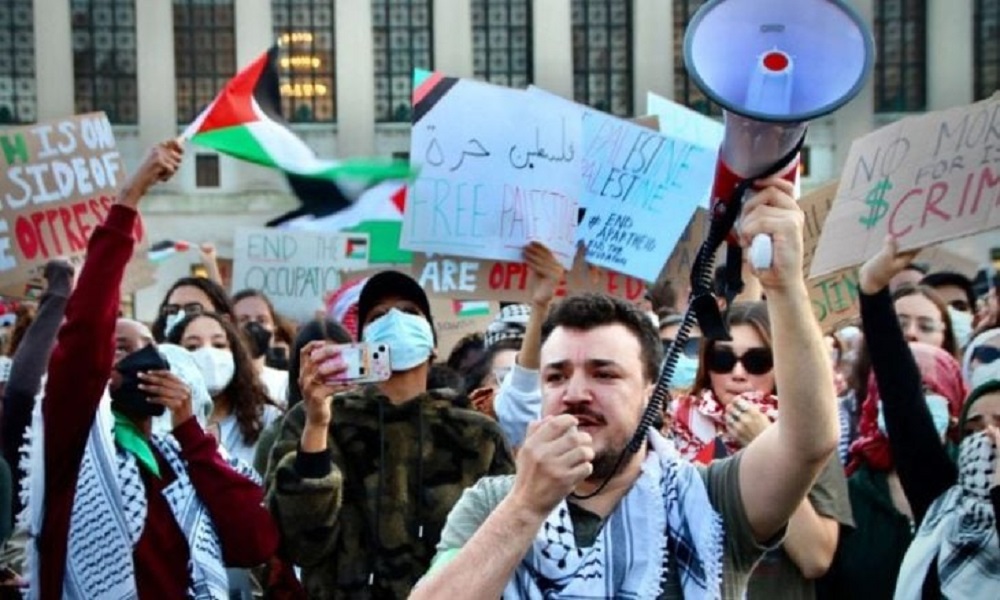
Khalil’s lawyers argue that the U.S. government is retaliating against their client—a legal permanent resident—for his participation in protests at Columbia University, and that he should be free pending a fair legal process.
The paper noted that federal Judge Michael E. Farbiarz of New Jersey is treating the case with grave seriousness but has not yet issued a full opinion on the critical First Amendment and due process questions that have garnered national attention.
Despite repeated requests by Khalil’s defense team for his release on bail—consistent with other similar cases—Judge Farbiarz stated that he must first resolve fundamental procedural matters.
Farbiarz has issued multiple rulings, including two lengthy opinions: one of 67 pages confirming his authority to hear the case, and another of 108 pages affirming his jurisdiction. In the latter, dated April 29, he acknowledged that “unnecessary delay” is prohibited under the law.