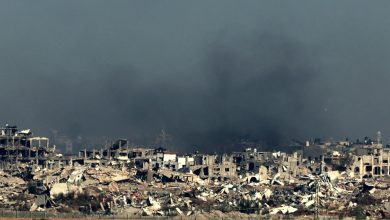
G7 Leaders Back Israel’s Right to Self-Defense, Oppose Iranian Nukes Amid Escalating War
Joint Statement Labels Iran a Major Destabilizer, As Macron Pushes Diplomacy and Trump Departs Early from Summit.
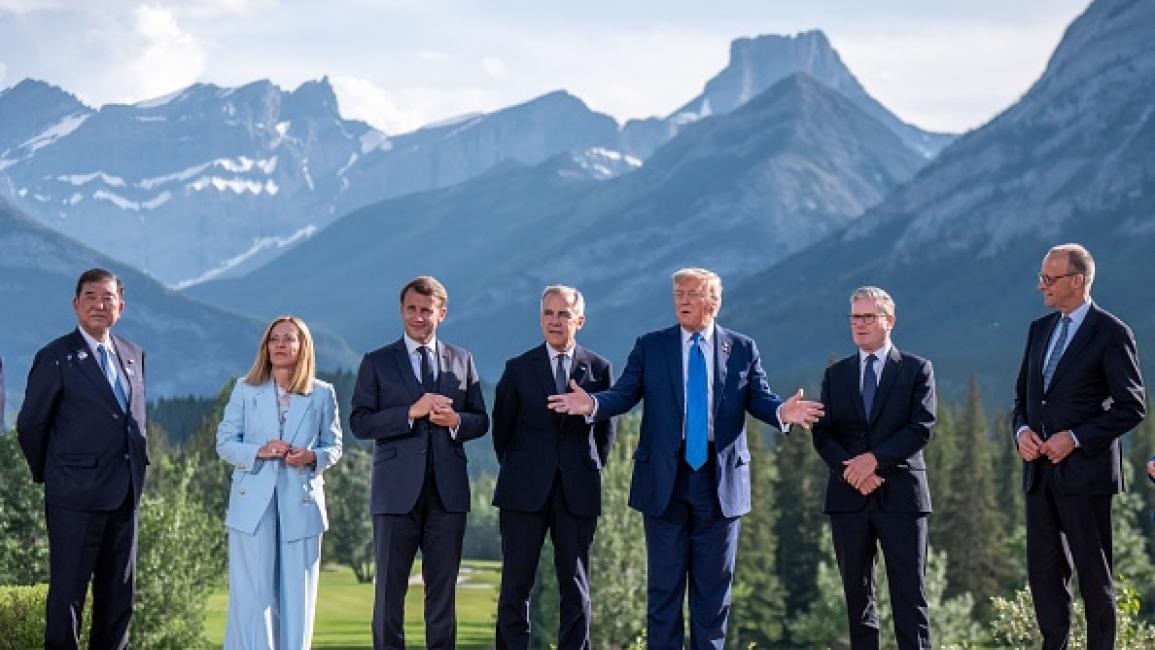
Watan-In an unexpected move, the G7 leaders issued a joint statement Monday affirming Israel’s right to self-defense and opposing Iran’s acquisition of nuclear weapons, as the Israel-Iran war continued.
In the statement released from the G7 summit in western Canada, the group described Iran as “the primary source of instability and terrorism in the region.”

The G7—comprising the United States, United Kingdom, France, Germany, Italy, Japan, and Canada—emphasized that “Iran must never acquire a nuclear weapon” and declared support for Israel’s security. The leaders also called for a broader de-escalation in the Middle East, including a ceasefire in Gaza.
U.S. President Donald Trump left the summit early, returning to Washington amid ongoing Israeli-Iranian missile exchanges that have continued for five consecutive days. His helicopter departed the summit in the Canadian Rockies after he urged residents of Tehran to evacuate.
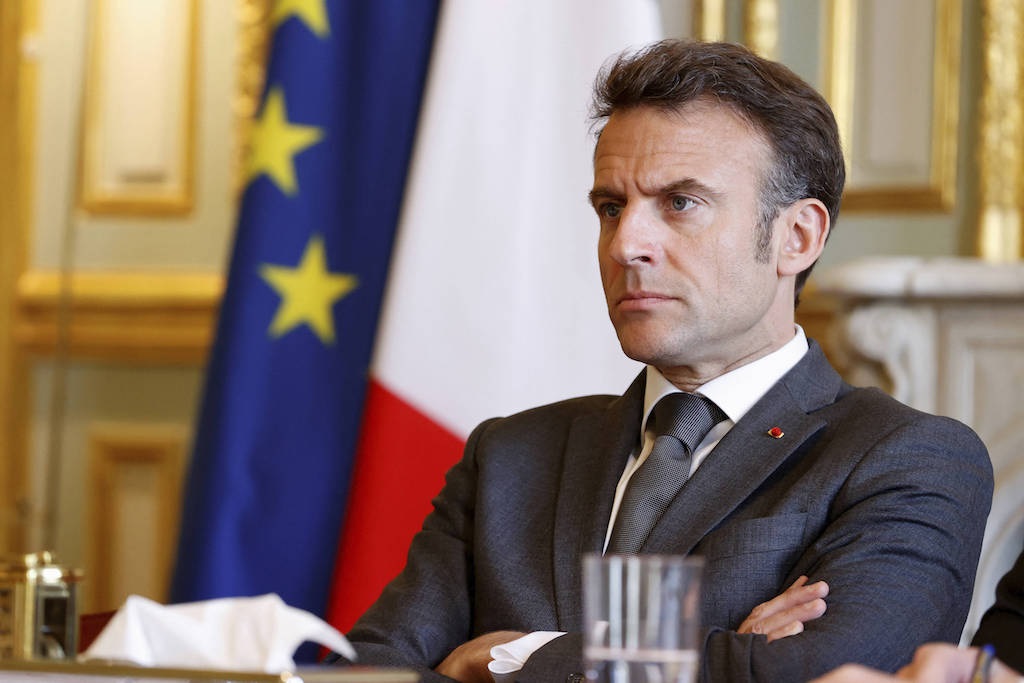
French President Emmanuel Macron spoke positively about U.S. efforts to end the war, saying France, Germany, and the UK were ready to help.
Europe Ready for Talks with Iran
Speaking on the sidelines of the summit, Macron said the European trio is prepared to engage in nuclear negotiations with Iran. He stressed that France and others had launched several initiatives over the years to salvage the nuclear agreement aimed at preventing Iran from developing a bomb.
That deal was unilaterally scrapped by Trump during his first term, after which he re-imposed sanctions. Iran eventually ceased compliance after a year of waiting.
Macron stated, “If the U.S. succeeds in brokering a ceasefire, it would be a very positive step,” confirming that France would support the effort. Though details were sparse, he noted Trump hinted at ongoing talks, including a ceasefire proposal and offers to convene negotiations.
Macron Rejects Regime Change Strategy
Macron strongly rejected calls for regime change in Iran, saying:“It’s not the role of external powers to change political systems.”
He warned that history shows those who try to impose change through force make grave strategic mistakes, adding:“Anyone who thinks bombing from the outside will save a country against its will is mistaken.”
He also shared that Israeli Prime Minister Benjamin Netanyahu told him Friday that regime change was not his objective, but rather limiting Iran’s nuclear and missile capabilities.
European Pressure on Iran to Resume Talks
A French diplomatic source told Reuters that European foreign ministers urged Iranian counterpart Abbas Araghchi to resume nuclear talks and avoid further escalation with Israel. Araghchi reportedly said Tehran’s focus remains on confronting Israel militarily.
France, the UK, and Germany—known as the E3 or European Troika—remain parties to the 2015 Iran nuclear deal, which traded curbs on Iran’s program for sanctions relief. Last week, the E3 submitted a resolution to the IAEA Board of Governors, accusing Iran of breaching non-proliferation obligations.
Ministers urged Iran to return to unconditional negotiations, while warning against reckless actions that could threaten Western interests.
Araghchi responded that Iran has never abandoned diplomacy, but emphasized that the priority is effective resistance to aggression. The French foreign minister had also spoken to U.S. Secretary of State Marco Rubio before the E3 call.
Rising European Frustration with U.S. Strategy
European powers, excluded from U.S.-Iran bilateral talks, have grown increasingly frustrated with Washington’s approach. A draft U.S. proposal from May was reportedly too harsh and offered little in return for Iran’s cooperation.
According to European officials, the IAEA resolution may lead to a UN Security Council referral later this summer if Iran does not engage meaningfully. This would be separate from the “snapback” mechanism that could restore UN sanctions on October 18, when the 2015 deal’s sunset clause expires.
The E3 are the only parties able to activate the snapback clause and are considering an August deadline to do so. Macron emphasized Europe should be a central player in any renewed nuclear negotiations due to its deep involvement in the file.
U.S. Holds the Leverage in Ending the War
A source close to U.S. strategic thinking told reporters that Washington holds the lead role in resolving the Israel-Iran war, saying:“Ultimately, there will be one country in charge of ending this war—and that is the United States, with Israel as its partner.”
He added that broader international involvement is welcome as long as it doesn’t undercut U.S. or Israeli foreign policy strategy.