Algeria-France Crisis Deepens: Economic Blow to French Companies
Escalating tensions between Algeria and France lead to economic setbacks and declining French business presence.
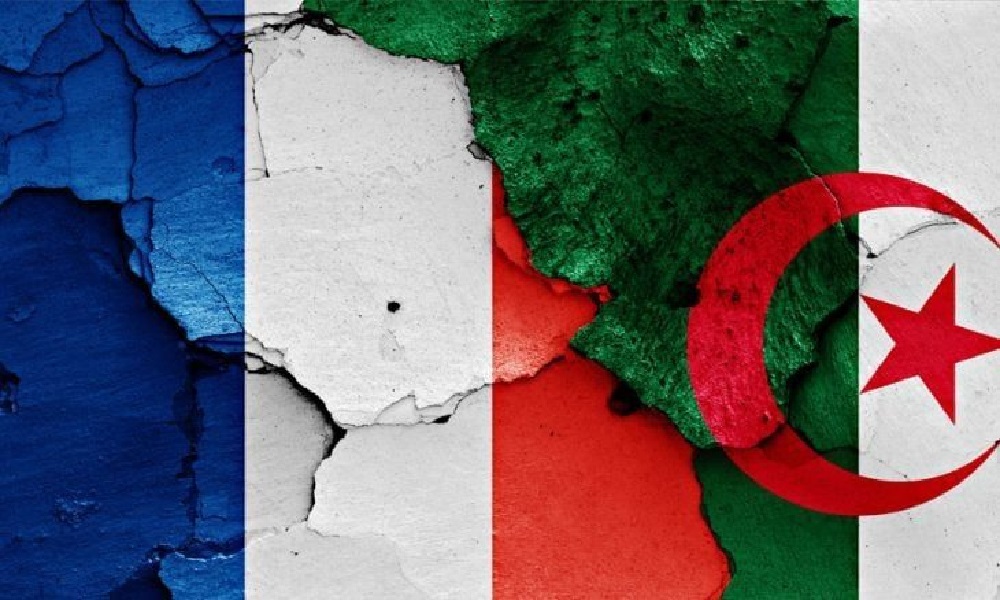
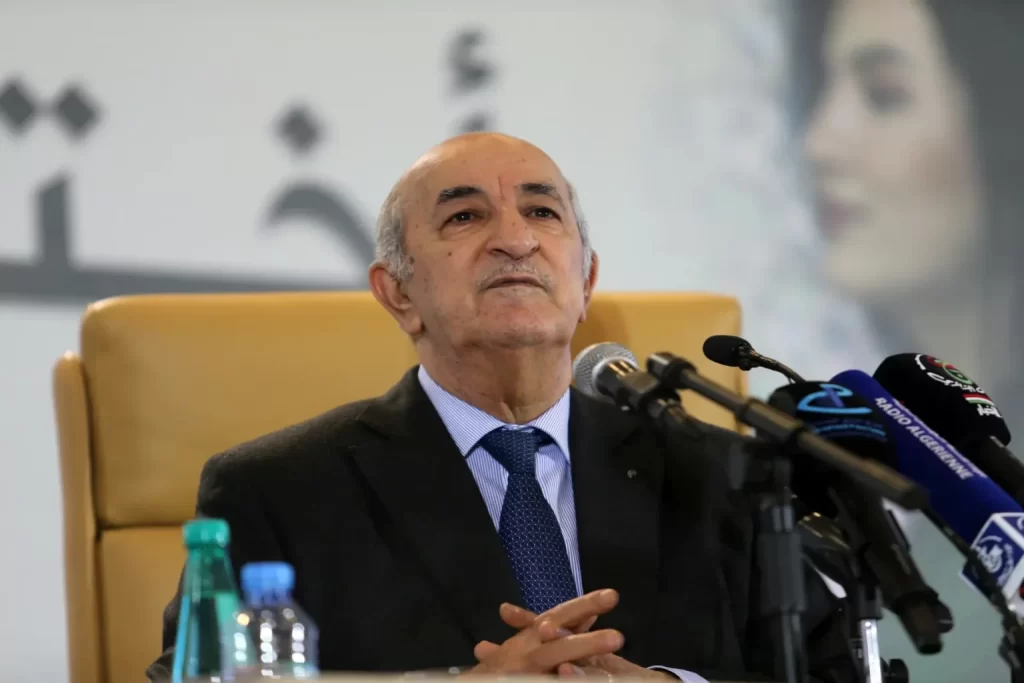
Watan-The unprecedented and escalating diplomatic tension between Algeria and France signals economic repercussions affecting Parisian companies and their presence in the Arab country, where France has lost significant market share since President Abdelmadjid Tebboune took office at the end of 2019.
The increase in tensions between the two countries, which have been experiencing a crisis for years, worsened last summer when the Élysée Palace announced its support for Morocco’s autonomy proposal as the sole solution to the dispute over Western Sahara between Rabat and the Polisario Front.

This was followed by Algeria’s unprecedented decision to withdraw its ambassador from Paris, whereas previously, the ambassador would typically be recalled for consultations. Diplomatic representation was reduced to the level of chargé d’affaires only.
The Algerian diplomat has not returned to his post and was later appointed as Algeria’s ambassador to Lisbon, the capital of Portugal.
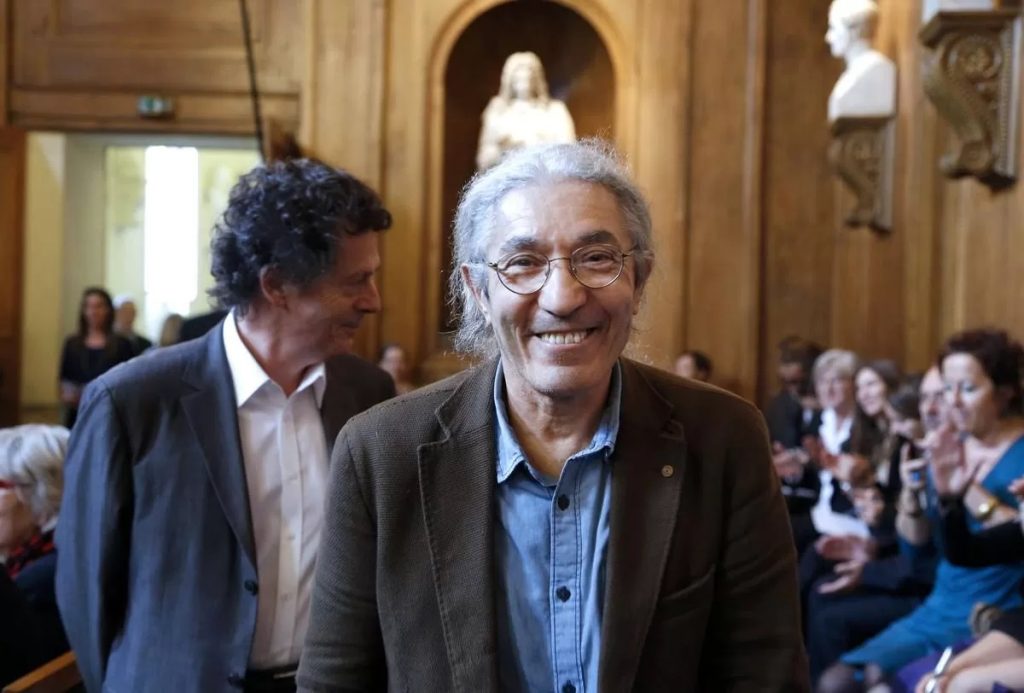
Tensions escalated further in November when Algerian authorities arrested Boualem Sansal, an Algerian writer with French citizenship, at the capital’s airport.
An Algerian court charged Sansal under Article 87 of the Algerian Penal Code with “undermining and threatening national unity” after he made statements on French television claiming that regions in northwest Algeria actually belong to Morocco.
Relations deteriorated further after French President Emmanuel Macron and several of his ministers called for Sansal’s release, which Algeria viewed as “blatant interference” in its internal affairs, particularly as the case was already in the hands of the judiciary.
The tension extended to what was described as the case of Algerian influencers arrested in France, whom Paris accused of using social media platforms to incite hatred and violence.
Among these influencers was the young man known as “Zazo Youssef” (25 years old), who has over 400,000 followers on TikTok.
He was arrested due to a video in which he threatened Algerian regime opponents if they protested during New Year’s celebrations, calling for them to be shot in both France and Algeria.
Following France’s attempt to deport Algerian influencer Naaman Boualem, known as “Dolamen,” Paris found itself in an embarrassing situation when Algerian authorities rejected the French decision and sent him back to Paris on the same plane that had brought him.
Algeria accused French authorities of failing to adhere to the procedures outlined in a 1970s diplomatic cooperation agreement between the two countries.
French politicians, particularly from the far right, such as Interior Minister Bruno Retailleau, described the incident as a humiliation for France by Algeria, arguing that France should respond with all available means.
Declining French Presence
Alongside the diplomatic tensions that have overshadowed Algerian-French relations for the past five years, there has also been a noticeable decline in France’s economic presence in Algeria under President Tebboune, while partnerships with other countries such as China, Turkey, Qatar, and Italy have been strengthened.
This situation led to the departure of the French company “RATP Paris” from Algeria in October 2020. The company had been responsible for operating and maintaining the Algiers metro since 2011, but Algerian authorities decided not to renew its contract.
Similarly, in 2021, the French company “SUEZ,” which managed water and wastewater services in Algiers and the neighboring Tipaza province since 2006 under a repeatedly renewed contract, withdrew from the country.
After Tebboune took office, Renault’s car assembly plant ceased operations in Algeria, laying off its workers and employees in 2020.
Despite some statements from both Algerian and French officials, the plant has remained shut down and has not resumed production.
Meanwhile, the Algerian government has launched similar automobile assembly and manufacturing projects with the Italian brand “Fiat,” and earlier this month, it reached an agreement with South Korea’s “Hyundai” to establish a car plant with an investment exceeding $400 million.
As an example of the decline in French businesses in Algeria, the French agricultural credit bank “Crédit Agricole” ended its presence in the country in 2021 after the Algerian central bank revoked its operating license. The bank had entered the Algerian market in 2007.
During Tebboune’s tenure, Algerian authorities also blocked the acquisition of American oil company “Anadarko’s” Algerian assets by the French energy giant “Total.” These assets had been acquired by “Occidental Petroleum” at the time.
Algeria exercised its preemptive rights under its hydrocarbons law to veto the deal, entirely rejecting the transaction’s Algerian component, given that Total had purchased Anadarko’s assets across Africa.
In 2023, “Total” also withdrew from a major petrochemical plant project in Oran, western Algeria, which was a joint venture with Algeria’s state-owned energy company “Sonatrach.”
The Algerian side decided to proceed with the project independently, awarding the construction contract to a Chinese-British consortium for $1.5 billion.
France’s $18 Billion Loss
Strategic expert Hassan Qasimi, a former director of migration at Algeria’s Interior Ministry, believes that “relations with France are indeed witnessing a severe deterioration due to the unethical actions and statements of the French political class, particularly the far right, which is waging a multi-pronged campaign against Algeria and its interests.”
Qasimi asserts that over the past four years, Algeria has “made economic and commercial decisions regarding its dealings with France that have reached the ruling elite in Paris as a warning, causing significant losses to the French side.”
He estimated that “French companies and economic presence in Algeria have suffered losses amounting to $18 billion over four years, a significant figure that impacts France’s financial and economic balances.”
Qasimi claimed that France had previously worked on schemes aimed at weakening the Algerian state and obstructing major economic development projects, allegedly with the collusion of unnamed Algerian parties.
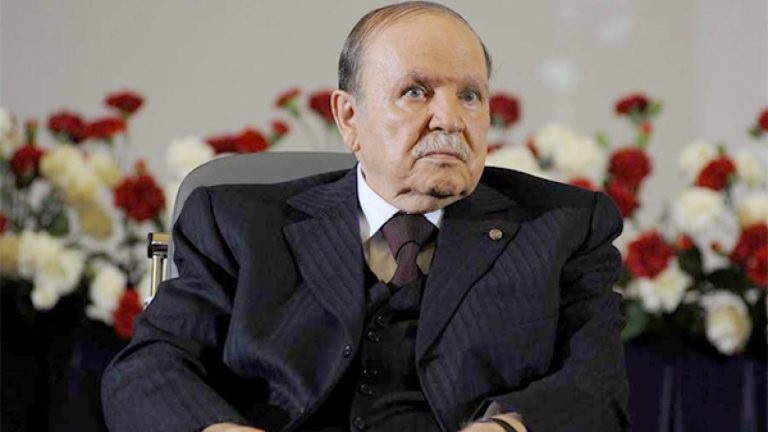
Furthermore, he argued that France had, during the era of former President Abdelaziz Bouteflika, transferred large sums of money—amounting to billions of dollars—out of Algeria without any return.
Colonial Mindset
Regarding the future of France’s presence and businesses in Algeria, Qasimi believes this will depend on France’s response to the demands of Algerian authorities, led by President Tebboune, who insists that France must officially acknowledge its colonial crimes and apologize to the Algerian state and people.
He added that “the restoration of commercial and economic relations, as well as political and diplomatic ties, to their previous state is conditional on France abandoning its colonial-era mindset and treating Algeria and African nations as equals.”
Qasimi concluded that “under the current circumstances, it is impossible to think about establishing friendly relations and economic exchanges with the far-right extremists who are steeped in a criminal colonial culture, which clashes with Algeria’s doctrine of sovereignty, liberation, and coexistence with justice.”