Escalating Tensions in Rafah: Israeli Military Targets Palestinian Police Forces

Watan-The Israeli occupation army intensified its targeting of elements and vehicles of the Palestinian police in the city of Rafah, south of the Gaza Strip, where there are indications of a military operation being planned in the coming days.
On Saturday morning, Israeli aircraft targeted a car carrying three officials from the police force in the Tel al-Sultan neighborhood west of Rafah, resulting in the killing of Rafah Investigations Director Ahmed Al-Yaqoubi, his deputy Ayman al-Rantisi, and the head of the Supplies Investigations Department, Ibrahim Shtat.
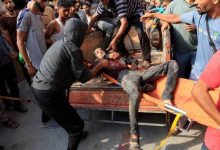
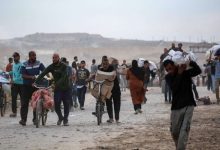
A few hours later, those aircraft targeted a Palestinian police vehicle in Rafah, resulting in the killing of at least two patrol members.https://www.watanserb.com/en/2023/12/05/gazas-humanitarian-dilemma-al-jazeera-unveils-shocking-aid-realities/
Prior to these two incidents, specifically last Tuesday, the Palestinian police media office stated that Israel killed six of its members by targeting their vehicle in the Khirbet al-Adas area east of Rafah while they were securing aid trucks.
استشهاد مدير مباحث رفح أحمد اليعقوبي ونائبه أيمن الرنتيسي وإبراهيم شتات رئيس قسم مباحث التموين جراء قصف جيش الاحتلال لمركبتهم في حي تل السلطان غربي رفح pic.twitter.com/5KCPTeoC8b
— حسن اصليح | Hassan (@hassaneslayeh) February 10, 2024
But why does the Israeli army target police vehicles in Rafah specifically?
Observers and followers of field developments in Rafah believe that the intensification of the Israeli army’s bombardment of Palestinian police vehicles and the assassination of its members—especially those working to secure aid trucks entering to help displaced people from northern and central areas—is aimed at spreading a state of security chaos and disorder in the city to assist in achieving its goals. This is amidst Israeli threats of launching a wide-scale military operation in the city in the coming days.
This targeting of the police force comes amid previous Israeli statements expressing political and security concerns about Hamas regaining its civilian control over the northern areas of the Gaza Strip, where it conducted a wide-ranging military operation by land and air.
تغطية صحفية: طائرات الاحتلال تستهدف مركبة للشرطة الفلسطينية في رفح للمرة الثانية، اليوم. pic.twitter.com/trZ2fLtXy1
— شبكة قدس الإخبارية (@qudsn) February 10, 2024
Observers view these statements as reflecting Israel’s intentions to undermine Hamas’ civilian control over the entire strip, considering it one of the goals of the war.
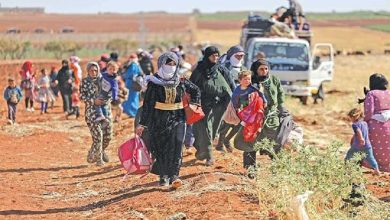
Rafah Governorate in the southern Gaza Strip is considered the last refuge for displaced persons after the Israeli army asked Gaza residents to seek refuge there during its ongoing operations in the northern areas of the strip.
Invasion of Rafah… warning of a humanitarian catastrophe and a global massacre
Several Arab countries warned that an Israeli army attack on Rafah would lead to a humanitarian catastrophe in the city, which has become the last refuge for hundreds of thousands of displaced persons in the Gaza Strip.
In this context, Qatar called on the United Nations Security Council on Saturday, February 10, 2024, to take urgent action to prevent Israel from invading Rafah and committing genocide in the city.
This came in a statement by the Qatari Ministry of Foreign Affairs, condemning “in the strongest terms Israeli threats to invade Rafah” and affirming “firm rejection of attempts to forcibly displace the Palestinian people from Gaza.”
📷 صور صفا| 6 شهداء من عناصر الشرطة جراء قصف قوات الاحتلال مركبتهم في حي خربة العدس برفح جنوبي قطاع غزة pic.twitter.com/pU5qgLokxz
— وكالة صفا (@SafaPs) February 6, 2024
Meanwhile, the Gaza Government Media Office warned of “a global catastrophe and massacre” that could result in tens of thousands of martyrs and wounded if Rafah Governorate is invaded.
The office held “the American administration, the international community, and the Israeli occupation” fully responsible for the global catastrophe and massacre threatened by the occupation.
It also warned that the invasion of Rafah “may occur at any time coinciding with the Israeli army committinghu thousands of massacres in Gaza Governorates during the genocide war.”
It also called on the United Nations Security Council to convene immediately and urgently and to take a decision obligating the Israeli occupation to stop the genocide war it is committing against civilians, children, and women in the Gaza Strip.
On Friday, Israel officially announced readiness for the operation in Rafah when the Prime Minister’s Office declared that Netanyahu “ordered the Israeli army and security establishment to present a dual plan to the government to evacuate residents and destroy Hamas brigades.”
Netanyahu requests the mobilization of reserve soldiers in preparation for the invasion of Rafah
Israeli Prime Minister Benjamin Netanyahu requested on Saturday, from Chief of Staff Hertzl Halevi, to mobilize reserve forces in preparation for a military ground operation in the city of Rafah, south of the Gaza Strip, according to Israeli media.
Channel 13 reported that Netanyahu asked Halevi to mobilize the reserve forces that were discharged in preparation for the possible operation of the Israeli army in Rafah.
📸خيام النازحين المكتظة في #رفح حيث يعيش حوالي مليون ونصف المليون فلسطيني في المدينة التي يهدد جيش الاحتلال بشنّ هجوم عليها خلال الأيام القادمة، وسط تحذيراتٍ من “حمام دم”. pic.twitter.com/mqgl4nH9Ku
— وطن. يغرد خارج السرب (@watanserb_news) February 10, 2024
Halevi, for his part, said, “The army will be able to deal with any mission, but there are political aspects that must be addressed first,” according to the same source.
Meanwhile, a senior Israeli official, preferring not to mention his name, told the same channel, “The operation in Rafah is approaching.”