
Jordan Denies Allegations of Land Bridge to Israel: A Closer Look at the Controversy
Watan-The Jordanian Prime Minister, Bisher Al-Khasawneh, denied recent rumors about the passage of a “land bridge” through Jordan to Israel, threatening to take action against what he described as “fabricating stories out of imagination.”
During a speech in the capital, Amman, in the presence of members of the Jordanian government, Al-Khasawneh said, “We do not accept any bargaining regarding our stance towards the Gaza war… It is a disgrace to anyone who doubts our official and popular position regarding that.”


The Jordanian official described the reports talking about a land bridge supporting the occupation passing through Jordan as “stories from the imagination.”
رئيس الوزراء الأردني بشر الخصاونة: هناك قصص من وحي الخيال تنسج حول وجود جسر بري يمر إلى إسرائيل#حرب_غزة pic.twitter.com/YrbGl2fUeM
— قناة الجزيرة (@AJArabic) February 25, 2024
Stories from the imagination
“Stories from the imagination,” Prime Minister Bisher Al-Khasawneh added, “There is no actual land bridge from Jordan, and the transportation system in the country has not changed for over 25 years.”
He continued, “We will not remain silent about what is being fabricated against the country.”
This is not the first time Jordan has denied these reports. In December 2023, it denied what it called “claims” related to the passage of a land bridge through the kingdom to transport goods to Israel.
Followers respond to Al-Khasawneh
Followers responded to Al-Khasawneh with varied comments on social media platforms. The account “The Legend” commented, “It’s clear he’s a liar, saying it’s been the same situation for 25 years means the transportation of goods hasn’t stopped even during this war.”
The Kuwaiti activist Abdulaziz Al-Munis sarcastically asked, “Is there anyone who doesn’t know that the Jordanian regime and ‘Israel’ are twins?”
Amir Salama wrote, “Don’t ask the Prime Minister about the land bridge; ask him if the goods going to Israel through Jordan are being stopped.”
Salama clarified about the Prime Minister, “He said the situation has been the same for 25 years, meaning goods pass as usual according to the prevailing customs and legal system that does not prohibit goods from crossing to Israel. He refuses to name it.”
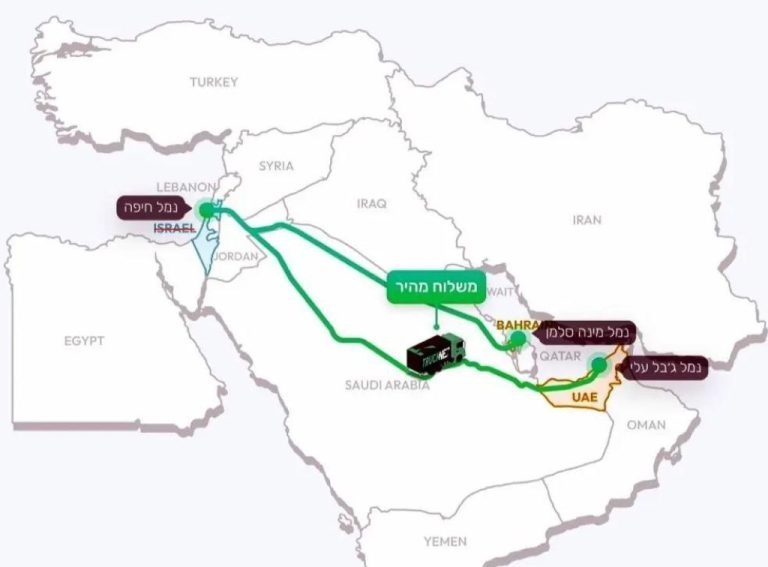
A land bridge passing through Saudi Arabia and Jordan
A land bridge passing through Saudi Arabia and Jordan The Israeli newspaper “Maariv” mentioned in early December 2023 that both the UAE and Israel had signed an agreement to establish a land bridge between them passing through Saudi Arabia and Jordan, extending to the port of Haifa.
The newspaper quoted the CEO of “Traknet” as saying that the new route would save more than 80% of the cost of transporting goods via sea routes.
Jordan has been linked to the Israeli occupation by a peace treaty called the “Peace Treaty” since 1994 and it still continues despite numerous crises due to repeated Israeli escalation in Palestinian territories.
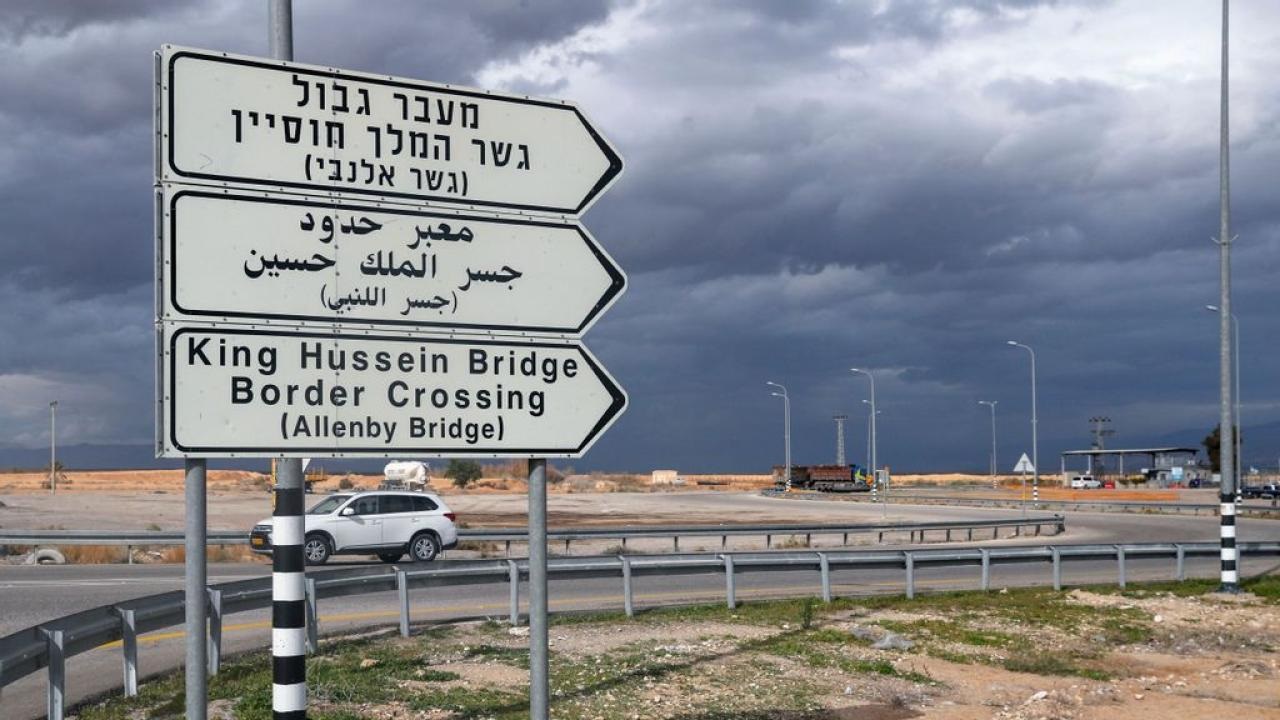
There are three crossings between Jordan and the occupied Palestinian territories (Israel): Sheikh Hussein (Jordan River from the Israeli side), King Hussein Bridge (Allenby from the Israeli side), and Wadi Araba (Yitzhak Rabin from the Israeli side).
Jordan has witnessed angry protests demanding the prevention of export trucks to Israel and stopping what was described as a land bridge supplying the occupation with goods from Dubai ports. Protesters chanted, “Shame, shame, the land bridge is the biggest shame” and “Stop, stop this export.”