Ultra-Orthodox Jews in West Jerusalem Raise Palestinian Flag in Defiance of Zionism
In Mea Shearim, members of the anti-Zionist “Guardians of the City” reject Israeli statehood and stand in solidarity with Palestinians, denouncing occupation and colonial identity theft.
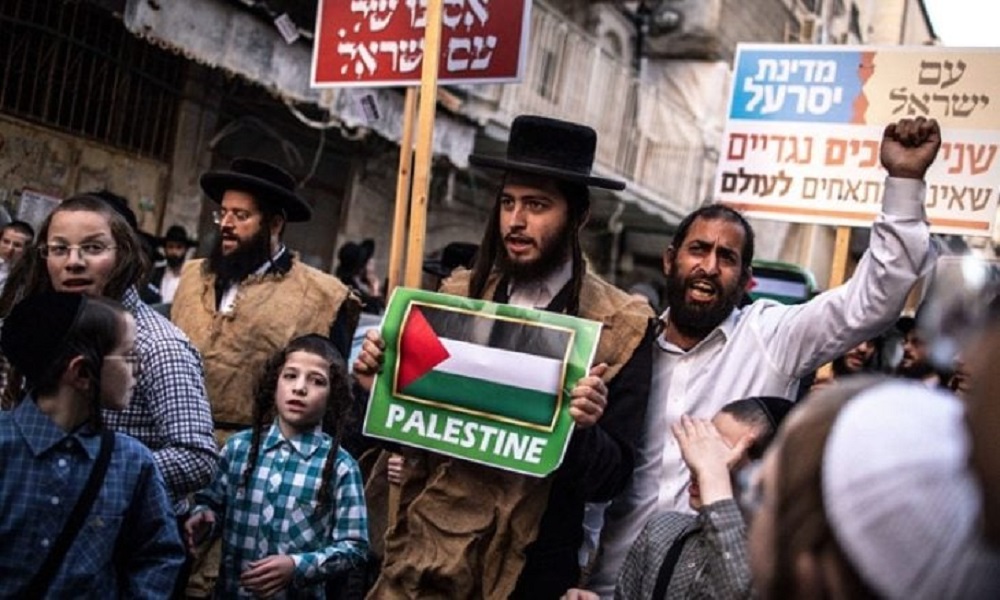
Watan-In a powerful scene of defiance, Mea Shearim, a neighborhood in West Jerusalem, appeared to be detached from Israel itself, with Palestinian flags raised in some alleyways—especially in areas inhabited by members of the ultra-Orthodox “Guardians of the City”, a group known for its outspoken anti-Zionist stance.
Estimated to number in the thousands, members of this community refuse military service, do not recognize the legitimacy of the State of Israel, and reject the occupation and settlement of Palestinian lands, believing the Zionist project to be a betrayal of Judaism.

On Thursday, while Israeli flags blanketed most of the country to mark 77 years since Israel’s founding, the streets of Mea Shearim told a different story. No Israeli flags were in sight. Instead, members of the group marched after a religious fast, raising the Palestinian flag—until Israeli police intervened, confiscated, and burned the flag.
“We Are Not Free to Do as We Wish”
Speaking to Anadolu Agency, a participant named Daniel (who withheld his full name for fear of persecution) explained the group’s ideology:“Our protest is not just against the occupation—it’s against Zionist ideology itself, which seeks to sever Jews from the Torah and sacred traditions. Zionism tries to build a new secular nation, and we reject that.”
Daniel added:“We believe Zionism is not Judaism. Anyone who adopts that ideology no longer truly belongs to Judaism—even if born Jewish. It’s like a new religion.”
Regarding Israeli Independence Day, Daniel stated:“There’s no such thing as true independence. We are Jews, and we’re bound by the Torah and divine commandments. Those who claim independence rely on global powers—like the U.N., the U.S., Germany, and Britain—for political, military, and economic support. They are not independent.”
He went on to explain how Israel’s founding came at the expense of Palestinians, and how the state actively seeks to erase Palestinian names, traditions, and culture, even down to food and clothing:
“They stole the name ‘Palestine,’ the culture, the cuisine—everything. They are trying to erase an entire people in broad daylight.”
A Message of Solidarity with Palestinians
Daniel explained the group’s decision to raise the Palestinian flag:“We did it to show solidarity. We clearly state that we are against the occupation. Yes, Palestinians suffer visibly—but we Jews suffer too, under the same regime.”
He added:“We are brothers with the Palestinians. Every drop of their blood hurts us—especially when shed in the name of Judaism.”
“We don’t want occupation. We want peace—the kind we once lived in with the Palestinians. But the authorities want to erase every trace of Palestine.”
Denouncing Israeli Brutality and Zionist Identity
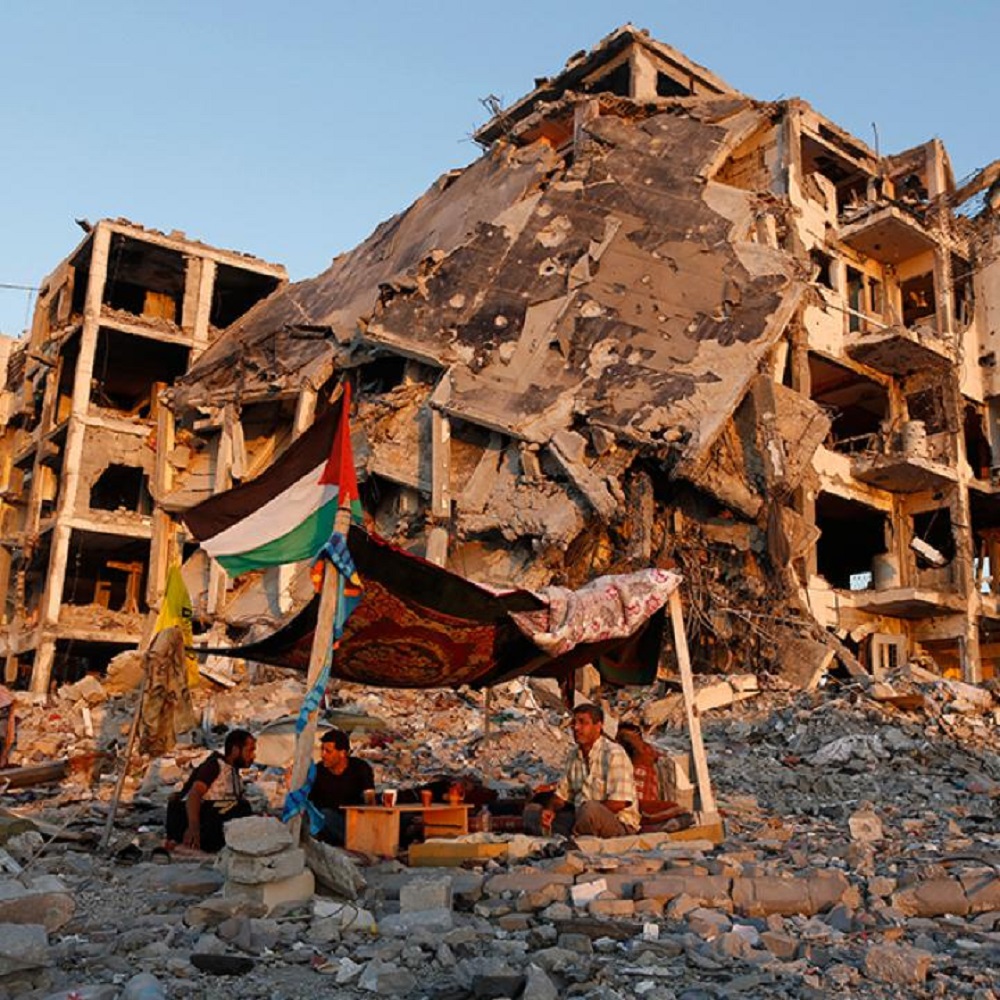
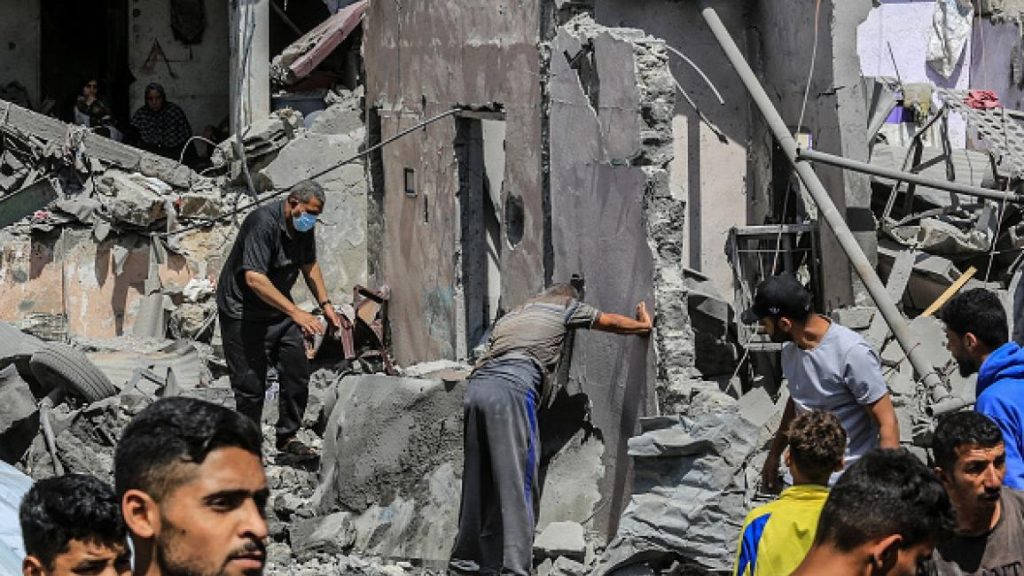
Daniel also condemned Israel’s atrocities, especially in Gaza:“They don’t just beat Palestinians—they starve them, displace them, and leave children to die. These are not actions of a moral people—they’re the acts of the worst kind of killers.”
“We, the Jewish people, have nothing to do with that. We oppose it. We don’t want Zionists to represent us—we don’t want them to be occupiers in our name.”
“We want Palestinians to reclaim their land. We are not thieves. We want full peace and equality. No apartheid. No separation. They are human beings, just like us.”
“Zionists call them animals and say they have no right to live, no right to food or shelter. But we reject that. Palestinians are our cousins, our kin—we respect and love them. We want to join them in their rightful homeland.”
Since October 7, 2023, Israel—with unconditional U.S. support—has waged a genocidal war on Gaza, leaving over 170,000 Palestinians killed or wounded, most of them women and children, with more than 11,000 still missing.